


















By Ebi Kesiena
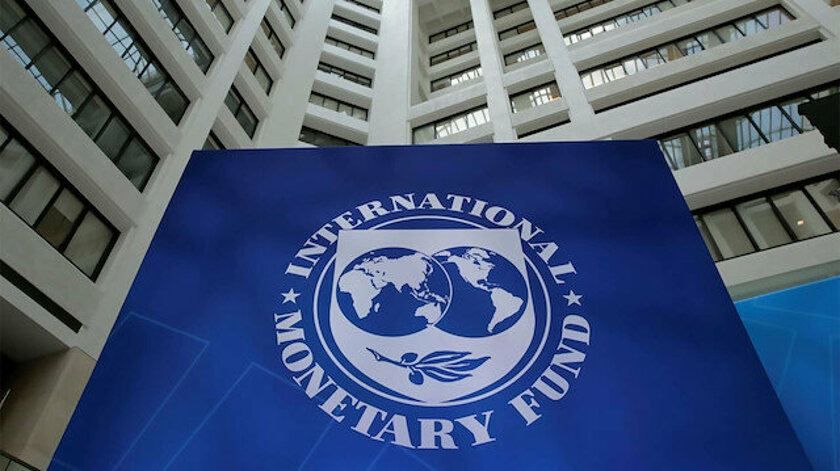
The International Monetary Fund (IMF) has projected that global economic growth will remain steady at 3.3 per cent in 2026, easing slightly to 3.2 per cent in 2027.
The projections are contained in the IMF’s January World Economic Outlook (WEO) update released on Monday. According to the fund, the outlook represents a modest upward revision for 2026 and no change to the 2027 forecast compared with its October 2025 assessment.
The IMF noted that the relatively stable outlook reflects a balance of opposing forces in the global economy. It explained that headwinds arising from shifting trade policies are being offset by strong investment linked to technological advancement, particularly artificial intelligence (AI), with North America and Asia benefitting more than other regions. Additional support coming from accommodative monetary policy, favourable financial conditions, and the adaptability of the private sector.
The report also projected a continued decline in global headline inflation, from an estimated 4.1 per cent in 2025 to 3.8 per cent in 2026 and 3.4 per cent in 2027. Inflation is expected to return to target levels more gradually in the United States than in other major economies.
Among advanced economies, growth is forecast at 1.8 per cent in 2026 and 1.7 per cent in 2027. Emerging markets and developing economies are expected to maintain growth slightly above 4.0 per cent over the same period.
In the Middle East and Central Asia, growth is projected to rise from 3.7 per cent in 2025 to 3.9 per cent in 2026 and further to 4.0 per cent in 2027, supported by higher oil production, resilient domestic demand, and ongoing reforms.
For Sub-Saharan Africa, the IMF expects growth to accelerate from 4.4 per cent in 2025 to 4.6 per cent in both 2026 and 2027, driven by macroeconomic stabilisation and reform efforts in key economies. Nigeria’s economy is projected to grow by 4.4 per cent in 2026 before moderating to 4.1 per cent in 2027.
In Latin America and the Caribbean, growth is forecast to slow to 2.2 per cent in 2026 before rebounding to 2.7 per cent in 2027 as countries approach their economic potential at different stages of the cycle. Emerging and developing Europe is expected to recover from a sharp slowdown in 2025, expanding by an average of 2.3 per cent in 2026 and 2.4 per cent in 2027.
Meanwhile, the IMF warned that risks to the outlook remain skewed to the downside, including possible reassessment of technology-driven expectations and heightened geopolitical tensions. However, it noted that stronger AI-related investment and easing trade tensions could further boost global activity if productivity gains materialise.
The fund urged policymakers to rebuild fiscal buffers, safeguard price and financial stability, reduce uncertainty, and accelerate structural reforms to support sustainable growth.