




By Emmanuel Nduka Obisue
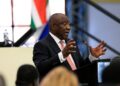
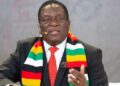
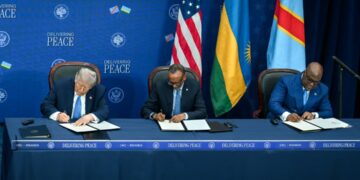
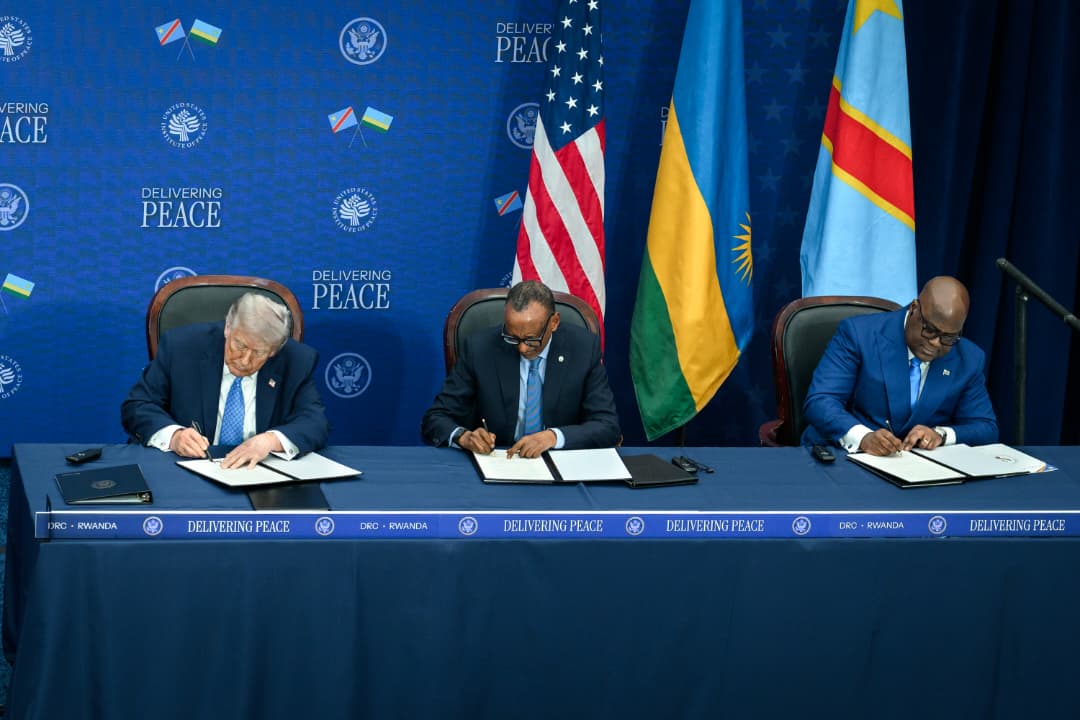
President Donald Trump on Thursday welcomed Rwandan President Paul Kagame and Democratic Republic of Congo (DRC) President Félix Tshisekedi to Washington for the signing of a landmark peace and economic partnership aimed at ending decades of conflict in eastern Congo.
Heritage Times HT reports that the two African leaders first met Trump at the White House before the trio proceeded to the newly renamed Donald J. Trump Institute of Peace, where the accords were formalized. The State Department had redesignated the U.S. Institute of Peace in Trump’s honour just a day earlier.
The pact, now known as the Washington Accords, builds on a preliminary framework agreed to in June. Negotiations have continued for months, even as intermittent clashes persisted back home.
According to the U.S. president, the latest agreement cements the commitments made earlier this year, including a full ceasefire, disarmament of non-state combatants, provisions ensuring displaced people can return home, and mechanisms for justice and accountability for wartime abuses. It also outlines an economic roadmap intended to spur development in both countries.
“I have a lot of confidence in both leaders,” Trump said during the ceremony. “We’ll keep these commitments… and create a much brighter future for the people of their countries,” he added.
Alongside the peace deal, Washington signed separate mineral cooperation agreements with both Rwanda and the DRC. Trump said the arrangements will allow American industries to tap into critical minerals while supporting shared economic growth.
Congo holds some of the world’s largest deposits of cobalt, copper and other key minerals used in electronics and clean-energy technologies.
The president added that major U.S. companies would soon begin investing in the region’s mining sector, predicting significant mutual gains. “Everybody is going to make a lot of money,” he remarked.
President Kagame praised the initiative, calling Trump an “even-handed” leader who acted swiftly to seize an opportunity for peace in a region that often receives little global attention. He said the deal offers “the clearest and most viable path forward that we have ever had”.
President Tshisekedi voiced gratitude as well, expressing hope that the agreement will help end long-standing turmoil in eastern Congo and pledging that his government will uphold its commitments.
Despite the symbolism of the Washington ceremony, fresh reports of clashes between Rwanda-backed M23 rebels and DRC forces emerged on Thursday from parts of South Kivu. Rebels accuse the Congolese military of shelling civilian areas, while Kinshasa continues to condemn M23’s offensives.
M23, one of more than 100 armed groups active in eastern Congo, has waged repeated battles with the DRC military for more than a decade. The group, which traces its origins to the fallout of the 1994 Rwandan genocide, resurfaced forcefully in 2021. The DRC says Rwanda supports the rebels, an accusation Kigali denies, insisting its actions are defensive.
Years of conflict have left thousands dead, many of them civilians, and intensified earlier this year when M23 captured two major cities in the region. Fighting has periodically flared even during the peace negotiations. The United Nations reported that at least 319 civilians were killed in July following renewed violence, shortly after the initial White House signing.