






By Ebi Kesiena
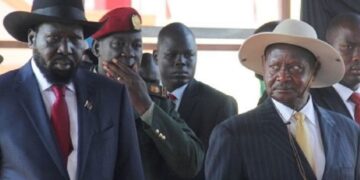
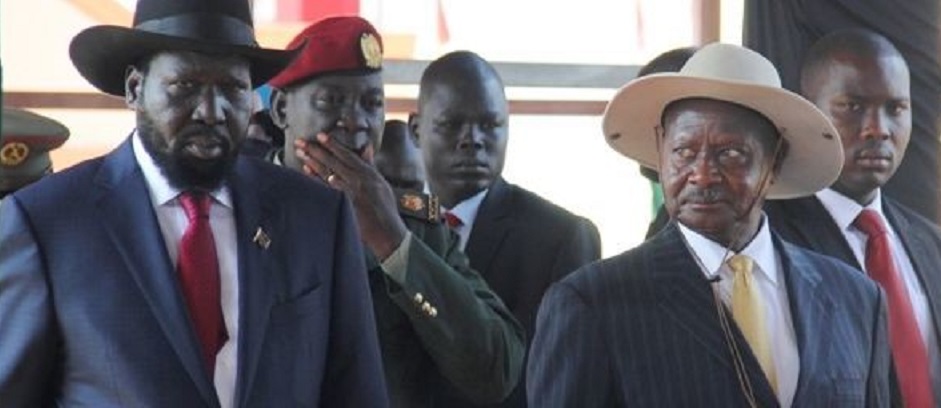
South Sudanese President Salva Kiir Mayardit has pledged to work “closely” with Ugandan President Yoweri Museveni following Museveni’s disputed re-election, signalling Juba’s determination to sustain strong political and security relations with Kampala despite opposition objections to the poll.
In a statement issued by the presidency on Saturday evening, Kiir congratulated Museveni on what he described as a landslide victory, saying the outcome would create room for deeper cooperation between the two neighbouring countries.
“Your Excellency, I warmly congratulate you on your re-election victory,” Kiir said. “I look forward to working closely with you to advance bilateral relations between our two sisterly countries and to strengthen our cooperation on regional and global issues of mutual interest.”
Museveni, 81, was declared winner of Uganda’s presidential election on Saturday by the electoral commission, extending his decades-long hold on power. The result was swiftly rejected by opposition figures, who alleged widespread irregularities, incidents of violence and an internet shutdown during the voting process.
Kiir’s message further revealed South Sudan’s long-standing dependence on Uganda as a crucial security partner. Ugandan troops have been deployed to South Sudan on several occasions since the outbreak of civil war in 2013, most notably to secure the capital, Juba, and to support Kiir’s government against rebel forces led by the now-detained First Vice President, Riek Machar, of the Sudan People’s Liberation Army in Opposition (SPLA-IO).
Meanwhile, Supporters of the South Sudanese government have welcomed Museveni’s continued rule, viewing him as a dependable ally whose political and military backing has helped prevent Kiir’s administration from collapsing during periods of intense fighting and instability. Pro-government voices often credit Uganda with helping to safeguard Juba and maintain regional stability.
However, opposition supporters and civil society groups in South Sudan see Museveni as a symbol of external interference that has reinforced the political status quo in the world’s youngest nation. They argue that Uganda’s consistent alignment with Kiir has helped keep him in power without a renewed electoral mandate, contributing to repeated delays in South Sudan’s own elections, stifling political change and worsening economic stagnation.
Kiir has remained in office since South Sudan gained independence in 2011, with national elections repeatedly postponed under successive transitional arrangements. Critics contend that Kampala’s support has tilted the balance in favour of the government, undermining prospects for a democratic transition.
Uganda, for its part, has defended its involvement, saying its actions in South Sudan have been aimed at preventing broader regional instability and protecting its security and economic interests. Museveni has also played a diplomatic role through the Intergovernmental Authority on Development (IGAD), which has helped broker peace agreements in South Sudan.
There was no immediate response from Museveni’s office to Kiir’s remarks.