




















By Emmanuel Nduka Obisue
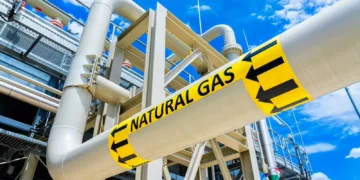
Egypt has begun exporting a new shipment of liquefied natural gas (LNG) as part of plans to supply European markets and meet commitments to foreign energy partners, the Ministry of Petroleum and Mineral Resources has announced.
The latest shipment, totaling about 150,000 cubic meters of LNG, was loaded at the Idku LNG Terminal and transported aboard the tanker Methane Bekki Anne to a port in Turkey. The cargo was delivered to Shell and forms part of Egypt’s broader strategy to increase LNG exports while maximizing the use of its liquefaction facilities.
According to a source at the Ministry of Petroleum, the Egyptian government has reached an agreement to export approximately 3.2 billion cubic feet of natural gas to European markets on behalf of Shell and Petronas. The move is intended to honor contractual obligations to foreign partners, encourage further investment in Egypt’s energy sector, and boost domestic production while adding value to the national economy.
The source noted that Egypt has been exporting LNG on behalf of Shell Global since October, when the LNG carrier New Nature departed the Idku terminal for Italy carrying around 155,000 cubic meters of LNG. These exports followed the signing of new agreements earlier this month to supply natural gas to Syria and Lebanon.
The latest export deal is estimated to be worth between US$40 million and US$45 million, with proceeds payable entirely to the foreign partners as part of efforts to settle outstanding arrears accumulated over several years. In exchange, the Egyptian government will receive the partners’ shares of domestically produced gas.
Under the agreement, the Egyptian Natural Gas Holding Company (EGAS) is expected to begin pumping the agreed volumes of gas to the Idku complex within a week, ahead of liquefaction and shipment to Europe. The final export date, the source said, will be determined in coordination with Shell and Petronas in the coming days.
EGAS is also working to secure additional LNG shipments for export, taking advantage of surplus supply resulting from reduced gas consumption by conventional power plants during the winter months, estimated at between 600 and 700 million cubic feet per day. The company plans to meet with foreign gas exploration and production firms before the end of the month to finalize export schedules, while ensuring domestic demand is fully met ahead of the summer of 2026.
Meanwhile, official data show that Egypt’s LNG imports rose sharply to about US$7.2 billion in the first ten months of last year, compared with approximately US$3.85 billion during the same period in 2024—an increase of 87 percent. The rise was driven by a surge in imported cargoes, which peaked at around 18 shipments per month during the summer, up from five to seven shipments a year earlier.
On the export side, Egypt’s natural gas exports stood at about 238 million cubic meters in November, slightly higher than the 236 million cubic meters recorded in October, according to data from the Joint Organizations Data Initiative. LNG exports accounted for roughly 215 million cubic meters, while pipeline gas exports totaled about 23 million cubic meters.