




By Enyichukwu Enemanna
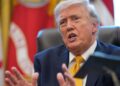
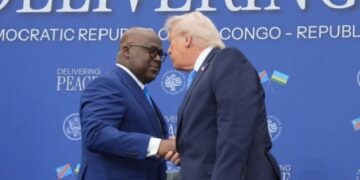
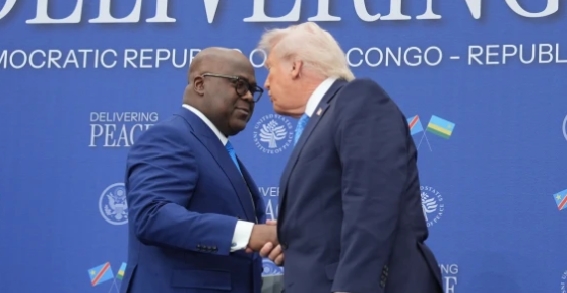
A deal which allows U.S. companies access to critical minerals in the Democratic Republic Congo (DRC) is facing growing opposition, following President Félix Tshisekedi’s return from Washington last week in a mineral summit where he was praised by the US leader and lawmakers.
The deal allows U.S. companies access to eastern DRC’s largely untapped rich mineral resources estimated to worth $24 trillion.
It is offered in exchange for U.S. support to help fight off rebels and build critical infrastructure in the region where Rwanda-backed M23 rebels seized major cities last year.
But this has not gone down well with opposition figures and civil society organisations who accused Tshisekedi of trading off the country’s resources at lesser value.
A group of lawyers and human rights activists in Congo has filed a lawsuit arguing that the mineral partnership threatens Congo’s sovereignty.
“We are assuming our responsibility as Congolese citizens to protect the sovereignty of our country and preserve our heritage for future generations,” Jean-Marie Kalonji, one of the lawyers said.
Within the ranks of opposition, there is also the fear that the deal will mainly benefit Tshisekedi. Moïse Katumbi, the main opposition leader, has raised concerns about how it could be implemented given the security situation in the mineral-rich east, and has called for a national dialogue as a better approach to investors.
Archbishop Fulgence Muteba, who is president of the National Episcopal Conference of Congo (CENCO), likened the strategic partnership to “selling off the minerals of an entire nation to save a regime or a political system.”
“This clearly amounts to sacrificing the development of the population and confiscating the happiness of future generations,” the Catholic bishop said in December.
Trump administration is seeking to create a minerals trading bloc with its allies, partly to defend against China’s stranglehold on critical mineral resources needed for everything including fighter jets and smartphones manufacting.
China accounts for nearly 70% of the world’s rare earth mining and controls roughly 90% of global rare earths processing. It is also the most active player in Congo’s minerals sector.
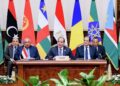
On the sidelines of the Feb. 4 Critical Minerals Ministerial in Washington D.C., Tshisekedi led a Congolese delegation on strategic meetings with senior Trump administration officials and members of the Congress, mostly building on the strategic partnership agreement that both countries signed in December.