




By Enyichukwu Enemanna
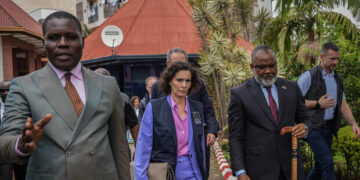
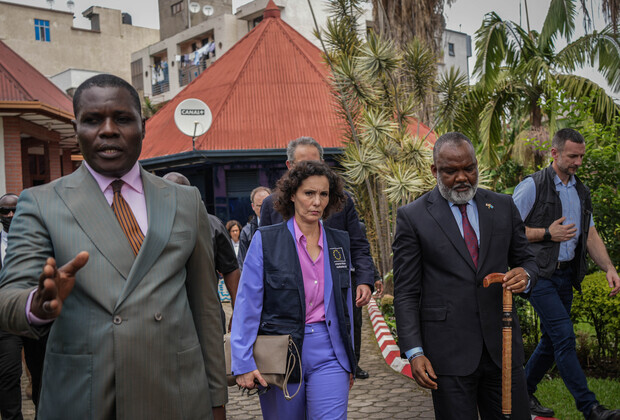
The European Commissioner for Equality, Preparedness and Crisis Management on Friday ended a tour of the Great Lakes region in Goma, Eastern Democratic Republic of Congo, calling for awareness regarding the “catastrophic” humanitarian situation in the area.
Hadja Lahbib spoke in the city controlled by the March 23 Movement (M23) rebel group, during the regional tour that also included stops in Kinshasa, Rwanda, and Burundi.
Her visit came as the European Union (EU) announced this week the release of 81.2 million euros (about 88 million U.S. dollars) in humanitarian aid for victims of the conflict across the Great Lakes in the eastern DRC.
“From Kinshasa to Kigali, Bujumbura, and now Goma, I have one message: respect for humanitarian law,” Lahbib told reporters after meeting with the rebel leaders.
She added that humanitarian workers must be allowed to do their jobs, noting an increase in what she described as blatant violations of international humanitarian law on the ground.
Speaking after the meeting, Corneille Nangaa, leader of the Congo River Alliance (AFC), a politico-military coalition allied with the M23, rejected that assessment by Lahbib.
Nangaa claimed that the humanitarian crisis was “dramatic and catastrophic” especially in areas under government control, citing Uvira, Beni, and Bunia.
He said the AFC/M23 does not hinder humanitarian access in areas under its control and is open to any organization seeking to assist civilians.
Regarding the reopening of Goma’s airport shut down since January 2025 after the city was seized by the rebels, despite regular appeals from the international community to facilitate aid deliveries, Nangaa said external partners had so far “knocked on the wrong door,” adding that discussions were now underway with the de facto authorities.
On Friday, both the DRC army and the M23 rebel group accused each other of violating a recently proposed ceasefire in eastern DRC, as fighting and security incidents continue to be reported in parts of North Kivu and South Kivu.
Angola, which has been mediating the DRC crisis since 2022, proposed on Feb. 11 that a ceasefire between Kinshasa and the M23 take effect on Feb. 18.
DRC President, Felix Tshisekedi said on Feb. 13 that he had accepted the proposal “in a spirit of responsibility and de-escalation,” while the army on Friday accused the M23 of attacking its positions and villages earlier this week.
The M23 on its part, has accused government forces of carrying out attacks against civilians, especially in South Kivu’s Hauts Plateaux region.