














By Enyichukwu Enemanna
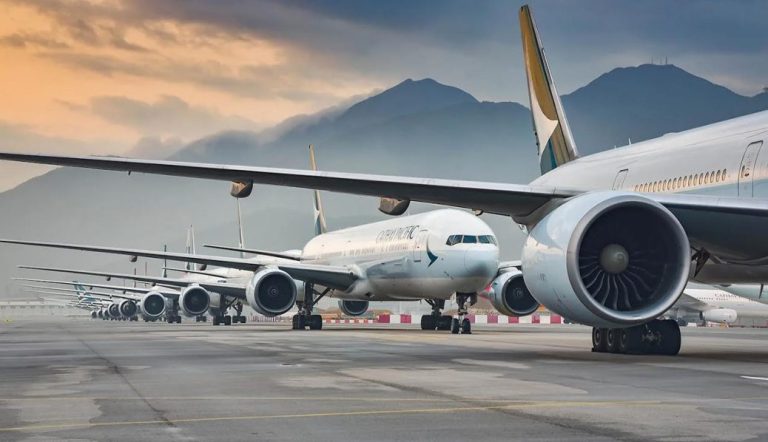
The Director General of World Trade Organisation (WTO) has urged the Nigerian government to accord priority to the upgrade and maintenance of the country’s airports as a key driver of its competitiveness in the global aviation space.
Ngozi Okonjo-Iweala, a former Minister of Finance in the West African nation, stressed that such upgrade is crucial for Nigeria’s rating in global value chain, emphasising that it “is not optional but a prerequisite.”
“Invest in the aviation eco-system to match and compete with the global aviation sector. This means acquisition of new aircraft and investment in airport infrastructure, which should be complemented by a strong maintenance culture”, the WTO chief said on Wednesday in Lagos at the Aircraft Acquisition and Investment Summit.
Experts have among other things listed strong home-based airlines, modern airport infrastructure with efficient services, friendly government policies and downward review of taxes on passengers and cargo as key steps Nigeria must take to position itself as key air travel hub for West Africa, even as they advocate private sector participation.
Okonjo-Iweala also advised the Nigerian government in this line, emphasising that funding from private sector would accelerate the upgrade and maintenance campaign.
“The good news is that the burden need not be borne by government alone. This calls for public-government partnerships. Private financing needs to be mobilised for modernisation of airport infrastructure.”
She also called for a review of rising fuel, taxes, and airport charges, which, according to her, could lead to higher operating costs for airlines.
“The full costs need to be reexamined – fuel costs, airport taxes, levies and charges”, she said, adding that an enabling business environment needs to be created to boost investors’ confidence.
“The model is straightforward – government provides the enabling framework, the regulatory certainty, and the long-term concession structures that give the private sector the confidence to commit.
“The private sector brings capital, operational expertise, and the discipline of commercial incentives.
“Once these structures are set, there is no reason it will not bring commercial growth as experienced in other parts of the world.”
Also at the summit, the country’s minister of Aviation and Aerospace Development, Festus Keyamo said the West African nation has cleared 98 per cent of previously trapped airline funds, a move aimed at restoring investor confidence and unlocking fresh investment into the aviation sector.
The clearance of blocked funds he said signals Nigeria’s commitment to ensuring liquidity, convertibility, and ease of repatriation, key factors for attracting global airlines and financiers.