










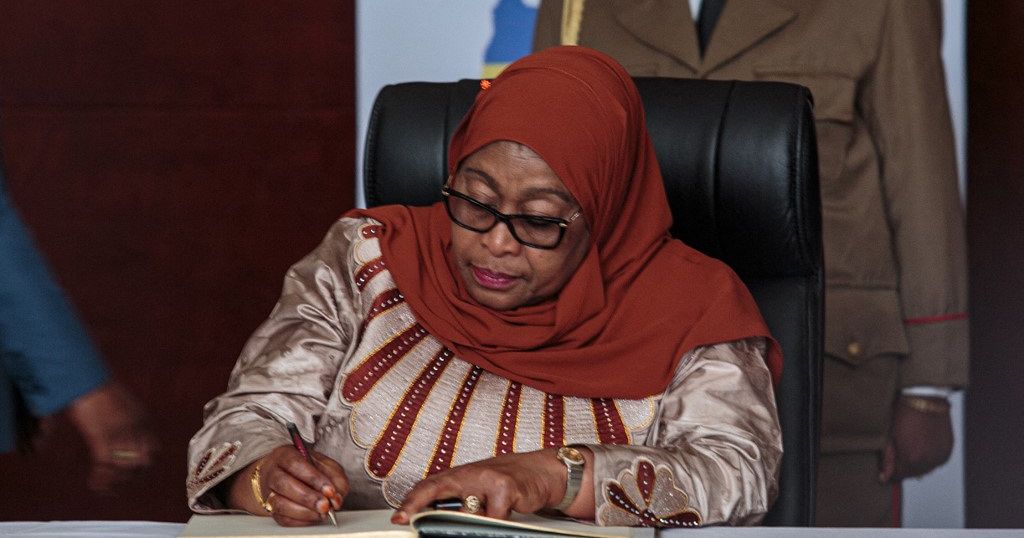
President Samia Suluhu Hassan has ordered a significant reduction in government convoy sizes and directed public officials to travel together in a single bus during official trips, as Tanzania grapples with rising fuel costs triggered by the ongoing crisis in the Middle East.
Fuel Conservation Measures
The directive, announced on Wednesday during a swearing-in ceremony for newly appointed officials, is part of broader measures aimed at conserving fuel amid tightening supply and escalating prices.
The country’s energy regulator recently disclosed that fuel prices have surged by roughly one-third since March, placing additional strain on government operations and citizens alike.
New Convoy Arrangement
Under the new arrangement, only the president’s essential convoy, comprising her security detail, police escorts, and a backup vehicle, will accompany her on official engagements. All other government officials are now required to travel collectively in a single bus to reduce fuel consumption.
“From now on, wherever I go, all officials will travel together in one bus to cut fuel usage,” Hassan stated, emphasising the need for discipline and cost-saving measures within government ranks.
Traditional Convoys Under Scrutiny
Traditionally, presidential movements in Tanzania involve large motorcades, often exceeding 30 vehicles, including luxury SUVs and security outriders. These convoys have frequently drawn criticism for causing traffic disruptions and consuming significant amounts of fuel.
Global Energy Market Impact
The president’s decision comes as global energy markets continue to feel the impact of tensions in the Middle East, particularly disruptions linked to the Strait of Hormuz. The vital maritime corridor, through which about one-fifth of the world’s oil and gas supply passes, has experienced effective blockades, forcing several countries to adopt fuel rationing and conservation strategies.
Regional Context
Elsewhere in the region, Ethiopia has already introduced measures prioritising fuel access for essential services, including the transportation of critical goods and public transit systems.
Analyst Perspective
Analysts say Tanzania’s latest move reflects a growing trend among African governments seeking to manage the ripple effects of global energy shocks through austerity measures and policy adjustments aimed at reducing consumption and preserving limited resources.