





By Enyichukwu Enemanna
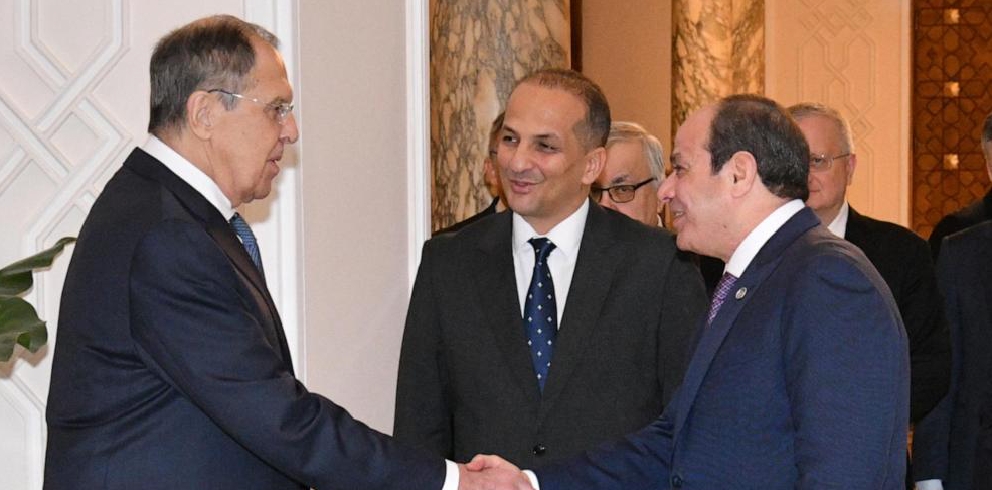
Egypt’s President Abdel-Fattah el-Sissi on Saturday reiterated calls for structural changes in the United Nations Security Council that will allow Africa Africa to assume a larger role in shaping global decisions.
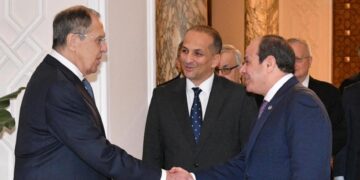
El-Sissi made the call for a “more pluralistic” world order at a conference of the Russia-Africa partnership held in Cairo, which had in attendance Russian Foreign Minister Sergey Lavrov and ministers from more than 50 African countries, as well as representatives from several African and regional organisations.
“The voice of Africa should be present and influential in making global decisions given the continent’s human, economic, political and demographic weight,” el-Sissi said in a statement read out by his foreign minister at the plenary session of the conference.
He added that international financial institutions need to undergo similar reforms to give Africa an equitable representation.
African Union has in the past two decades been demanding that Africa be granted at least two permanent seats with veto powers and five non-permanent seats in the Security Council.
It has argued that such reforms would contribute to achieving peace and stability on the continent, which has been struggling with arm conflicts for decades. However, African countries have so far failed to reach a consensus on a mechanism to select their potential permanent representatives.
“We have decided to continue coordinating our efforts in various multilateral forums, including with the aim of promoting reform of the U.N. Security Council, taking into account the legitimate interests of African states,” Lavrov told reporters in a joint news conference with his Egyptian counterpart.
The Security Council, which is charged with maintaining international peace and security, has not changed from its 1945 configuration: 10 non-permanent members from all regions of the world elected for two-year terms without veto power, and five countries that were dominant powers at the end of World War II are permanent members with veto power: the United States, Russia, China, Britain and France.
Lavrov said earlier the ministerial conference launched talks aimed at developing an action plan for cooperation for the years 2026-2029. The plan will be presented to heads of state at the Russia-Africa summit scheduled for next year.
“We remain a reliable partner for African states in strengthening their national sovereignty, both politically and in matters of security, as well as in other dimensions,” Lavrov said at the plenary session. “We’re committed to further unlocking the existing enormous potential of our practical cooperation.”