















By Emmanuel Nduka Obisue
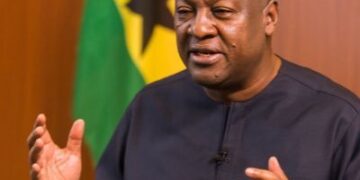
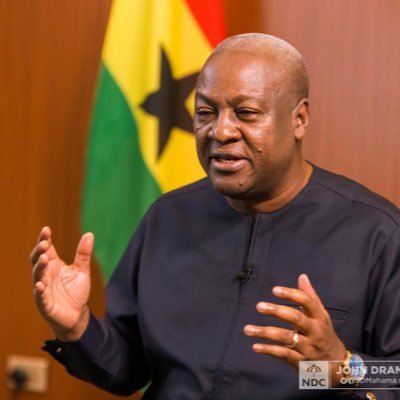
President John Dramani Mahama has announced that Ghana is on course to exit its International Monetary Fund (IMF) programme by April 2026, citing significant improvements in key macroeconomic indicators and a gradual restoration of investor confidence.
Speaking at the Ghana–Zambia Business Dialogue in Lusaka, the President said sustained fiscal reforms undertaken by his administration have helped stabilise the economy, with inflation easing, foreign reserves strengthening, and confidence returning to the market. He noted that the improving economic outlook places Ghana in a stronger position to expand trade and investment, particularly within the framework of the African Continental Free Trade Area (AfCFTA).
President Mahama explained that the government’s development agenda is anchored on five strategic pillars: industrialization and value addition; export-led growth; modern infrastructure development; strong support for micro, small and medium-sized enterprises (MSMEs), women and youth entrepreneurs; and the creation of a predictable, transparent, and investor-friendly business environment.
“We have restructured our debt to invest in people, not just to service loans. This is what ‘Resetting Ghana’ means, and it is delivering results,” he said. The President highlighted the sharp decline in inflation from over 23.4 per cent at the end of 2024 to 3.8 per cent in January 2026, alongside improved currency stability, with the Ghanaian cedi appreciating by 32 per cent to rank among the world’s five best-performing currencies in 2025.
He added that Ghana has successfully renegotiated its debt obligations on terms that safeguard national sovereignty while ensuring long-term sustainability. “We are steadily exiting the IMF’s Extended Credit Facility with dignity as partners, not as supplicants,” President Mahama stressed.
The President further noted that Ghana’s economic recovery has positive spillover effects beyond its borders, contributing to increased regional confidence and deeper continental integration.
Describing Zambia as a natural partner, he said the complementarities between the two economies, particularly in mining, agriculture, energy, and manufacturing, offer strong prospects for joint ventures, value-chain development, and expanded bilateral trade.