









By Enyichukwu Enemanna
Africa’s 2025 political calendar was spiced up with notable events, particularly in the area of recruitment of leaders across various states of the 54-nation continent through electioneering exercise, a periodical ritual that gives democratic governance the needed oxygen to take a deeper root as government with the people at the centre of its focus.
Observations by Heritage Times HT however indicates that there was a sharp decline to foster participatory elections — where all parties are given a fair and equal opportunity to exercise their constitutional rights. Instead, the firm grip on power and use of state authorities to suppress opposition persisted, reversing slight gains previously recorded.
Despite these concerns that have perennially remained in Africa’s political scene, opposition parties in 2024 mustered strength to form governments across five nations, including in Ghana, Botswana, Mauritius, Senegal, and Somaliland. However, 2025 recorded a dip, with countries such as Guinea, Cameroon, Tanzania, the Ivory Coast, Mali and Guinea-Bissau being on the front row as those who deployed authoritarian tendencies against rivalries.
Apart from the Southern African state of Malawi where a moderately competitive and fair election was recorded, which saw the return of former President Peter Mutharika, there was a large scale or systemic crackdown on opposition in other countries where citizens went to poll. This undermines key definitions of democracy links, anchored on peaceful change in government through free, transparent and credible election, as well as conducive environment for opposition parties to campaign freely without interruptions from state agents.
Gabon
Brigadier General Brice Oligui Nguema who led a coup that ousted a democratically installed leader, Ali Bongo in a short while transformed from military-backed transitional president to a democratically elected leader with a large margin of votes which raised questions on fairness and transparency. Also the leader of then Gabonese Republican Guard, Nguema a cousin to Ali Bongo, started his political journey with the annulment of a 2023 presidential election which gave Bongo a controversial third term with a 64 percent of votes. The results of the August polls were heavily disputed, and four days after, Nguema mobilised the military, announcing the annulment of the election, dissolved all state institutions and eventually arrested Bongo, whose dynasty had held power in the small oil-rich rich West African nation for nearly six decades.
Upon assumption of office, Nguema promised a 2-year transitional period, within which to return power to civilian authorities. Surprisingly, six months before the expiration of the interim government, he announced his exit from the military, making him eligible to run despite truncating a civilian government himself. Apart from approving a new electoral code that allows ex-military officers, including himself to run, his transitional parliament also introduced a 70-year age limit for those running as presidential candidates. This measure was to technically ensure the disqualification of most popular opposition figures.
On April 12, 2025, a presidential election was held for the first time after the Nguema-led coup. Though turnout of voters was put at 70%, the highest since 1993, it was still largely criticised for lacking in fairness as it favoured the incumbent military-leader-turned-civilian. Nguema was declared winner a day later, after receiving 90% of the votes, leaving his main challenger Alain Claude Bilie By Nze with just 3%.
Cameroon
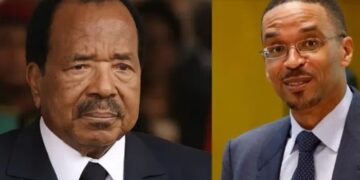
In the Central African nation of Cameroon, President Paul Biya extended his grip on power with a controversial win for 8th term in office, after garnering 54 percent of votes in the October 12 presidential election. Biya, 92 who has been in power for 43 years and ranks as the world oldest President won a highly disputed poll, which opposition said was “stolen”. He was pitted against his former cabinet minister, Issa Tchiroma who secured 35% percent of votes.
In power since 1982, Biya had presided over public disenchantment over his style of governance and inability to tackle key economic issues, with critics alleging that he rules by proxy. The eventual declaration of the results sparked violent demonstrations. United Nations sources said at least 48 deaths were recorded in the post-election protests, a figure the government disputed.
Majority of victims were killed by live bullets especially in the Littoral region which includes the port city Doula, as security forces cracked down on Cameroonians who rejected the electoral outcome. Tchiroma had earlier declared himself winner, a development that elicited hope in the minds of voters who had long yearned for a regime change through a democratic process. Things however took a new twist when early results showed Biya in a comfortable lead. In the northern region where Tchiroma was popular, ten deaths were recorded.
At the Constitutional Council, judges dismissed Tchiroma’s claim of electoral fraud, citing lack of sufficient evidence to annul the election. The “victory” gives Biya, who was rarely seen in the public during the campaigns another seven years, effectively keeping him in office till 2032 when he will be 99. Tchiroma did not file official complaint against the election, citing waning confidence and questionable independence of the judiciary.
Tanzania
In power since 2021 following the death of her predecessor, John Magufuli, President Samia Suluhu Hassan was praised for easing some of the political restrictions imposed by her boss while she served as Vice President to Magufuli in the East African nation. This was however short-lived as critics accused her of hostile treatment against opposition figures and dissents. Since assumption of office, she has allegedly failed to tackle deteriorating economy and improved the living conditions of Tanzanians, a development that fuels agitations, largely among the apolitical youth population of the country. She was also accused of discrimination in his choice of political appointments, an allegation that was confirmed when she appointed her daughter and son-in-law into key positions after her electoral victory.
Way before the commencement of the October 29, 2025 presidential polls, the political atmosphere was already tensed especially with the arrests and detention of opposition figures, including Tundu Lissu who is still standing trial over alleged terrorism, restrictions on activities of groups not aligned to President Hassan’s re-election and bans on public gatherings.
Everything seemed normal when elections took off, with voters casting their ballots peacefully. Things however took a different turn when demonstrations broke out after it became imminent that President Hassan was going to emerge victorious after most of her challengers were disqualified in questionable circumstances. The looming chaos later degenerated into what analysts say is the worst political violence in Tanzania’s post-independence history. This came after the electoral commission announced Hassan as winner with 98 percent of votes. In Dar es Salaam, protesters were engaged in violent confrontation by security forces. According to U.N human rights experts, at least 700 persons were killed in the election-related violence.
Acknowledging the international implications, including ability to secure loans from lenders, President Hassan set up a commission of inquiry to probe the election violence. She also cancelled independence anniversary celebrations, fearing that her government’s human rights record could further come under scrutiny in the event of possible demonstrations. US threatened review of relations with Tanzania over large-scale violence against civilians.
Ivory Coast, Guinea-Bissau, Others
A politically volatile West African state, Ivory Coast saw the re-election of President Alassane Ouattara for fourth term, after he secured an 89.77-percent landslide victory in the October 25 election criticised by opposition as “sham”. Ouattara, 83, who has led the cocoa-rich country since 2010 deployed brute force against the opposition which saw the disqualification of prominent rival candidates, including former President Laurent Gbagbo and ex-Credit Suisse CEO, Tidjane Thiam through court pronouncements.
The opposition has repeatedly accused authorities of using the courts to bar Thiam and Gbagbo from the election. While Thiam was disqualified over issues around his nationality as he is alleged to have had French citizenship when he declared to run in the election, Gbagbo was stopped over criminal conviction. But the government in defending their exclusion from the ballot insists the judiciary acted independently.
Notably, unlike previous elections in the country which saw mass outbreaks of violence, the 2025 presidential vote was substantially peaceful despite the removal of credible opposition figures from ballot, with a few incidents that saw about 11 people killed.
In Guinea-Bissau, the military coup that ousted incumbent President Umaro Sissoco Embalo in November 2026 has remained a subject of controversy. Following a presidential election in which Embaló and the opposition candidate, Fernando Dias da Costa claimed victory, the military struck in a manner that portrayed Embalo to be complicit.
Army officers who called themselves the Military High Command, deposed Embalo a former military officer and installed Major-General Horta Inta-a as interim President. According to a former Nigerian leader, Goodluck Jonathan who led ECOWAS-backed observation team, the coup appeared staged over fear that the incumbent Embalo might lose the poll. According to Jonathan, in a way not commonly seen in coup setting, the deposed leader was the one holding a press conference announcing that he has been removed from office.
Also in Guinea, after his initial promise not to run, junta leader, Mamady Doumbouya won a late December presidential election, securing an 86.72 percent of the first-round vote. Doumbouya, 41, also reneged in his promise of supporting the return to civilian rule before the end of 2024, after seizing power in September 2021 and toppled Alpha Conde.
In addition to the suspension of activities of political parties, main opposition leaders were also barred from running in the election, while they urged their supporters to boycott the December 28 election. Opposition candidate Abdoulaye Yero Balde denounced “serious irregularities”, citing the refusal to grant his representatives access to vote-counting centres and allegations of “ballot stuffing” in some areas. Another candidate, Faya Millimono, complained of “electoral banditry” and undue influence on voters.
What 2026 Holds
With ten nations, including Uganda, Republic of Congo, Benin, Libya, Djibouti, Cape Verde, Ethiopia, Zambia and The Gambia expected to go to polls this year, no significant difference is expected from the current trend. In Uganda for instance where presidential election holds January 15, the long-term President Yoweri Museveni who has been in power since 1986 has not stopped using state instruments to clampdown on dissents and those with opposing views.
In the last one year, an opposition leader, Kizza Besigye has been in jail where he has been denied bail over alleged plan to overthrow the 81-year-old leader who is seeking to extend his grip on power. Also, Bobi Wine, whose real name is Robert Kyagulanyi, Museveni’s main challenger in the election has come under attacks in the course of campaigning, with several supporters being arrested and jailed on trumped up charges. While democracy is largely believed to be the most accepted form of governance, its practice, where the people’s vote hardly counts has created more questions than answers in the African context.