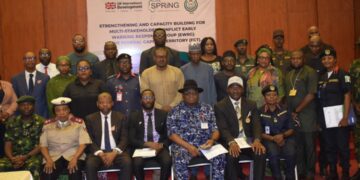















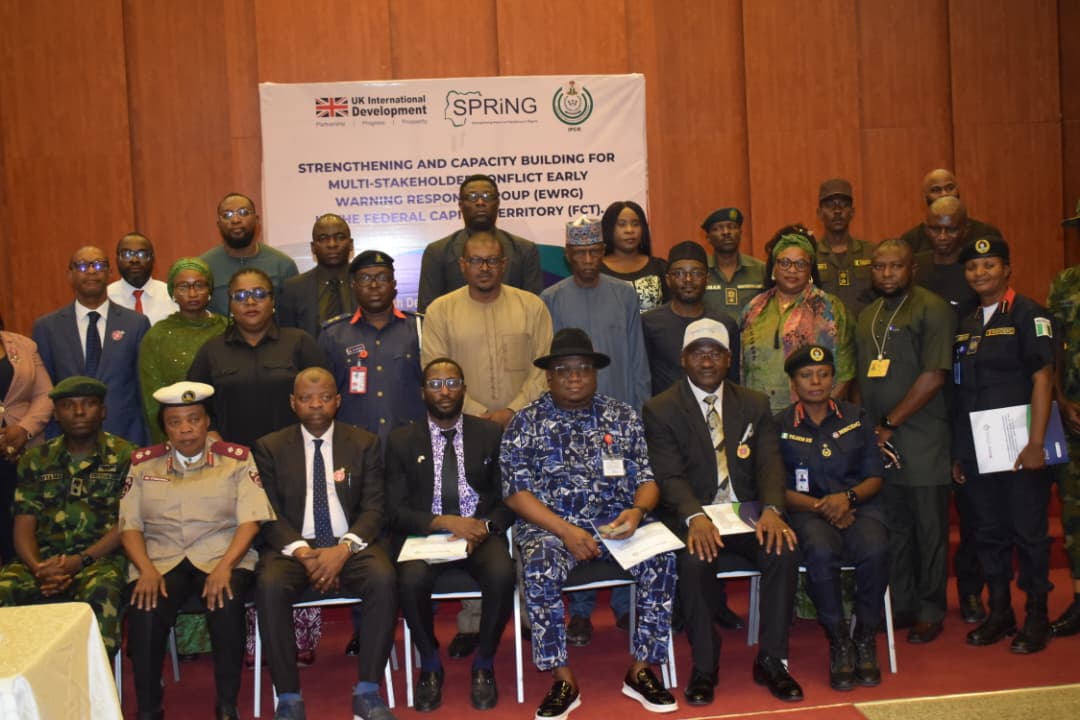
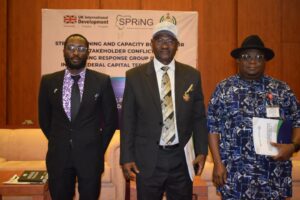
Nigeria has taken a significant step to reinforce its peace and security architecture with the Capacity Building Engagement for the Multi-Stakeholder Conflict Early Warning Response Group (EWRG), held on wednesday, at the Institute for Peace and Conflict Resolution (IPCR) in Abuja.
The development was contained in a statement issued at the conclusion of the high-level engagement, which focused on strengthening coordination, capacity, and timely response mechanisms to prevent violent conflict across the country.
The engagement was organised by IPCR in collaboration with the Strengthening Peace and Resilience in Nigeria (SPRING) Project, with support from the United Kingdom’s Foreign, Commonwealth and Development Office (FCDO). It brought together a broad coalition of security and non-security actors committed to improving Nigeria’s ability to translate early warning signals into effective preventive action.
The Honourable Minister of Foreign Affairs, Ambassador Yusuf Maitama Tuggar, OON, was represented at the event by the Ministry’s Spokesperson, Mr. Kimiebi Ebienfa, who reaffirmed the Federal Governments commitment to conflict prevention, early warning, and rapid response systems as central pillars of Nigeria’s national security and foreign policy priorities.
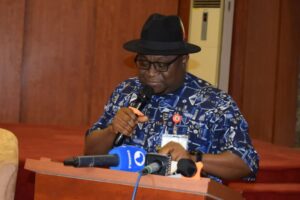
According to the Minister, the government is in support of data-driven and collaborative peacebuilding approaches, while commending IPCR and its partners for convening the engagement at a critical moment in Nigeria’s security landscape.
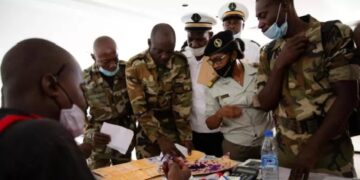
Participants were drawn from a wide spectrum of institutions, including key security agencies, ministries, departments and agencies, development partners, civil society organisations, women groups, transport unions, and the media. Represented bodies included the Ministry of Foreign Affairs, the Nigerian Army, DSS, Nigeria Police Force, NSCDC, Nigerian Correctional Service, NEMA, FRSC, National Boundary Commission, National Orientation Agency, NURTW, and the British High Commission.
Meanwhile, in his opening remarks, the Director-General of IPCR, Dr. Joseph Ochogwu, identified the persistent gap between early warning signals and effective response as a major challenge in Nigeria’s conflict management efforts. He noted that while warning signs often emerge early at community levels, delayed or fragmented responses frequently allow tensions to escalate into violence.
Discussions throughout the engagement underscored the need to strengthen the response component of Nigeria’s early warning architecture. IPCR explained that its system functions as a governance and policy support mechanism, relying on open-source data, community reporting, and stakeholder validation rather than intelligence gathering.
The sessions also highlighted the growing importance of integrating technology, climate-related indicators, gender inclusion, and human rights considerations into early warning and response processes, in recognition of the evolving drivers of conflict in Nigeria.
Furthermore, the British High Commission reaffirmed the United Kingdom’s commitment to supporting Nigeria’s peace and security efforts through the SPRING Project, stressing that insecurity in Nigeria has wider implications for West Africa and the continent. Emphasis was placed on institutional trust, coordination, and sustained capacity building as foundations for long-term stability.
Collectively, Stakeholders reaffirmed the strategic importance of the Early Warning Response Group as a cornerstone of Nigeria’s peace and security framework, agreeing that inclusive, coordinated, and timely responses are essential to ensuring that early warning leads to early action.