








By Emmanuel Nduka Obisue
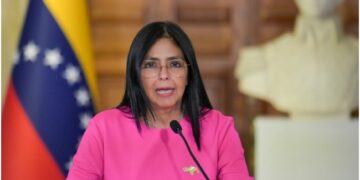
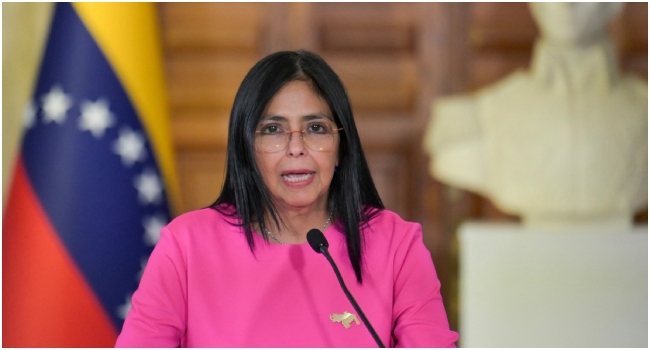
The United States has begun releasing Venezuelan funds previously frozen under sanctions, according to the country’s interim president, Delcy Rodriguez, marking a significant step in the gradual thaw between the two long-time adversaries.
Venezuela has been under sweeping US sanctions, including an oil embargo, since 2019 following former president Nicolas Maduro’s disputed re-election the previous year. During his first term, US President Donald Trump also ordered the freezing of Venezuelan assets held in international accounts, funds Maduro estimated in 2022 at about $30 billion.
Speaking on state television on Tuesday, Rodriguez said Washington had started unblocking resources belonging to the Venezuelan people.
“We are unfreezing resources from Venezuela that belong to the Venezuelan people,” she said, adding that the funds would be channelled into critical sectors, including healthcare.
“This will allow us to invest significant resources in equipment for hospitals – equipment we are acquiring in the United States and in other countries,” Rodriguez said, without disclosing the amount released so far.
Rodriguez has been serving as interim president since Maduro was toppled during a deadly US military operation on January 3. Since then, Washington and Caracas have entered into a series of agreements aimed at easing tensions and reopening diplomatic channels.
“I reaffirm what President Donald Trump has said — that we have established channels of communication marked by respect and courtesy,” Rodriguez said, noting ongoing engagements with both Trump and US Secretary of State Marco Rubio as part of a developing “work agenda”.
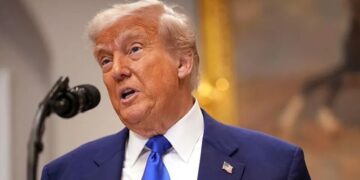
Despite efforts to reset relations, the Trump administration has warned that cooperation is contingent on compliance with US demands, including access to Venezuela’s vast oil reserves. Trump has described Rodriguez’s leadership as “very strong” and claimed the United States is already benefiting from Venezuelan oil production.
Rodriguez, however, has insisted that Venezuela is not operating under US tutelage.
Rubio is expected to warn the Senate Foreign Relations Committee on Wednesday that Rodriguez could face the same fate as Maduro if her government fails to align with Washington’s objectives.
“She is well aware of the fate of Maduro,” Rubio is to say, according to prepared remarks. “It is our belief that her own self-interest aligns with advancing our key objectives,” he adds, warning that the United States is prepared to use force to ensure compliance.
Venezuela holds nearly one-fifth of the world’s proven oil reserves and was once a major supplier of crude to the United States, with several American companies operating in the country until 2007.
In another sign of warming ties, Washington last week confirmed Laura F. Dogu, a former US ambassador to Nicaragua and Honduras, as the new charge d’affaires to Venezuela, a move widely seen as a step toward restoring full diplomatic relations severed in 2019.
Under Venezuela’s constitution, new elections are required if a president leaves office before completing half of their term. Maduro was sworn in for a new term in January 2025.
However, his son, Congressman Nicolas Maduro Guerra, dismissed calls for fresh elections, arguing that the circumstances surrounding his father’s removal do not trigger constitutional provisions for a vote. “There is no clock running. Elections are not on the table,” he told journalists in Caracas.