



















By Ebi Kesiena
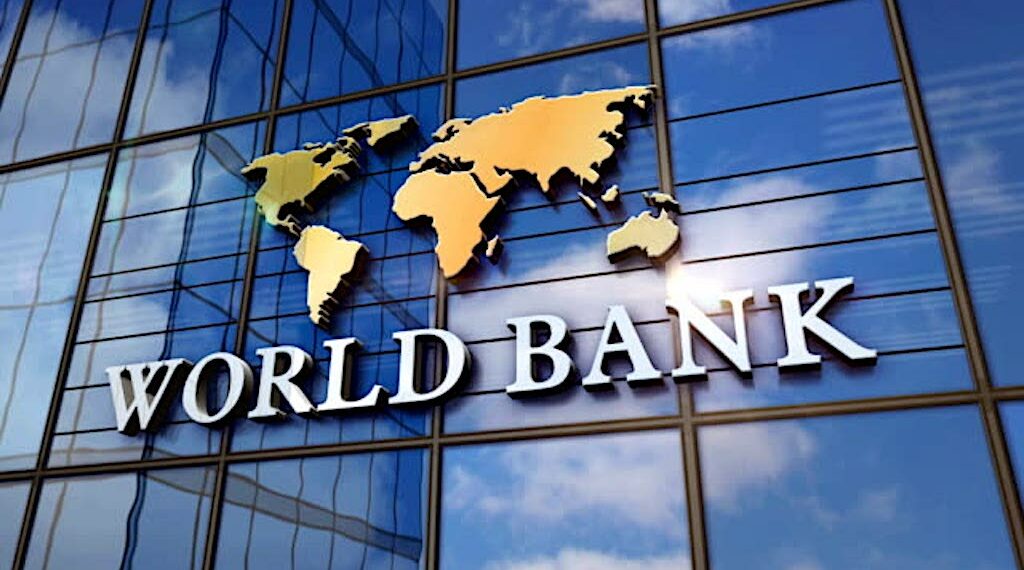
The World Bank has urged Nigeria and other Sub-Saharan African countries to accelerate export diversification and implement stronger fiscal reforms to address rising debt pressures across the region.
In its International Debt Report 2025, the Bank warned that Sub-Saharan Africa remains an outlier globally, with debt levels and servicing costs continuing to rise through 2024 despite weak economic growth. The trend, it said, has been driven largely by countercyclical official financing rather than productivity-enhancing investment, leaving external debt burdens elevated across the region, including in Nigeria.
The report noted that unlike other regions recovering from the COVID-19 shock, Sub-Saharan Africa recorded year-on-year growth in external debt stocks between 2015 and 2024 even as output lagged behind.
“Sub-Saharan Africa stands out as an exception: both debt levels and servicing burdens have continued to rise even as growth remains subdued, underscoring persistent fiscal stress,” the World Bank stated.
It added that the negative relationship between GDP growth and debt accumulation intensified between 2020 and 2024, with about 64 per cent of low- and middle-income countries (LMICs) in the region exhibiting this pattern. High debt levels, the report warned, are deepening vulnerabilities by crowding out spending on health, education and infrastructure, while also contributing to food insecurity and institutional fragility.
Despite these pressures, Nigeria returned to the international capital market in 2024, raising $2.2 billion through Eurobond issuances at yields of 9.625 per cent and 10.375 per cent to help finance its budget deficit. The World Bank said issuances by IDA-eligible countries such as Nigeria and Kenya which raised $1.5 billion at a 9.75 per cent coupon signal renewed investor confidence, albeit at borrowing costs not seen since before the 2008 global financial crisis. Private creditor commitments to low- and middle income countries averaged 5.89 per cent in 2024.
Sub-Saharan Africa’s bond flows rose sharply by 55.6 per cent to $27.7 billion during the year, but the Bank cautioned that repayment pressures are mounting, with principal repayments in low-income countries projected to increase by 87.5 per cent by 2026.
The report also highlighted that Nigeria recorded one of Africa’s largest current account surpluses in 2024, alongside Djibouti and Angola, standing out against widespread deficits among LMICs. However, it noted that Nigeria still clusters with high-risk peers such as Kenya, Mozambique and Zambia in terms of debt sustainability challenges.
“As of 2024, 23 LMICs had current account surpluses—the largest were in Africa (Djibouti, Nigeria, and Angola), followed by several countries in Europe and Central Asia, including Azerbaijan and Tajikistan,” the report said.
Nigeria also ranked among the top beneficiaries of concessional financing from the International Development Association (IDA), alongside Bangladesh, Kenya and Pakistan.
The report added that the European Union was the second-largest source of net debt flows in 2024, providing $15.5 billion, largely driven by financial support to Ukraine.
The World Bank stressed that without deeper export diversification, stronger institutions and sustained fiscal reforms, countries such as Nigeria risk prolonged debt stress despite continued access to international and multilateral financing.