







By Enyichukwu Enemanna
South Africa on Tuesday said it will reduce its fuel levy for one month to avert a possible increase in pump price of the product in the month of May, after trade unions and business groups pressured the government to intervene to cushion the impact of the Iran war.
The finance and petroleum ministries said in a statement that the government would lose at least 6 billion rand ($350.69 million) of tax revenue through this cut, stating that it will recoup the funds through other mechanisms.
Work is under way on a broader package of measures to support households and key sectors of the economy, the statement said, as despite the levy cut the regulated petrol price will rise by about 15% in April and wholesale diesel by 40%.
The general fuel levy will be reduced by 3 rand for April, taking the levy to 1.10 rand per litre for petrol and 0.93 rand per litre for diesel.
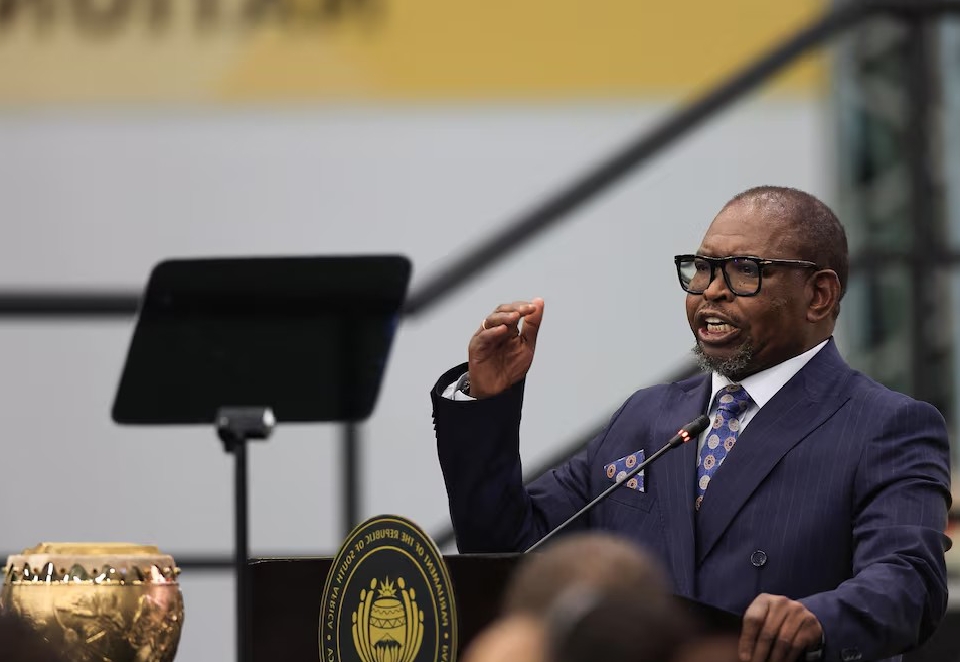
Finance Minister Enoch Godongwana told reporters the government would monitor developments in the Middle East and that if the conflict persists, it may provide some fuel levy relief that will last till May and June.
“I don’t think it can be sustained beyond June,” he said.
In 2022, South Africa implemented similar relief in response to the beginning of Russia’s war in Ukraine.
That reduction of 1.5 rand per litre remained in place for several months before being lowered and finally withdrawn.
South Africa’s central bank warned of inflationary risks from increase in fuel pump prices at its monetary policy meeting last week, saying fuel inflation of more than 18% was expected in the second quarter.
The risk-sensitive rand has fallen nearly 7% against the dollar since the U.S. and Israel launched strikes on Iran in late February, adding to inflationary risks.
South Africa like several other African nations imports most of its petroleum products, exposing it to swings in global energy prices.
It adjusts fuel prices monthly using a formula that factors in movements in global crude oil prices, the exchange rate and local taxes such as the fuel levy.