





By Emmanuel Nduka
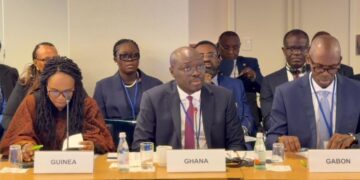
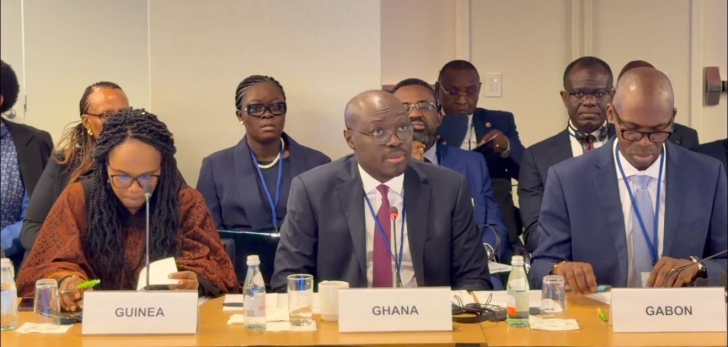
Ghana’s economic recovery has taken centre stage at the ongoing IMF/World Bank Spring Meetings, where the country’s Minister of Finance, Cassiel Ato Forson, presented a compelling account of the nation’s turnaround at the 13th African Fiscal Forum High-Level Roundtable.
Speaking during a session on “Macro-Fiscal Developments and Outlook in Sub-Saharan Africa,” Dr Forson said Ghana’s experience over the past 15 months demonstrates how African economies can navigate crises and leverage them as opportunities for structural transformation.
He noted that despite severe economic headwinds in 2022 and 2023, a combination of bold policy choices and sustained reforms from 2025 had restored macroeconomic stability and strengthened the country’s fundamentals.
Dr Forson pointed to significant improvements across major macroeconomic indicators as evidence of Ghana’s rebound. Real GDP growth rose to six per cent in 2025, up from 5.8 per cent in 2024, while inflation dropped sharply from 23.8 per cent in 2024 to 5.8 per cent in 2025, further declining to 3.2 per cent as of March 2026.
He also highlighted the stabilisation of the Ghanaian cedi, which appreciated by over 40 per cent against the US dollar in 2025, with gains extending into 2026. On the fiscal side, Ghana’s primary balance improved markedly, shifting from a deficit of 2.9 per cent of GDP to a surplus of 2.6 per cent in 2025.
According to the Finance Minister, Ghana has also made notable progress in reducing its debt burden. The country’s debt-to-GDP ratio fell from 61.8 per cent to 45.3 per cent by the end of 2025, well ahead of the initial 2034 target.
He added that international reserves have strengthened to cover 5.8 months of imports, while policy credibility has been reinforced through stronger institutions and the implementation of clear fiscal rules. These gains, he stressed, reflect disciplined fiscal management and a deliberate commitment to long-term economic sustainability.
The IMF/World Bank Spring Meetings bring together finance ministers, central bank governors, and global economic leaders to assess economic trends and policy priorities.
Dr Forson said Ghana’s recovery story highlights the impact of decisive leadership and sound economic policies, offering a model for other African economies seeking to achieve resilience and sustainable growth.