



















By Enyichukwu Enemanna
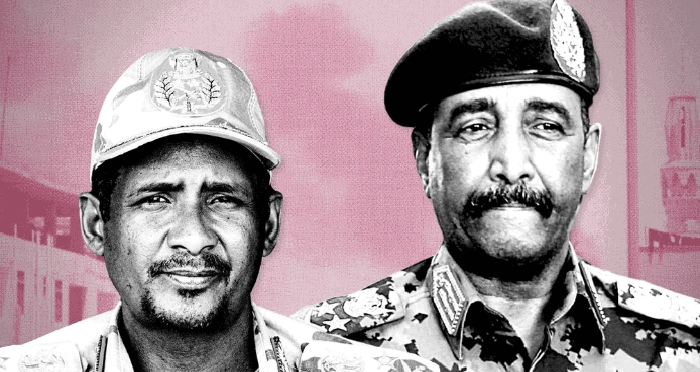
Sudan on Wednesday entered the fourth year of war that has caused thousands of deaths, famine and growing humanitarian crisis, a war now being called an “abandoned crisis.”
This comes as a new conflict in the Middle East overshadows the fighting that broke out April 2023, forcing 13 million people to flee their homes.
Sudan has been described as the world’s largest humanitarian challenge, notably in terms of displacement and hunger.
There is no end in sight to the fighting between the military and the paramilitary Rapid Support Forces (RSF).
Evidence shows regional powers, including the United Arab Emirates are supporting the combatants behind the scenes.
Attempts by the United States and regional powers, who are now distracted by the war in Iran have failed to establish a ceasefire.
“This grim and chastening anniversary marks another year when the world has failed to meet the test of Sudan,” United Nations humanitarian chief Tom Fletcher said.
At least 59,000 people have been killed. No fewer than 6,000 died over three days as the RSF rampaged through the Darfur outpost of el-Fasher in October, according to the U.N., with U.N.-backed experts concluding the offensive bore “the defining characteristics of genocide.”
More than 11,000 people were missing over the course of the war, the Red Cross says.
The war has pushed parts of Sudan into famine. The number of people with severe acute malnutrition, the most dangerous and deadly kind, is expected to increase to 800,000, the world’s foremost experts on food security, the Integrated Food Security Phase Classification, said in February.
About 34 million people, or almost two of every three Sudanese, need assistance, the U.N. says. Only 63% of health facilities remain fully or partially functional amid disease outbreaks including cholera, according to the World Health Organization.