









By Ebi Kesiena
Leaders of Economic Community of West African States (ECOWAS) regional bloc are calling for a strengthened and unified intelligence system and coordinated border operations to address challenges confronting the region, including terrorism, violent extremism, and unconstitutional changes of government.
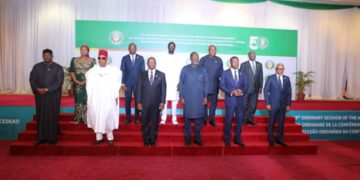
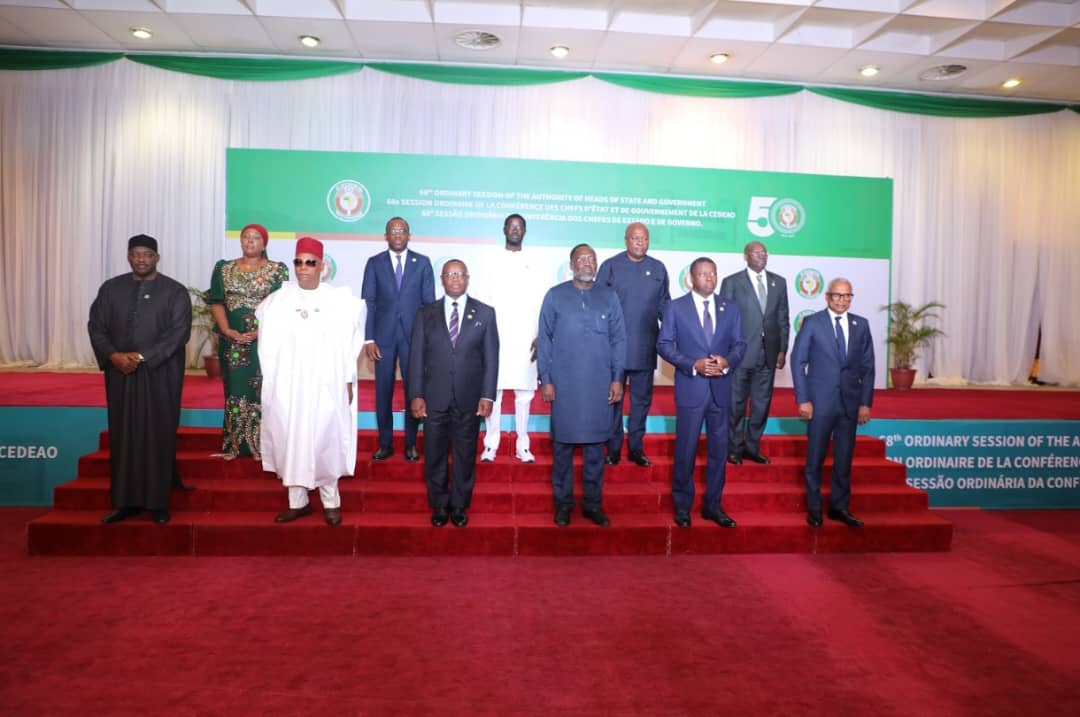
This was the crux of the 68th Ordinary Session of the ECOWAS Authority of Heads of State and Government which held in Nigeria’s capital, Abuja on Sunday.
In his address, ECOWAS Chairman and President of Sierra Leone, Julius Bio called for collective action to tackle the activities of extremist groups.
Bio condemned the unconstitutional change of government in Guinea-Bissau and the attempt in the Republic of Benin, commending the rapid mobilisation of ECOWAS troops, with Nigeria taking the lead to safeguard constitutional order.
He emphasised the need for legitimate leadership and accountable governance as crucial for regional stability.
In his remarks, Nigeria’s President, Bola Tinubu said no single nation can achieve stability alone, assuring the gathering that Nigeria stands committed to collective action in defence of the region’s collective future.
Represented by the Vice President, Kashim Shettima, the Nigerian leader assured his country’s commitment to lead the charge in deepening stability among ECOWAS states.
The Community in an effort to make mobility, opportunity, and inclusion accessible to all in the region also announced that beginning from January 2026, it will implement a landmark measure to reduce the cost of air travel across West Africa.
Under this agreement, member states will abolish air transport taxes and reduce passenger and security charges by 25%.
The meeting came in the wake of a successful military take-over in Guinea-Bissau last month and a foiled coup attempt in Benin a week ago.
The bloc was previously hit with a string of coups between 2020 and 2023 in Burkina Faso, Guinea, Mali, and Niger all of whom are still under junta control and have since ditched the bloc, accusing it of failure to protect members’ interest.