











By Emmanuel Nduka Obisue
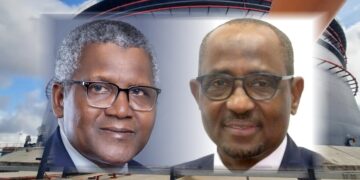
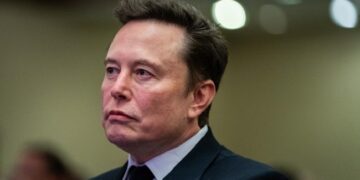
President of Dangote Industries Limited, Aliko Dangote, has raised questions over the alleged payment of $5 million in foreign secondary school fees for the children of Farouk Ahmed, Chief Executive Officer of the Nigerian Midstream and Downstream Petroleum Regulatory Authority (NMDPRA), calling for a formal investigation into the source of the funds and the conduct of the regulator.
Africa’s richest man made the allegation on Sunday while speaking to journalists at the Dangote Petroleum Refinery in Lagos, where he accused the leadership of the NMDPRA of actions he described as detrimental to Nigeria’s domestic refining industry and broader economic interests.
According to the billionaire industrialist, four of Ahmed’s children are said to be attending elite secondary schools in Switzerland at costs running into several million dollars, an amount Dangote argued is difficult to reconcile with the legitimate earnings of a public servant.
“I am not calling for his removal,” Dangote said. “I am calling for a proper investigation. He should be required to explain his wealth and demonstrate that he has not compromised his position to the detriment of Nigerians. What is happening amounts to economic sabotage”.
Dangote contrasted the allegation with his personal choices, noting that his own children attended secondary schools in Nigeria. He questioned how many Nigerians could afford to pay $5 million for secondary education, especially in a country where many families struggle to meet basic school fees.
The industrialist challenged Ahmed to publicly deny the claim, saying he was prepared to provide documentary evidence if necessary. He also called on relevant institutions, including the Code of Conduct Bureau, to investigate the matter.
While efforts to reach Ahmed for comment were unsuccessful as of the time of filing this report, he had previously maintained that the Dangote refinery seeks to dominate the downstream petroleum market and that domestic refining capacity remains insufficient to meet national demand.
Beyond the personal allegations, Dangote accused the NMDPRA of colluding with international fuel traders to undermine local refining through the continued issuance of petroleum import licences, despite growing domestic capacity.
He disclosed that import licences covering an estimated 7.5 billion litres of Premium Motor Spirit (PMS) were allegedly issued for the first quarter of 2026, a move he said threatens the survival of local and modular refineries.
“There are powerful interests in the oil sector,” Dangote said. “It is troubling that African countries still import refined products when value addition should happen locally. This practice weakens investment and exports jobs,” he added.
Dangote warned against what he described as a dangerous overlap between regulatory authority and commercial trading interests, insisting that the downstream sector must be insulated from personal and commercial influence.
Amid the controversy, Dangote announced a reduction in petrol prices, stating that the gantry price of PMS from his refinery had been cut to N699 per litre, with pump prices in Lagos expected to fall to below N740 per litre from Tuesday.
He said MRS filling stations would be the first to reflect the new pricing, adding that the refinery had reduced its minimum purchase requirement from two million litres to 500,000 litres to allow more marketers, including members of the Independent Petroleum Marketers Association of Nigeria (IPMAN), to participate.
According to Dangote, the refinery was established primarily to benefit Nigerians, not to maximise profit, stressing that consumers would benefit from better-quality, locally refined fuel.
Dangote also highlighted ongoing difficulties in securing domestic crude oil, revealing that the refinery currently imports about 100 million barrels of crude annually, largely from the United States, due to limited local supply. He said this figure could rise to 200 million barrels following planned expansion.
He added that local refiners are often compelled to buy Nigerian crude at premiums from trading arms of international oil companies, placing them at a competitive disadvantage.
Despite what he described as sustained resistance and regulatory obstacles, Dangote said the refinery would continue its expansion plans and deploy additional logistics, including compressed natural gas (CNG) trucks, to sustain nationwide fuel distribution.
“This refinery is for Nigerians first. I am not giving up,” he said.