


















By Ebi Kesiena
Nigeria’s organised labour unions have raised fresh concerns over the worsening state of workers’ welfare, warning that rising insecurity and deepening poverty are steadily crippling productivity and undermining national development.
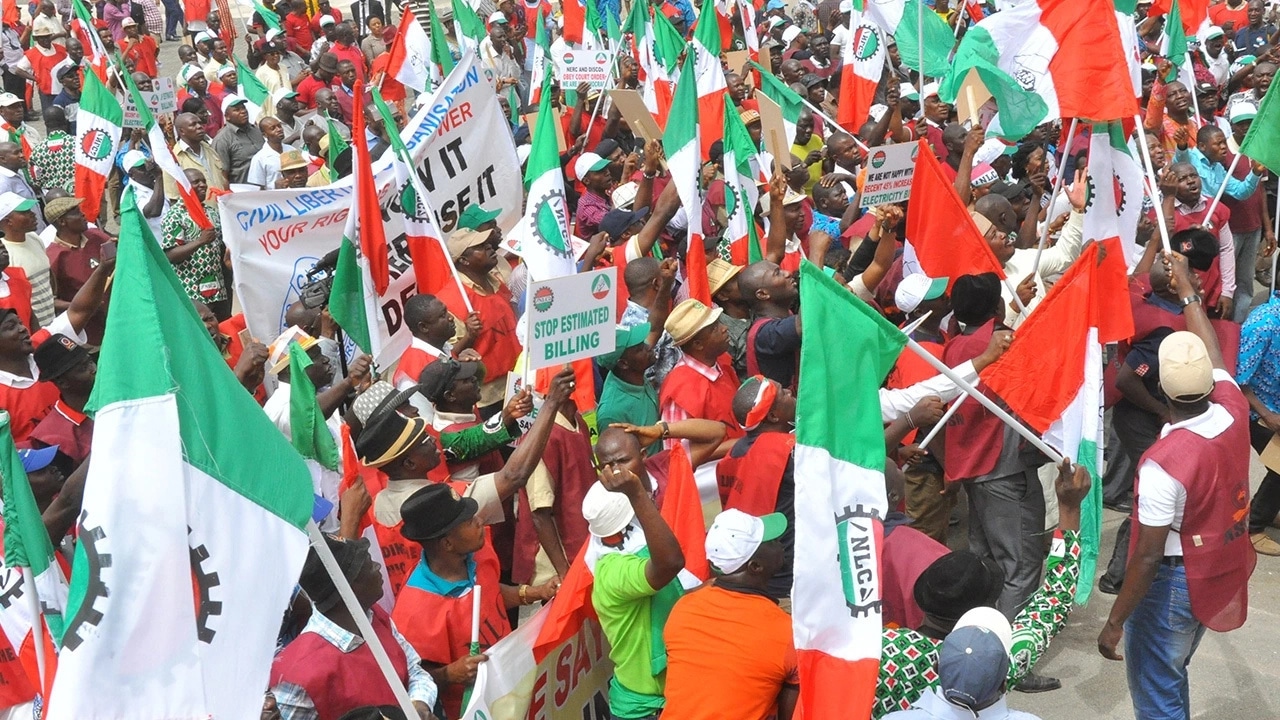
The Nigeria Labour Congress (NLC) and the Trade Union Congress (TUC) jointly sounded the alarm on Friday during the 2026 May Day celebration held in Abuja, Nigeria’s capital, where they called for urgent government intervention to reverse the trend.
The event, themed “Insecurity, Poverty: Bane of Decent Work,” provided a platform for labour leaders to spotlight the daily struggles of Nigerian workers, many of whom continue to sustain critical sectors of the economy despite difficult conditions.
Speaking at the gathering, NLC President, Joe Ajaero, described workers as the backbone of Nigeria’s productivity across key sectors including healthcare, education, aviation, energy, and public service. He stressed that the prevailing security and economic challenges are eroding the foundation of decent work in the country.
According to him, the twin crises of insecurity and poverty have become major barriers to job creation, workers’ welfare, and sustainable economic growth.
“This year’s theme reflects the harsh realities confronting Nigerian workers, where insecurity and poverty continue to erode decent work,” Ajaero said.
He noted that the absence of safety and economic stability has weakened employment opportunities, undermined workers’ rights, and strained social protection systems nationwide.
Referencing Sustainable Development Goal 8, which promotes decent work and economic growth, Ajaero emphasised that no meaningful progress can be achieved without ensuring security, stability, and inclusive development.
He further warned that the rising poverty rate is pushing millions of Nigerians into hardship daily, worsening already fragile living conditions. The proliferation of Internally Displaced Persons (IDP) camps, he added, revealing the scale of the humanitarian crisis confronting vulnerable populations.
Ajaero also decried weak institutions and poor governance, which he said continue to exacerbate citizens’ suffering, urging authorities to prioritise the safety of lives and property.
“No meaningful economic development can occur without security,” he stated.
In his remarks, TUC President, Festus Osifo, echoed similar concerns, noting that insecurity remains a major deterrent to foreign investment and economic expansion.
He called for stronger institutional independence, urging both the legislature and judiciary to uphold transparency and accountability in governance.
Osifo warned that thousands of Nigerians are being pushed into poverty daily, further deepening social and economic instability across the country.
He stressed the need for urgent and coordinated action to tackle insecurity, poverty, and declining living standards, while reaffirming labour’s commitment to protecting workers’ rights.
According to him, unity among stakeholders remains essential to driving national progress and ensuring a more secure and prosperous future for Nigerian workers.