




















By Enyichukwu Enemanna
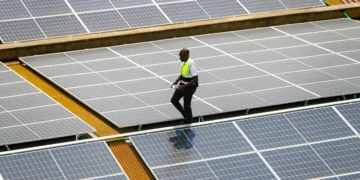
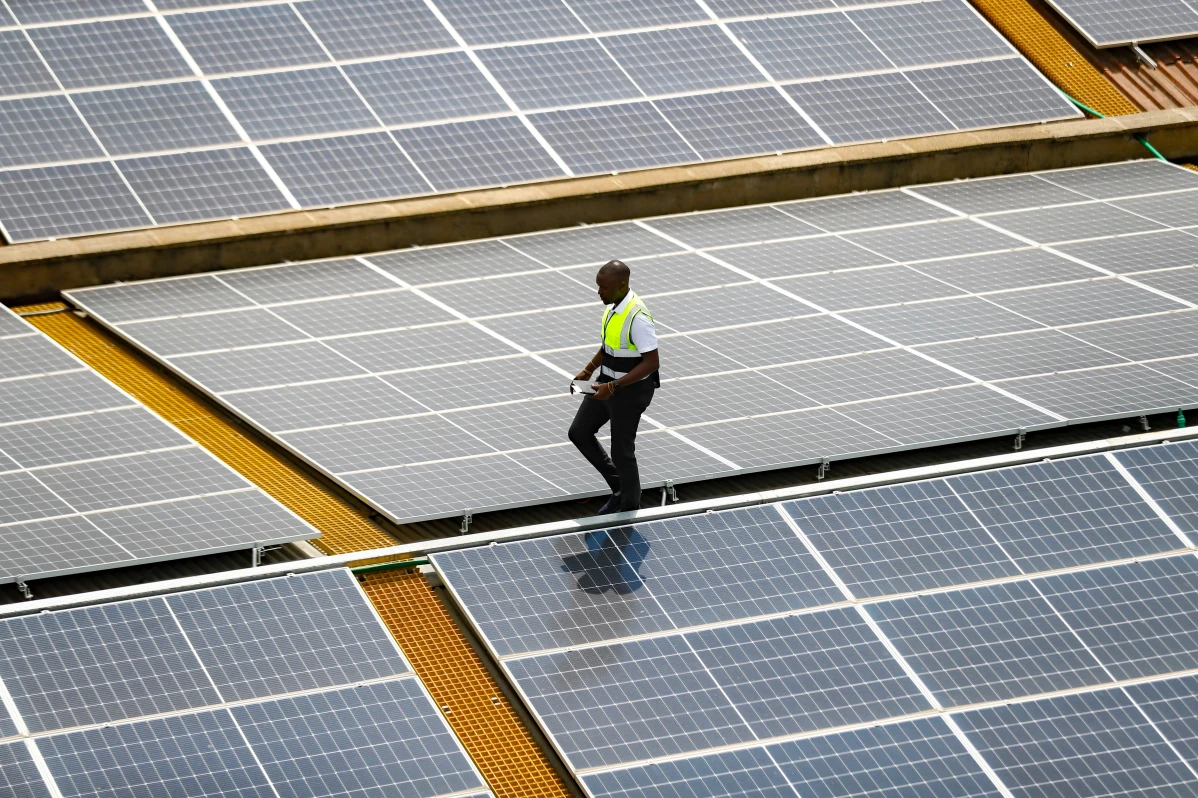
An industry report released late last month has indicated that Africa is taking a lead as world’s fastest-growing solar market in 2025, defying a global slowdown, emerging as the centre where renewable energy is concentrated.
While South Africa has historically dominated solar imports in Africa, and at one point accounted for roughly half of all panels shipped to the continent, Nigeria has displaced Egypt, becoming Africa’s second-largest importer, as solar energy and battery storage provide a practical and affordable alternative to diesel generators and unreliable grid power.
The report released by the Africa Solar Industry Association says the continent’s solar installed capacity expanded 17% in 2025, boosted by imports of Chinese-made solar panels. Global solar power capacity rose 23% in 2025 to 618 GW, slowing from a 44% increase in 2024.
According to the report, South Africa’s share has slightly slipped as demand surged elsewhere, with at least 20 African nations setting new annual records for solar imports last year. It says 25 countries imported a total of at least 100 megawatts of capacity.
“Chinese companies are the main drivers in Africa’s green transition,” said Cynthia Angweya-Muhati, acting CEO of the Kenya Renewable Energy Association. “They are aggressively investing in and building robust supply chains in Africa green energy ecosystem.”
Some of that capacity has yet to be rolled out. Africa has only 23.4 gigawatts peak (GWp) of working solar capacity even though nearly 64 GWp of solar equipment has been shipped to the continent since 2017. A gigawatt peak represents 1 billion watts of maximum, optimum power output under ideal conditions.
“Africa’s growth is driven by changing policies and enabling conditions in a number of countries, “said John Van Zuylen, CEO of the Africa Solar Industry Association.
“Solar energy has moved beyond a handful of early adopters to become a broader continental priority,” he said recently on the sidelines of the Inter Solar Africa summit in Nairobi. “What we are seeing is not temporary. It is policies aligning with market dynamics.”
At least 23 African countries, including South Africa, Tunisia, Kenya, Chad and the Central African Republic, are now generating over 5% of their electricity from solar energy, the report said.
Prices have fallen both for solar panels and batteries, mostly from China, enabling households and businesses to rely on solar plus batteries for round-the-clock electricity, the report said.
Battery storage costs in Africa fell to $112 per kilowatt-hour in 2025 from an average of $144 per kilowatt-hour in 2023 as improved technology made storage systems more flexible and longer lasting.
The removal of subsidy on petrol in Nigeria in the past two years also has helped accelerate adoption of solar energy. The policy made premium motor spirit (pms) increasingly expensive, leaving businesses and households with the solar option.
In September, Nigeria announced plans for a 1 GW solar panel factory, the largest in West Africa. Similar facilities are under construction in Egypt, South Africa and Ethiopia.