





By Emmanuel Nduka
The government of Senegal has imposed a ban on non-essential foreign trips by public officials as part of sweeping measures to curb rising expenditure triggered by soaring global oil prices.
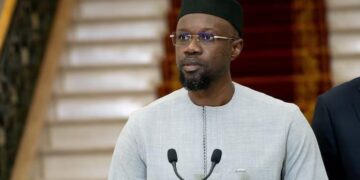
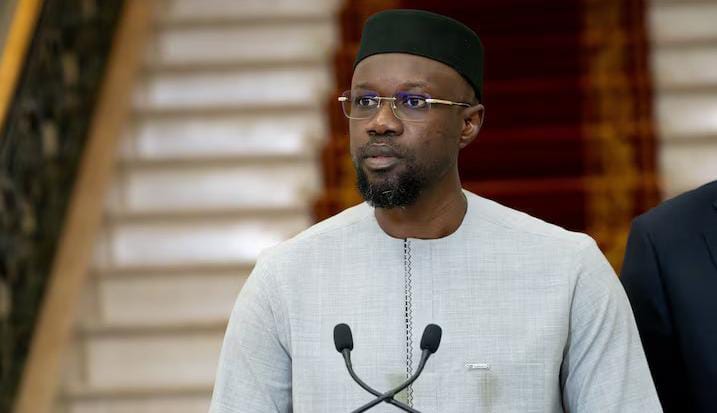
Prime Minister Ousmane Sonko announced the decision during a rally in Mbour on Friday, warning that the country faces “extremely difficult” economic conditions due to the sharp increase in crude oil prices linked to the ongoing Iran war.
According to him, the government is tightening its spending framework, with immediate effect on official travel.
“I have taken a number of drastic measures to restrict everything related to government spending, including the cancellation of all non-essential missions abroad,” Sonko said. “No minister in my government will leave the country unless it is for an essential assignment tied to our current priorities,” he added.
The prime minister also revealed that he has personally suspended his planned trips to France, Spain, and Niger, underscoring the administration’s commitment to austerity.
Oil prices have climbed to about $115 per barrel, nearly double the $62 benchmark contained in Senegal’s national budget, placing additional strain on the West African nation’s finances.
Like many countries in the region, Senegal relies heavily on imported petroleum products.
Sonko acknowledged the economic pressure on citizens but said the government would remain transparent about the realities of the global crisis. He noted that the aim was not to alarm the public, particularly young people, but to give them a clear understanding of the challenges ahead.
Further cost-cutting measures are expected in the coming days, with the country’s mines ministry set to unveil additional steps to manage expenditure.
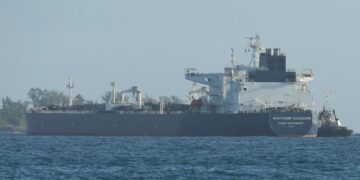
The situation has been worsened by disruptions to global oil supply routes, particularly the closure of the Strait of Hormuz, a critical passage through which roughly 20 per cent of the world’s oil and gas is transported.