





















By Enyichukwu Enemanna
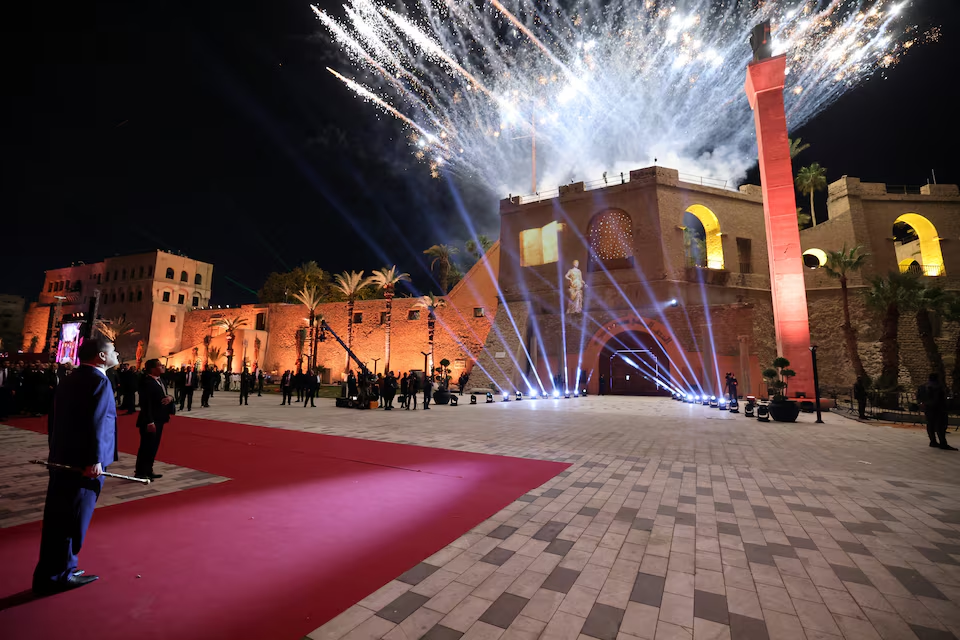
For the first time since the 2011 revolt that toppled Libya’s former leader, Muammar Gaddafi, the country’s national museum, the Red Castle, has reopened in Tripoli, allowing the public access to some of the finest historical national treasures
Formerly known as As-Saraya Al-Hamra, the Libya’s largest museum was closed in 2011 during a NATO-backed uprising against longtime ruler Gaddafi, who appeared on the castle’s ramparts to deliver a fiery speech.
Renovations works were flagged off in March 2023 by the Tripoli-based Government of National Unity (GNU), which came to power in 2021 in a U.N.-backed political process.
“The reopening of the National Museum is not just a cultural moment but a live testimony that Libya is building its institutions,” GNU Prime Minister Abdulhamid al-Dbiebah said at a ceremony to mark the reopening on Friday.
Built in the 1980s, the museum’s 10,000 square metres of gallery space features mosaics and murals, sculptures, coins, and artefacts dating back to prehistoric times and stretching through Libya’s Roman, Greek and Islamic periods.
The collection also includes millennia-old mummies from the ancient settlements of Uan Muhuggiag in Libya’s deep south, and Jaghbub near its eastern border with Egypt.
“The current programme focuses on enabling schools to visit the museum during this period, until it is officially opened to the public at the beginning of the year,” museum director Fatima Abdullah Ahmed told reporters.
Ahead of the reopening, chairman of the board of directors of the antiquities department Mohamed Farj Shakshoki said Libya has since recovered 21 artefacts smuggled out of the country after Gaddafi’s fall, notably from France, Switzerland, and the United States.
Shakshoki said that talks are ongoing to recover more than two dozen artefacts from Spain and others from Austria.
In 2022, Libya received nine artefacts, including funerary stone heads, urns and pottery from the U.S.