





















By Enyichukwu Enemanna
African airlines are grappling with rising operational costs as jet fuel prices surge following the ongoing U.S.–Israeli conflict with Iran, which has disrupted global energy supply chains.
The conflict has significantly affected fuel shipments through the Strait of Hormuz, a key global oil transit route. The disruption has caused shortages and price volatility, forcing airlines to manage rapidly increasing costs while passengers face potential fare increases.
According to financial and commodities analytics firm S&P Global, nearly 70% of jet fuel and kerosene imports to Africa are shipped through the Strait of Hormuz, making the continent particularly vulnerable to supply disruptions.
Strait of Hormuz Disruption Hits Global Fuel Supply
Since the conflict began on February 28, shipping of fuel from Middle Eastern refineries through the Strait of Hormuz has slowed dramatically. The disruption has removed roughly one-fifth of global oil and liquefied natural gas supplies from the international market.
The shortage has pushed jet fuel prices to record highs across several regions.
Jet fuel prices in north-west Europe have surged to nearly $239 per barrel since the conflict began, according to data from LSEG. Meanwhile, prices in Asia are approaching $200 per barrel, close to recent record levels.
African Airlines Struggle With Volatile Jet Fuel Prices
African airlines are particularly affected because fuel accounts for a significantly larger portion of their operating costs.
According to the African Airlines Association, jet fuel represents between 30% and over 40% of operating costs for African carriers, compared with the global average of 20% to 25%.
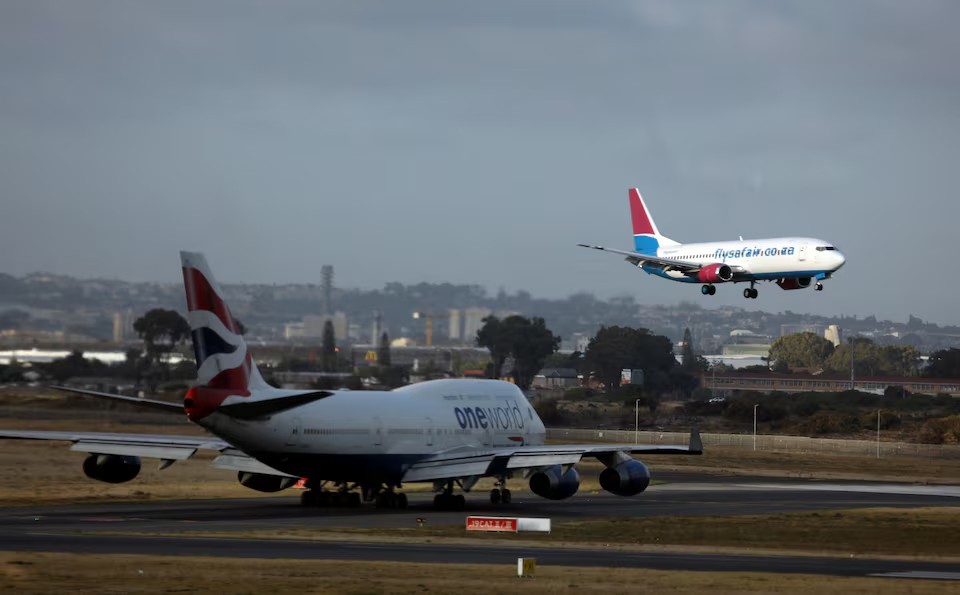
FlySafair, a South African low-cost airline, said jet fuel typically makes up 50% to 55% of its direct operating costs.
The airline estimates that current prices add approximately R35,000 ($2,071) per flight hour for each of its 37 Boeing 737-800 aircraft, which can collectively operate up to 165 flights daily.
FlySafair also reported that jet fuel prices at coastal airports in South Africa surged by 70% within a single week.
Industry Leaders Warn Of Price Instability
Industry operators say unpredictable price fluctuations are making it increasingly difficult to plan flight operations.
“You fly to airports across Southern, West and East Africa and you negotiate prices on arrival,” said Jannie de Klerk, executive director of flight operations at South Africa’s National Airways Corporation.
“By the time you get there, the price has changed. If the war continues, availability will become a problem. The instability of jet fuel prices makes it very challenging to move around.”
De Klerk recalled a recent return flight from Lanseria to Cape Town via St Helena to pick up a medical emergency patient, where jet fuel prices increased by six rand per litre within just 10 hours.
“We now have to be very careful how far ahead we quote for jobs. Otherwise, we could quote too low and lose money instead of making money,” he said.
Fuel Stocks Shrinking Across Africa
At the same time, jet fuel reserves across Africa are declining, raising concerns about potential shortages.
The Board of Airline Representatives of South Africa said domestic jet fuel stocks in the country could last only three to four weeks.
Kenya reportedly had around 50 days of jet fuel reserves as of March 10, while the Zambian government said the country has approximately 10 days of jet fuel stocks.
Authorities in Zambia have warned industry players against panic buying and fuel hoarding.
Airlines Monitor Fuel Situation Closely
Airlink Chief Executive de Villiers Engelbrecht said the airline currently has enough fuel to cover operations through March and April, but uncertainty remains beyond that period.
“Shock price adjustments tend to be more immediate, while stock shortages are more predictable and, in theory, easier to manage,” Engelbrecht said.