







By Enyichukwu Enemanna
Zambia’s government on Monday said it opposed a U.S. attempt to tie a health funding to access to critical minerals, speaking out for the first time about why negotiations with Washington over two proposed agreements were not successful.
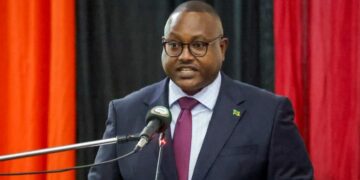
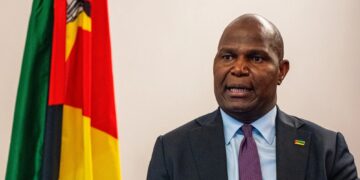
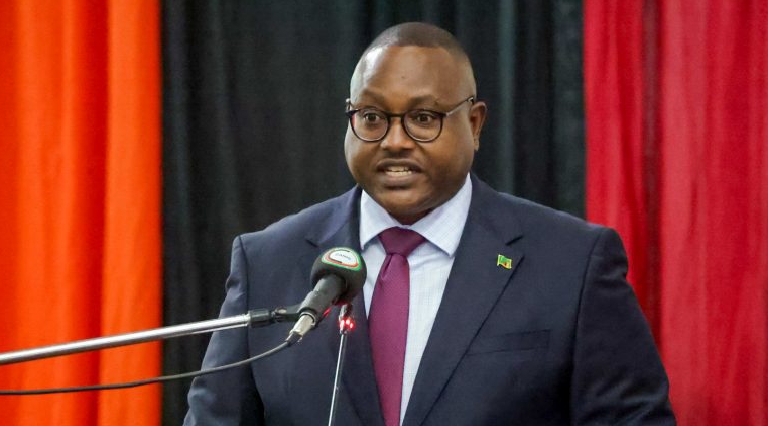
Zambia’s Foreign Minister Mulambo Haimbe said the United States had offered support of up to $2 billion over the next five years in a proposed health agreement, but expressed concern over some of the terms, including ones bordering around data sharing, which he said would violate Zambians’ right to privacy.
Separately, he said Zambia had objections to the content of a proposed critical minerals agreement. The health deal covers HIV, malaria, maternal and child health and disease preparedness.
“A further concern… is the coupling of the proposed agreements and frameworks to one another such that the conclusion of the critical minerals agreement is made conditional to the conclusion of the Health MOU,” Haimbe said in a statement.
“The Zambian Government has been consistent that the agreements must be considered separately on their respective merits,” he added.
No specific information was disclosed on what health data the U.S. was asking for.
Regarding the critical minerals agreement, he said Zambia was reluctant to accept the terms due to an insistence on preferential treatment for U.S. companies.
The U.S. State Department in response said that it does not disclose details of bilateral negotiations.
Health advocates had warned that the proposed health deal linked the money to mining access and brought data-sharing risks.
Zambia’s government previously said only that parts of it were not aligned with the country’s interests.
A number of African nations have signed memorandums of understanding which represent the Trump administration’s new approach to foreign aid. Ghana and Zimbabwe have rejected them over data sharing clause, contained in the agreement.
The outgoing U.S. ambassador to Zambia, Michael Gonzales had criticised the Southern African nation over its failure to finalise the memorandum of understanding (MOU), saying it had left funding continuing on an ad hoc basis, without a coherent implementation plan.
Gonzales rejected what he called “disgusting and patently false” allegations that Washington was threatening to withhold life-saving healthcare support “unless we get critical minerals.”