










By Emmanuel Nduka Obisue
As the Economic Community of West African States (ECOWAS) pushes ahead with plans to launch its long-awaited single currency, the eco, in July 2027, Guinea has become the first member state to formally announce it will not be joining the initial rollout.
Instead, the West African nation says it will retain its national currency, the Guinean franc, arguing that adopting the eco at this stage would not be in its economic interest.
The announcement has sparked fresh debate over the viability of the regional monetary union and whether all ECOWAS member states are equally prepared to surrender control of their national currencies.
Why is Guinea opting out?
The Guinean government’s decision is rooted in concerns about the country’s economic realities.
Although Guinea is one of Africa’s richest countries in mineral resources, boasting vast reserves of bauxite, gold and iron ore, its economy remains heavily dependent on raw material exports while relying significantly on imports for food, machinery and manufactured goods.
Analysts argue that joining a monetary union without first strengthening domestic production could weaken Guinea’s competitiveness, limit its ability to respond to economic shocks and expose the country to external vulnerabilities.
By keeping the Guinean franc, authorities believe they can continue to control exchange rate policies and monetary decisions tailored specifically to the country’s economic needs.
Trade patterns also influenced the decision
Another major reason behind Guinea’s stance is where it does business.
Unlike several ECOWAS countries whose trade is largely concentrated within West Africa, about 80 per cent of Guinea’s exports are destined for Asian markets, making Asia, not the ECOWAS region, its primary trading partner.
Economists say adopting a regional currency tied largely to neighbouring West African economies may offer Guinea fewer direct trade benefits while reducing its flexibility to manage exchange rates with its biggest export destinations.
They also warn that giving up monetary independence before diversifying the economy could reduce the government’s ability to respond quickly during periods of economic uncertainty.
What is the eco?
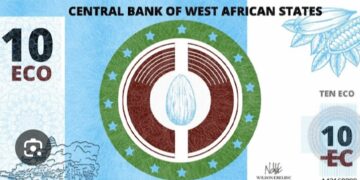
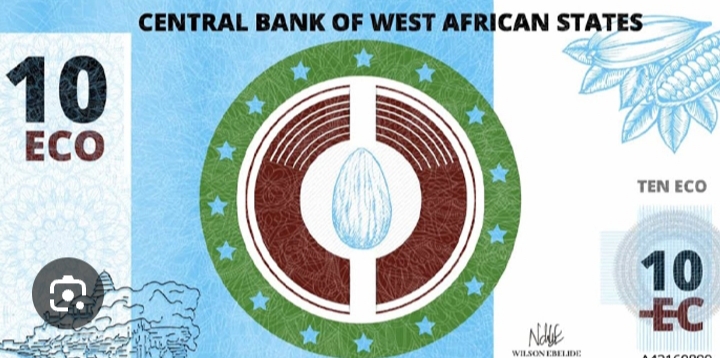
The eco is a proposed common currency designed to replace national currencies across participating ECOWAS countries.
The project has been under discussion for more than two decades and is intended to deepen regional integration by eliminating exchange-rate risks, lowering transaction costs, encouraging cross-border investment and boosting trade among member states.
If successfully implemented, businesses and travellers would be able to conduct transactions across participating countries without worrying about currency conversions.
However, the project has suffered repeated delays due to economic disparities among member states and challenges in meeting agreed fiscal and monetary benchmarks.
Why not every country can join immediately
Recognising that many member states are not yet economically aligned, ECOWAS recently adopted a phased implementation strategy.
Only countries that satisfy agreed convergence criteria, including targets on inflation, public debt, fiscal discipline and monetary stability, will participate in the first phase of the eco’s launch in July 2027.
Countries that fail to meet those benchmarks will be allowed to join later after achieving the required standards.
Why Guinea’s decision matters
Guinea’s announcement is significant because it is the first explicit decision by an ECOWAS member to opt out of the planned launch.
The move underscores the difficult balancing act facing West African leaders as they pursue deeper regional integration while accommodating the diverse economic conditions of member states.
It also raises fresh questions about how many countries will ultimately qualify for the first phase of the eco and whether the common currency can achieve its objectives if several economies remain outside the union.
What’s next?
ECOWAS leaders are expected to meet again in December to resolve key outstanding issues surrounding the monetary union.
Among the matters expected to be discussed are the final list of countries eligible for the first phase of the eco, the governance structure of the proposed West African Central Bank and the rules that will guide decision-making under the new monetary system.
For now, Guinea has made its position clear: until its economy is better positioned to benefit from a common currency, it believes retaining the Guinean franc offers greater economic flexibility than joining the eco at launch.
Whether other ECOWAS member states will adopt a similar position remains one of the biggest questions hanging over the bloc’s most ambitious economic integration project.