





• Latest
  • Trending
  • All
  • Politics
  • Economy
  • Security
  • Education
  • Sports
  • Health
  • Entertainment
  • Legal
  • Technology and Science
  • Opinion
  • Columns
  • Exposé
  • World
  • Lifestyle
North Korean Leader Instructs Military To Be Ready For War

A Nuclear-Armed North Korea As A Metaphor For The ‘Safe State’

4 months ago
UN Deputy Secretary General Visits AfDB Headquarters

UN Deputy Secretary General Visits AfDB Headquarters

1 day ago
Affordable HIV Prevention Jab Reaches Africa, Raises Hope

Affordable HIV Prevention Jab Reaches Africa, Raises Hope

1 day ago
Trump Orders US Exit From 66 UN Bodies, International Agencies

Trump Imposes New Tariffs On China, EU, 12 Others

2 days ago
Liberia Signs $5.6bn Infrastructure Deal To Triple Power Output

Liberia Signs $5.6bn Infrastructure Deal To Triple Power Output

2 days ago
Nigeria: 9 In 10 Believe Women Can Lead, But Structural Barriers Persist

UN Report: 47,000 Women, Girls Killed By Partners, Relatives In 2025

2 days ago
Saturday, November 28, 2026
  • Make a Donation
  • Photo Speaks
  • Videos
  • You-Report
  • Whistleblower
  • Advertise
  • HT Events
  • HT Management
  • About HT
  • Contact
Heritage Times
No Result
View All Result
Translate |
  • Login
  • Politics
    South Africa: Ramaphosa Deploys 2,200 Troops To Fight Crime In 5 Provinces

    South Africa: Ramaphosa Wins Legal Battle To Nullify Impeachment Report

    Zambia: Opposition Charged With Attempt To Overthrow Government

    Zambia: Opposition Charged With Attempt To Overthrow Government

    Nigeria: Tinubu’s Aso Rock Interviewer Linked To $4.5m Deal With US Lobbying Firm

    Nigeria: Tinubu’s Aso Rock Interviewer Linked To $4.5m Deal With US Lobbying Firm

    South Sudan To Resume Oil Production After Pipeline Destruction

    South Sudan Shifts Election To February 2027

    DRC: President Tshisekedi Meets US Lawmaker To Discuss Mineral Deals

    DRC: President Tshisekedi Signs Controversial Bill Extending Tenure Limit

    Nigerians Fear Vote-Buying, Violence Ahead Of Elections – Afrobarometer Survey

    Nigerians Fear Vote-Buying, Violence Ahead Of Elections – Afrobarometer Survey

    Israel’s President Picks Eisenkot Over Netanyahu To Form Next Government

    Israel’s President Picks Eisenkot Over Netanyahu To Form Next Government

    Ethiopia Gives 6 Sudanese Diplomats 48-Hour Ultimatum To Leave As Relations Deteriorate

    Ethiopia Gives 6 Sudanese Diplomats 48-Hour Ultimatum To Leave As Relations Deteriorate

    Zimbabwe: Mnangagwa Emerges Presidential Candidate In Election Due For 2030

    Zimbabwe: Mnangagwa Emerges Presidential Candidate In Election Due For 2030

  • Economy
    UN Deputy Secretary General Visits AfDB Headquarters

    UN Deputy Secretary General Visits AfDB Headquarters

    Trump Orders US Exit From 66 UN Bodies, International Agencies

    Trump Imposes New Tariffs On China, EU, 12 Others

    Liberia Signs $5.6bn Infrastructure Deal To Triple Power Output

    Liberia Signs $5.6bn Infrastructure Deal To Triple Power Output

    Jensen Huang Resigns As Nvidia CEO Amid Alleged Affairs Scandal

    Nvidia Reinstates Jensen Huang As CEO After Dramatic U-Turn, Shares Surge Over 30%

    Nigeria: NGX Group Acquires 10% Stake In Kenya’s Nairobi Securities Exchange

    Jensen Huang Resigns As Nvidia CEO Amid Alleged Affairs Scandal

    Jensen Huang Resigns As Nvidia CEO Amid Alleged Affairs Scandal

    Ghana Unveils Redesigned Cedi Banknotes Featuring National Heritage

    Ghana Unveils Redesigned Cedi Banknotes Featuring National Heritage

    Eswatini Gives Foreign Businesses 12-Month Ultimatum To Quit

    Eswatini Gives Foreign Businesses 12-Month Ultimatum To Quit

    Uganda And Ethiopia Are Challenging India’s Coffee Dominance

    Ethiopia’s Earnings From Coffee Hits $878m

  • Security
  • Education
  • Sports
  • Health
  • Metro
  • Entertainment
  • Lifestyle
  • Legal
  • Tech & Science
  • Opinion
  • Exposé
  • Exclusive Videos
  • Niger Delta
  • World
No Result
View All Result
First with the News
Home Columns

A Nuclear-Armed North Korea As A Metaphor For The ‘Safe State’

August 12, 2026
in Columns, Featured, Top Stories
0 0
0
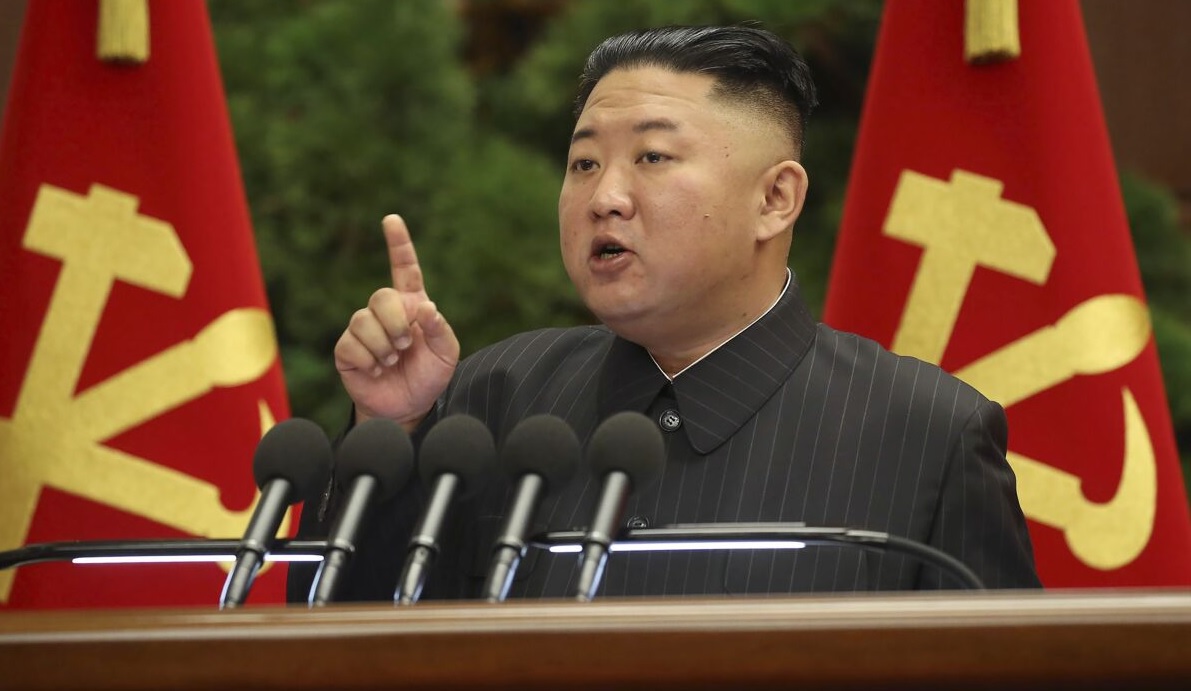
North Korea's leader, Kim Jong Un.

North Korea's leader, Kim Jong Un.

1
VIEWS
Share on FacebookShare on TwitterShare on Whatsapp

By Cally Ikpe, Ph.D

Throughout history, nations have competed for influence, territory, resources and strategic advantage. Whether driven by pride, ideology, religion, economics or national interest, the tendency of stronger states to dominate weaker ones has remained a recurring feature of international politics. Consequently, states perceived as vulnerable have often found themselves subjected to conquest, coercion or external interference.

Relatedreading

UN Deputy Secretary General Visits AfDB Headquarters

Affordable HIV Prevention Jab Reaches Africa, Raises Hope

History offers numerous examples. The trans-Atlantic slave trade, spanning roughly the sixteenth to the nineteenth century, flourished largely because European powers possessed overwhelming military and naval superiority.

Likewise, the colonization of Africa during the late nineteenth century was facilitated by technological and military advantages. In many instances, colonised peoples had to wage prolonged armed struggles before attaining independence in the mid-twentieth century.

The First World War, 1914–1918, and the Second World War, 1939–1945, demonstrated the catastrophic consequences of unchecked military rivalry. The latter culminated in the atomic bombings of Hiroshima and Nagasaki on 6 and 9 August 1945, introducing humanity to the destructive power of nuclear weapons.

In response, the international community sought to prevent the spread of such weapons. The Treaty on the Non-Proliferation of nuclear weapons, NPT, which entered into force in 1970, aimed to limit the number of nuclear-armed States while encouraging disarmament and the peaceful use of nuclear energy. Yet the pursuit of nuclear capability did not cease.

Several countries either developed or were believed to have developed nuclear arsenals outside the framework envisioned by the treaty.

North Korea’s Nuclear Path

North Korea, the Democratic People’s Republic of Korea, or DPRK, withdrew from the NPT in January 2003 and pursued nuclear capability despite rigorous international sanctions, trade embargoes, and diplomatic pressure led by the United States. North Korea perhaps, presents the most striking example. Despite severe economic sanctions, diplomatic isolation and sustained international pressure, it conducted its first nuclear test on 9 October 2006 and has since carried out multiple additional tests while steadily advancing its missile programme.

Successive governments in Pyongyang have portrayed these capabilities not as instruments of conquest but as the ultimate guarantee of regime survival. From North Korea’s perspective, nuclear weapons provide insurance against foreign intervention. Its leadership has repeatedly pointed to examples where governments without credible strategic deterrence were overthrown through external military action or coercion.

Incidents such as the US military invasion of Panama in December 1989 to oust Manuel Noriega, the 2003 invasion of Iraq following the removal of Saddam Hussein, and the 2011 NATO intervention in Libya after Muammar Gaddafi voluntarily surrendered his nuclear programme in 2003 and the 3 January 2026 capture of Venezuelan President Nicolas Maduro and his wife Cila Flores – now facing trial in New York City on the charges of narco-terrorism and cocaine trafficking – are often cited in strategic discussion as reinforcing this perception.

Whether or not one agrees with Pyongyang’s reasoning, the outcome is difficult to ignore. Since becoming a de facto nuclear-armed State, no major power has seriously contemplated a conventional military invasion of North Korea. Instead, diplomatic negotiations, sanctions and deterrence have become the principal tools of engagement.

Today, there are nine countries widely regarded as possessing nuclear weapons: the United States, Russia, the United Kingdom, France, China, India, Pakistan, North Korea and Israel, although Israel maintains a policy of deliberate ambiguity regarding its arsenal. Collectively, these states possess an estimated 12,000 nuclear warheads, with the overwhelming majority held by the United States and Russia. The strategic logic underpinning this reality is known as deterrence. It rests on the assumption that no rational actor will initiate an attack if doing so guarantees devastating retaliation.

During the Cold War, this principle evolved into what came to be known as Mutually Assured Destruction (MAD), arguably helping to prevent direct war between the world’s two largest nuclear powers. This deterrence debate also shapes current international tensions surrounding Iran’s nuclear programme.

The United States, Israel and several European governments argue that preventing Iran from acquiring nuclear weapons is essential to regional and global security. Iranian leaders, on the other hand, insist that their nuclear activities are peaceful while maintaining that the country has a legitimate right to develop advanced nuclear technology.

Regardless of one’s position, the controversy underscores a broader strategic question: States that feel threatened often become more determined, not less, to acquire credible deterrent capabilities. The paradox is therefore unmistakable. The international community understandably seeks to prevent nuclear proliferation because a world with many nuclear-armed States could be significantly more dangerous.

Yet history also suggests that countries possessing credible nuclear deterrents are generally less likely to become targets of direct military invasion by other major powers.This raises an uncomfortable but important question: does the possession of overwhelming retaliatory capability contribute to national security, or does it merely increase humanity’s collective risk?

Regional Instability And The Iranian Analogy

The dynamic between sovereign vulnerability and nuclear pursuit is evident in the Middle-East. The persistent geopolitical pressure and economic sanctions applied to Iran by the US and regional adversaries stem directly from efforts to prevent Tehran from achieving nuclear breakout status.

For non-nuclear States involved in asymmetric conflicts, conventional capabilities restrict them to targeting regional military infrastructure or proxy positions rather than the sovereign territory of global superpowers. Observing how nuclear status shields North Korea from military interventions reinforces the incentive for other pressured states to view nuclear capability as their ultimate defensive shield.

North Korea’s experience does not provide a definitive answer. It does, however, illustrate a strategic reality that policymakers cannot ignore. Whether admired or condemned, its nuclear arsenal has fundamentally altered how other nations engage with it. In that sense, a nuclear-armed North Korea has become a metaphor for a State whose sovereignty is reinforced not by international goodwill, but by the perceived certainty that any existential attack would carry unacceptable consequences.

That conclusion is deeply unsettling. Yet it reflects one of the central paradoxes of modern international relations: while nuclear weapons undoubtedly increase the dangers confronting humanity, they have also, in certain circumstances, served as powerful instruments of deterrence.

North Korea’s experience neither justifies nuclear proliferation nor settles the moral debate surrounding these weapons. It does, however, compel policymakers and scholars alike to confront an uncomfortable strategic reality – that in an international system where power remains the ultimate currency, the capacity to inflict unacceptable retaliation can profoundly shape the security and survival of States.

 

ShareTweetSend
Previous Post

South Africa: Despite Anti-Migrant Sentiments, Unemployment Rate Hits 33.6% In Q2

Next Post

Kenya To Discuss Fresh Borrowing Programme As IMF Team Visits Soon

Related Posts

UN Deputy Secretary General Visits AfDB Headquarters

UN Deputy Secretary General Visits AfDB Headquarters

November 26, 2026
Affordable HIV Prevention Jab Reaches Africa, Raises Hope

Affordable HIV Prevention Jab Reaches Africa, Raises Hope

November 26, 2026

Trump Imposes New Tariffs On China, EU, 12 Others

Liberia Signs $5.6bn Infrastructure Deal To Triple Power Output

UN Report: 47,000 Women, Girls Killed By Partners, Relatives In 2025

South Africa: Ramaphosa Wins Legal Battle To Nullify Impeachment Report

Next Post
William Ruto

Kenya To Discuss Fresh Borrowing Programme As IMF Team Visits Soon

AfriHeritage Magazine Issue 3 - Cover 1 AfriHeritage Magazine Issue 3 - Cover 1 AfriHeritage Magazine Issue 3 - Cover 1
AfriHeritage Magazine 2026 AfriHeritage Magazine 2026 AfriHeritage Magazine 2026

Updates

  • Trending
  • Comments
  • Latest
Iheanacho Helps Leicester City Win First Community Shield Title In 50 years

Iheanacho Helps Leicester City Win First Community Shield Title In 50 years

August 7, 2021
Kenya: Former Chief Justice Arrested For Protesting With Citizens

S/A: Anti-Migrant Protesters Demand Ban On Nigerians

November 19, 2026
Euro Qualifier: France Record Historic Victory In 14-Goal Thrashing Of Gibraltar 

Euro Qualifier: France Record Historic Victory In 14-Goal Thrashing Of Gibraltar 

November 19, 2023
Missing NAF Aircraft: CAS Relocates To Maiduguri

Nigeria: Military Airstrikes Kill 37 Terrorists In Fresh North-East Offensive

November 23, 2026
Trump Orders US Exit From 66 UN Bodies, International Agencies

Trump Imposes New Tariffs On China, EU, 12 Others

0
Liberia Signs $5.6bn Infrastructure Deal To Triple Power Output

Liberia Signs $5.6bn Infrastructure Deal To Triple Power Output

0
Nigeria: 9 In 10 Believe Women Can Lead, But Structural Barriers Persist

UN Report: 47,000 Women, Girls Killed By Partners, Relatives In 2025

0
South Africa: Ramaphosa Deploys 2,200 Troops To Fight Crime In 5 Provinces

South Africa: Ramaphosa Wins Legal Battle To Nullify Impeachment Report

0
UN Deputy Secretary General Visits AfDB Headquarters

UN Deputy Secretary General Visits AfDB Headquarters

November 26, 2026
Affordable HIV Prevention Jab Reaches Africa, Raises Hope

Affordable HIV Prevention Jab Reaches Africa, Raises Hope

November 26, 2026
Trump Orders US Exit From 66 UN Bodies, International Agencies

Trump Imposes New Tariffs On China, EU, 12 Others

November 25, 2026
Liberia Signs $5.6bn Infrastructure Deal To Triple Power Output

Liberia Signs $5.6bn Infrastructure Deal To Triple Power Output

November 25, 2026

Most Recent

UN Deputy Secretary General Visits AfDB Headquarters

November 26, 2026

Affordable HIV Prevention Jab Reaches Africa, Raises Hope

November 26, 2026

Trump Imposes New Tariffs On China, EU, 12 Others

November 25, 2026

Liberia Signs $5.6bn Infrastructure Deal To Triple Power Output

November 25, 2026

UN Report: 47,000 Women, Girls Killed By Partners, Relatives In 2025

November 25, 2026

South Africa: Ramaphosa Wins Legal Battle To Nullify Impeachment Report

November 25, 2026

Nigeria: Moses Siasia Urges Bayelsa Creatives To Think Globally

November 25, 2026

ECOWAS Targets 2027 Launch Of ECO Single Currency, Pushes Monetary Reforms

November 24, 2026

About

Heritage Times HT stands as a beacon of pan-African journalism, dedicated to amplyfing the rich tapestry of voices and narratives across the continent. With unwavering commitment, we illuminate the evocative essence of Africa, offering a fresh perspective that captivates our global audience.

Featured

A Nuclear-Armed North Korea As A Metaphor For The ‘Safe State’

One Year of Transformative Stewardship: Walson-Jack’s Innovative Impact on Nigeria’s Civil Service

Africa’s Largest Tech Event, MWC25 Kigali, Returns With Focus On Innovation, Policy

Connect

Connect with us on social media and receive timely updates on the go.

Get Updates

  • About
  • HT Management
  • Privacy Policy

© 2025 Heritage Times (HT) Media.

Welcome Back!

Login to your account below

Forgotten Password?

Retrieve your password

Please enter your username or email address to reset your password.

Log In
No Result
View All Result
  • Welcome
  • Politics
  • Economy
  • Security
  • Exposé
  • Education
  • Sports
  • Health
  • Entertainment
  • Legal
  • Technology and Science
  • Columns
    • Opinion
  • World
  • __________________
  • Make a Donation
  • Photo Speaks
  • Videos
  • You-Report
  • Whistleblower
  • Advertise
  • HT Events
  • HT Management
  • About HT
  • Contact us

© 2025 Heritage Times (HT) Media.