















By Enyichukwu Enemanna
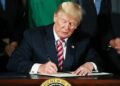
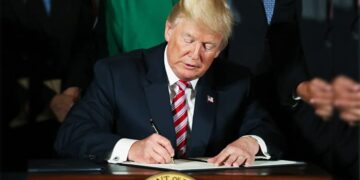
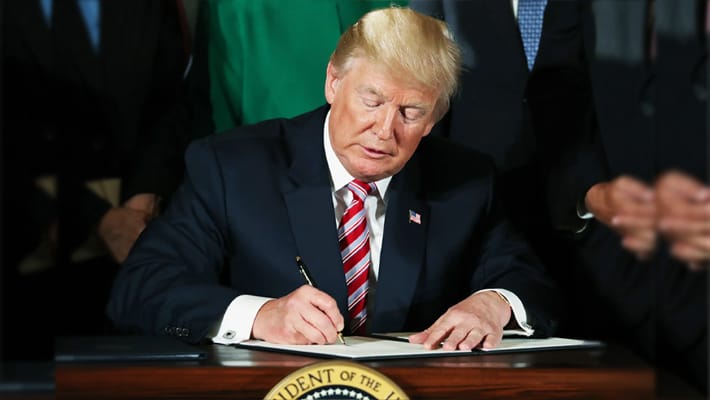
US President, Donald Trump has announced a fresh raft of tariffs as Washington pushes ahead with its signature trade policy under his administration.
The new taxes charged on imports to America are set to affects many of the country’s biggest trading partners, including China, the European Union and 12 other jurisdictions.
The move follows the White House’s investigation into the trade practices of other countries in March after the US Supreme Court ruled Trump’s previously announced Liberation Day tariffs were illegal.
China is facing the highest rate of up to 40%, followed by Vietnam at up to 35% and then others facing either 20% or 25%.
The new duties are not expected to take effect until next year.
Tariffs are taxes levied on imported goods. The amount is usually calculated as a percentage of the good’s value and paid to the government by businesses importing the products from abroad.
Some of these rates will be effectively reduced because of caps on tariffs Trump has agreed to. Individual countries also face different levies.
The proposed tariffs will affect China, the European Union, Singapore, Switzerland, Indonesia, Malaysia, Cambodia, Thailand, Korea, Vietnam, Taiwan, Bangladesh, Japan, and India.
US Trade Representative Jamieson Greer said the latest tariffs issued would “level the playing field for American workers and chart a new, more sustainable course for the world economy”.
He claimed that many of America’s trading partners had “for decades” adopted industrial strategies which included “targeting manufacturing, wage and labor suppression” as well as “other market distorting practices that tilt the trade balance in their favor while eroding America’s manufacturing base”.
Economists have however warned tariffs can fuel inflation and push prices up for consumers if businesses pass on higher costs, as well as dampen global trade.
Trump has repeatedly threatened or imposed tariffs during his second term, arguing they will boost US manufacturing and create jobs.
Trump is also seeking to cut the US trade deficit – the gap between the value of goods it buys from other countries and those it sells to them.