




















By Emmanuel Nduka
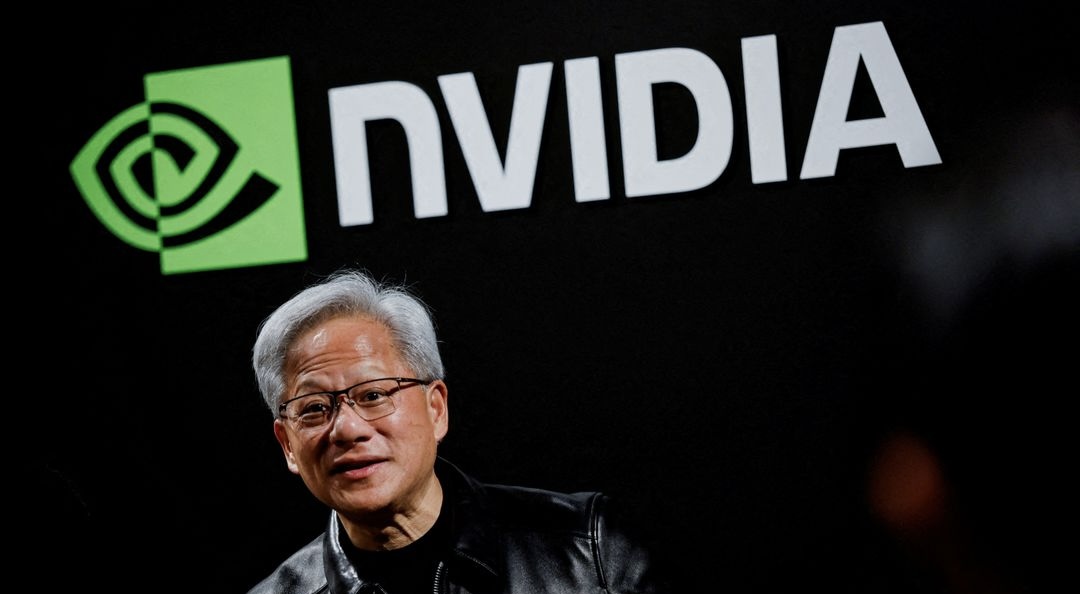
Jensen Huang, co-founder and Chief Executive Officer of American technology giant Nvidia, has resigned from his position following mounting controversy surrounding allegations of extramarital relationships, including one involving a woman suspected of having links to Chinese intelligence.
Nvidia’s Board of Directors announced Huang’s departure on Thursday, November 12, 2026, confirming that his resignation as president, chief executive officer and member of the company’s board takes immediate effect.
The development comes days after the company announced an independent investigation into reports that Huang had allegedly been targeted by a foreign intelligence operation involving a Chinese businesswoman identified as Alice Huang, who has no known family relationship with the Nvidia chief.
The controversy intensified following additional media reports alleging that Huang had another extramarital relationship with a senior female executive at Nvidia, further increasing pressure on the company’s leadership.
However, the company did not explicitly link Huang’s resignation to the allegations in its official announcement, instead acknowledging his contributions to the organisation and the wider technology industry.
Following his departure, Nvidia’s Executive Vice President and Chief Financial Officer, Colette Kress, has been appointed interim chief executive officer while the board begins the search for a substantive replacement.
Kress, who joined the company in September 2013, will retain her position as chief financial officer alongside her new responsibilities. The board said it would consider both internal and external candidates in appointing a permanent successor.
Harvey C. Jones, a longstanding member of Nvidia’s board who joined in 1993, the year the company was established, has also been appointed chairman of the board, becoming the company’s first-ever board chair.
In a statement, Kress expressed her commitment to sustaining the company’s achievements and maintaining its leadership in artificial intelligence and accelerated computing.
“NVIDIA’s strength has always come from its people, and together with our leadership team, I am committed to building on the extraordinary foundation Jensen created over the last 33 years,” she said.
She added that the company would continue advancing its technological capabilities while maintaining its commitment to customers, partners, developers and shareholders.
Huang’s departure brings an abrupt end to more than three decades of leadership at the company he co-founded in 1993 alongside Chris Malachowsky and Curtis Priem.
Under his leadership, Nvidia evolved from a graphics processing technology company primarily serving the computer gaming industry into one of the world’s most valuable technology corporations, with its specialised chips becoming indispensable to the development and deployment of artificial intelligence systems.
Its graphics processing units (GPUs) power some of the world’s most sophisticated AI models and data centres, making the company a critical player in the global race for artificial intelligence dominance.
Nvidia’s influence has extended across the technology ecosystem, with major companies, including Microsoft, Google and OpenAI, relying on its computing infrastructure to develop and operate advanced AI systems.
The company, which has a market valuation exceeding $4 trillion, has consequently become one of the most strategically important players in the global technology industry.
Huang’s resignation has already unsettled investors, with Nvidia shares falling sharply in early trading on Thursday amid concerns about the implications of his departure for the company’s leadership, business strategy and position in the rapidly expanding AI market.
Analysts have expressed concerns that replacing Huang could prove challenging, given his central role in shaping Nvidia’s technological direction, business relationships and long-term expansion strategy.
His departure also comes at a particularly sensitive time for the semiconductor industry, as the United States and China intensify their competition over advanced computing technologies and access to high-performance AI chips.
Nvidia is expected to release its third-quarter fiscal 2027 financial results on November 17, an announcement investors will now be watching closely for indications of the company’s financial performance and strategic direction under its interim leadership.