








By Emmanuel Nduka
The Nigerian Defence Headquarters (DHQ) has dismissed reports of a rumored ceasefire agreement between the country’s government and Boko Haram terrorists, insisting that the Nigerian military has not entered into any truce with insurgents, bandits or other criminal groups operating across the country.
The military high command also reaffirmed its commitment to sustained counterterrorism operations, declaring that troops would continue to pursue terrorists, kidnappers and other armed groups threatening national security, despite growing speculation over alleged backchannel negotiations with insurgents.
The clarification comes amid controversy surrounding reports that the Nigerian government allegedly entered into a secret ceasefire agreement with a faction of Boko Haram led by Ibrahim Bakura Doro, also known as Bakura. The reported arrangement was said to have contributed to a relative reduction in attacks in parts of Borno State for approximately three months.
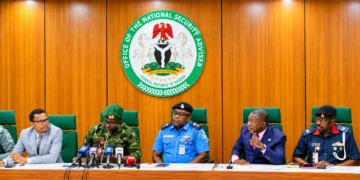
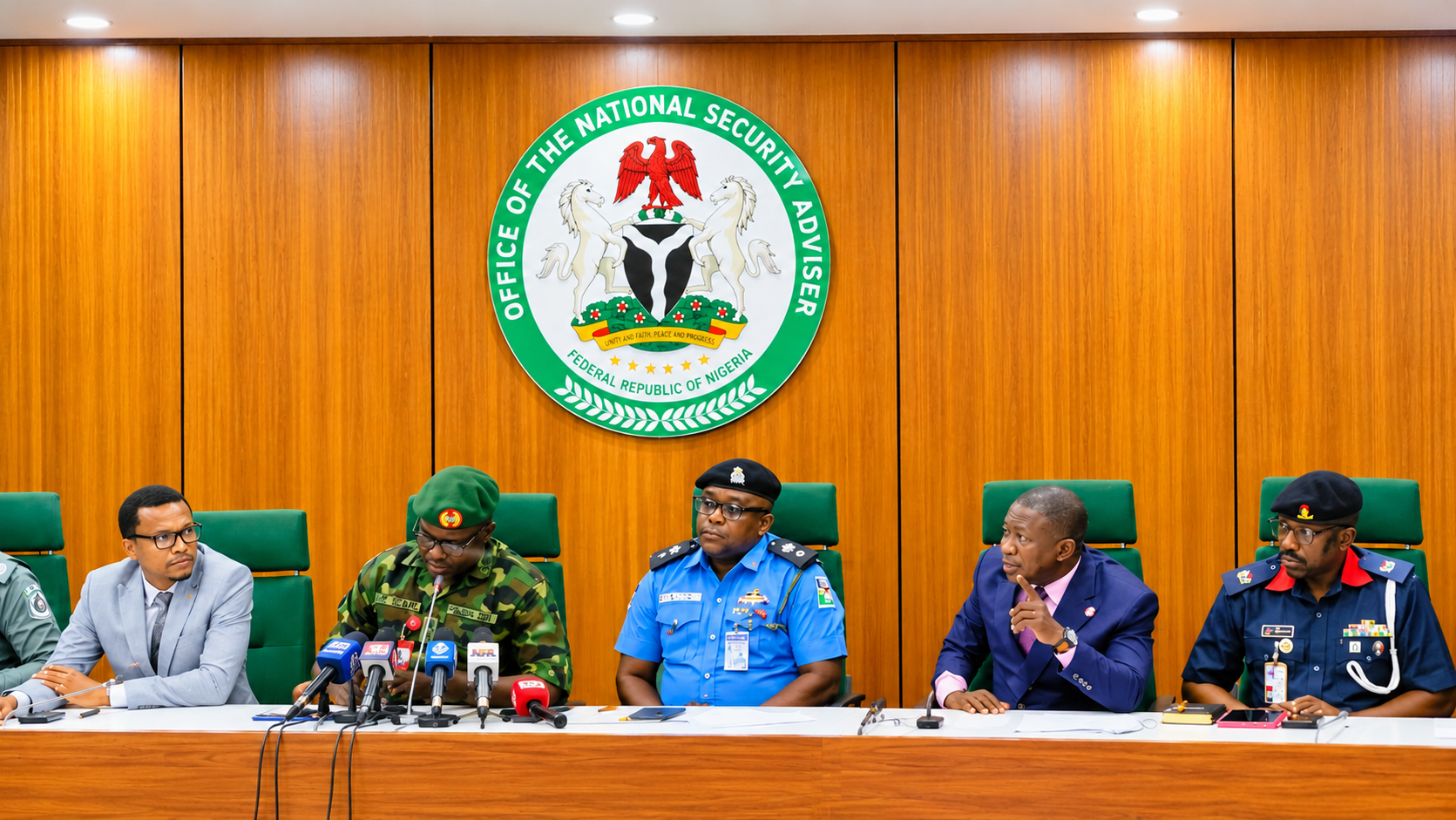
Speaking during a joint security briefing at the Office of the National Security Adviser in Abuja, the Director of Defence Information, Major General Samaila Uba, categorically dismissed the suggestion that the military had suspended hostilities against Boko Haram or any other armed group.
“On the issue of whether there is a ceasefire with Boko Haram, I want to make it clear that there is nothing like a ceasefire.
“Considering the terrorists neutralised, suspects arrested, victims rescued and other successes recorded across our operations, it is clear that we are not relenting.
“We will continue to sustain pressure on these criminal elements,” he said.
Uba explained that ongoing military operations were not limited to Boko Haram and the Islamic State West Africa Province (ISWAP), but extended to kidnappers, bandits and other armed criminal networks operating in different parts of the country.
“Our operations are not limited to Boko Haram or ISWAP. They also target kidnappers and other criminal elements who take up arms against innocent citizens,” he stated.
He warned that individuals involved in criminal activities threatening the lives and security of Nigerians would either be neutralised through lawful military operations or brought to justice.
On reports that some insurgents were relocating to areas where they had previously maintained little or no operational presence, the defence spokesman described the development as an indication of the impact of ongoing military operations, while cautioning that the Armed Forces were not underestimating the emerging security challenge.
According to him, the military was identifying locations where insurgents might have relocated to prevent them from establishing new operational bases.
“The fact that some of them are leaving their former locations is a testimony to the successes of our operations. However, I assure you that we are not taking the situation lightly,” he said.
Uba further disclosed that the military had intensified intelligence-driven efforts to track the movements of insurgents and prevent them from exploiting emerging security gaps.
He also cited the recent neutralisation of a high-level terrorist in a forest area as evidence that armed groups would not find safe havens anywhere in the country.
The Director of Defence Information said recent adjustments to the Armed Forces’ order of battle, including the establishment of new formations, battalions and units, were designed to strengthen military presence in vulnerable areas and close operational gaps.
Providing an update on military achievements, Uba disclosed that troops conducted 588 distinct security operations across the country in September and October.
He said the operations resulted in the neutralisation of 435 terrorists and bandits, including several high-profile commanders identified as Ali Mandara, Abba Gajiri, Habu Ikkima, Nakif Yana Faruk, Commander Gogore and Abdussamad Ohida.
According to him, troops also arrested 809 suspects, secured the voluntary surrender of 198 insurgents and rescued 717 kidnapped victims and other captives.
Among those rescued were 20 prospective members of the National Youth Service Corps (NYSC) in Owerri, Imo State, and 11 individuals in Danko-Wasagu, Kebbi State.
He added that troops recorded significant operational breakthroughs in Buni Yadi, Baga, Kukawa, Bittai and the Owo forest, disrupting insurgent networks and their operational capabilities.
The military also recovered 5,666 arms, ammunition, explosives and improvised explosive devices, alongside other logistical assets during the reporting period.
Inside The Controversial Boko Haram Ceasefire Allegation
The DHQ’s categorical denial comes against the backdrop of a September 7 investigative report by international humanitarian news organisation, The New Humanitarian, which alleged that the Federal Government had secretly negotiated a three-month ceasefire with a faction of Boko Haram led by Bakura Doro.
According to the investigation, the alleged arrangement followed negotiations that reportedly secured the release of approximately 360 civilians abducted from Ngoshe community in Gwoza Local Government Area of Borno State in March 2026.
The victims were reportedly kidnapped during an attack on a military formation in the community, triggering negotiations involving government representatives, intermediaries and members of the insurgent group.
Citing three individuals with contacts among senior Boko Haram members, The New Humanitarian reported that the ceasefire had been operational since June 2026 and was expected to be extended for another 40 days.
Two of the sources reportedly claimed that attacks had stopped in communities around Ngoshe following the arrangement.
However, the most explosive aspect of the investigation was the allegation that the negotiations leading to the release of the abducted civilians involved the payment of N5bn in ransom by the government.
The alleged payment, estimated at approximately $3.7m at the time, had also featured in earlier controversies surrounding the circumstances of the hostages’ release.
The Federal Government has consistently denied paying ransom to secure the release of the abducted civilians.
The controversy had earlier attracted attention following allegations by a Borno youth leader, Samaila Kaigama, who claimed during an interview on Channels Television that N5bn was paid to secure the freedom of the victims. The allegation was also linked to Senator Ali Ndume, who rejected the claims.
Kaigama was subsequently arrested by the Department of State Services (DSS) and arraigned over allegations relating to the extortion of families of kidnapping victims. The DSS said it had uncovered evidence linking him to the alleged activities.
In its investigation, The New Humanitarian acknowledged that it contacted government officials, the Defence Headquarters and the Nigerian Army for comments before publication but did not receive responses.
The report also suggested that the alleged arrangement did not extend to ISWAP, a rival faction of the insurgent movement that continues to operate in the Lake Chad region.
Boko Haram Also Denies Ceasefire
Interestingly, the alleged ceasefire generated another twist when a representative of Boko Haram subsequently denied that the group had entered into any agreement with the Nigerian government.
In a seven-minute video released in September, a man identified as Mallam Abdulrahman, reportedly speaking on behalf of Jama’atu Ahlis Sunna Lidda’awati wal-Jihad (JAS), the Boko Haram faction associated with Bakura Doro, dismissed the reports as false.
He described the reported agreement as a lie, insisting that the group had not entered into any negotiations or ceasefire arrangement with the government.
However, Premium Times, reporting on the development, quoted sources familiar with the alleged negotiations as suggesting that a smaller faction within the group might have agreed to the government’s request without obtaining approval from its wider leadership.
This raised further questions about the fragmented structure of the insurgent movement and the extent to which any individual faction or commander could commit the entire organisation to a ceasefire.
The allegations have also revived debate over Nigeria’s longstanding approach to negotiations with armed groups, particularly the distinction between military operations, humanitarian negotiations aimed at securing the release of hostages and broader political agreements with insurgent organisations.
While successive administrations have publicly maintained opposition to negotiating with terrorist groups or paying ransoms, Nigeria has previously explored non-kinetic approaches to addressing the insurgency, including dialogue, rehabilitation and reintegration programmes for former combatants.
For now, the Defence Headquarters’ latest position is an unequivocal rejection of any suggestion that military operations against Boko Haram, ISWAP and other armed groups have been suspended.
Nevertheless, the competing accounts surrounding the alleged Ngoshe negotiations, the reported three-month truce and the circumstances of the release of the 360 abducted civilians leave important questions about the government’s engagement with insurgent factions unanswered.