




By Emmanuel Nduka
Ghanaian President John Dramani Mahama has opened discussions with Russia over the establishment of the country’s first nuclear power station, as Accra seeks to expand its electricity generation capacity and secure reliable energy supplies to support its industrialization ambitions.
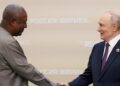
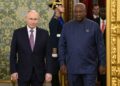
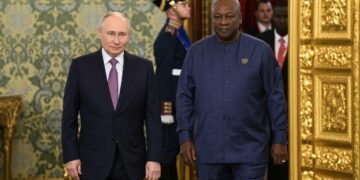
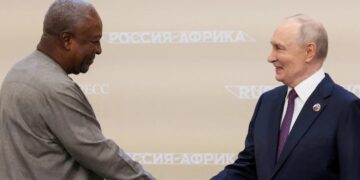
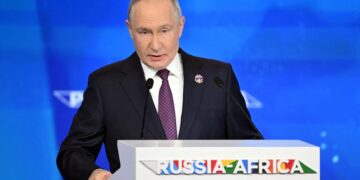
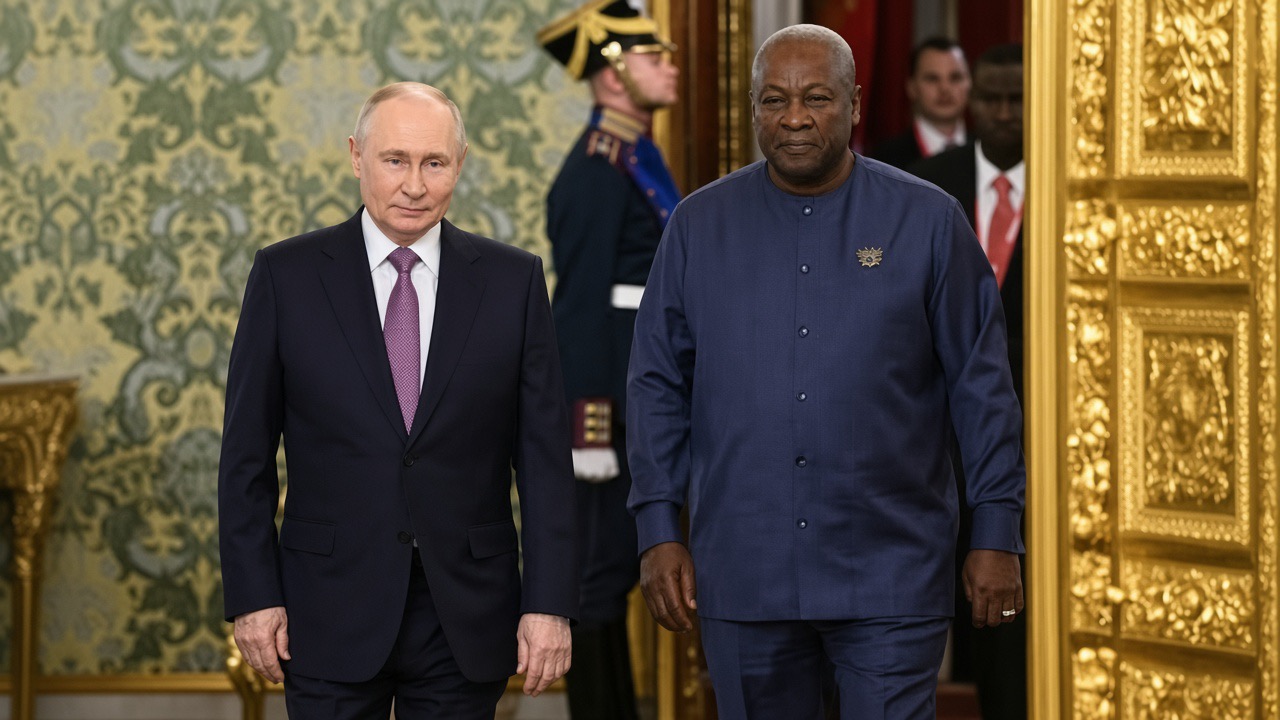
The proposed partnership with Russia’s state-owned nuclear energy corporation, Rosatom, was disclosed by Mahama at the Third Russia-Africa Summit in Moscow, where he met Russian President Vladimir Putin alongside other African leaders and officials to explore areas of economic and strategic cooperation.
“We have initiated discussions with Rosatom on the establishment of Ghana’s first nuclear power station,” Mahama announced, explaining that his administration was pursuing a diversified energy mix that combines renewable energy with the peaceful application of nuclear technology.
The Ghanaian leader identified inadequate electricity supply as one of the major obstacles to Africa’s economic transformation, arguing that industrialisation would remain difficult without dependable and affordable power.
He said Russia’s experience in nuclear technology presented an opportunity for mutually beneficial cooperation, particularly as Ghana seeks to move beyond the export of raw minerals towards domestic processing and manufacturing.
The nuclear power initiative is expected to support Ghana’s broader industrialisation agenda, including efforts to expand local processing of gold, bauxite and manganese. Mahama had earlier explained during an engagement with students at the Russian University of Transport in Moscow that the country’s ambition to create more value from its mineral resources would require substantially more electricity.
“My dream is to translate the macroeconomic success into jobs and opportunities for the young people. How we set the stage for the country to industrialise. That’s my dream,” he said.
Mahama also recalled the historical nuclear relationship between Ghana and Russia, dating back to 1964, when the Soviet Union supplied the West African country with a two-megawatt nuclear reactor intended for scientific research.
According to him, several Ghanaian nuclear scientists also received training in Russia to operate the facility, providing an existing foundation for renewed cooperation between the two countries in the nuclear energy sector.
The latest discussions come as Russia intensifies its nuclear energy engagement across Africa, with Rosatom pursuing major power plant projects in several countries seeking to diversify their electricity sources.
Rosatom Chief Executive Alexei Likhachev disclosed that the corporation was discussing large-scale nuclear power projects with Ghana, Uganda, Ethiopia and Egypt, while offering African countries nuclear facilities of different sizes and configurations to meet their respective energy requirements.
He also revealed that nine African countries had expressed considerable interest in floating nuclear power technology, with more detailed discussions taking place with Egypt, Tanzania, Togo and Namibia.
Africa’s nuclear power capacity remains limited, with South Africa’s Koeberg Nuclear Power Station currently the continent’s only operational commercial nuclear power facility. In Egypt, Russia is constructing the El Dabaa Nuclear Power Plant, a four-reactor facility, while discussions have also emerged over a possible expansion to six reactors.
For Ghana, however, the proposed Russian partnership remains at the discussion stage. No final construction agreement, project location, estimated cost, generating capacity or commencement date has been announced.
Beyond nuclear energy, Mahama used the Moscow summit to seek broader Russian investment in Ghana’s economy, identifying opportunities in agriculture, agro-processing, fertiliser production, pharmaceuticals, transport infrastructure and digital innovation.
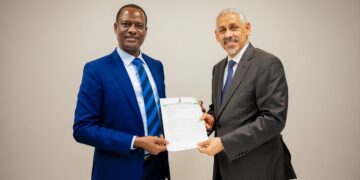
The growing economic engagement was further underscored by an agreement signed between Russian aluminium producer Rusal and Ghana’s Integrated Aluminium Development Corporation (GIADEC) to establish joint ventures for bauxite mining and alumina production.
The proposed project will focus on the Nyinahin bauxite deposit in Ghana’s Ashanti Region, which is estimated to contain more than 100 million tonnes of bauxite. Its first phase envisages mining up to five million tonnes annually, while a subsequent phase provides for the construction of an alumina refinery with an estimated annual production capacity of 1.2 million tonnes.
The agreements reflect Moscow’s broader efforts to deepen economic and strategic relations with African countries, particularly in energy, mining and industrial development.
Ghana, which recently announced plans to formally apply for membership of the BRICS economic bloc, is also seeking to expand its international partnerships and attract investments into strategic sectors as it pursues economic transformation.