



By Enyichukwu Enemanna
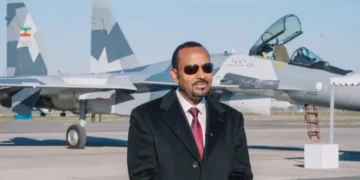
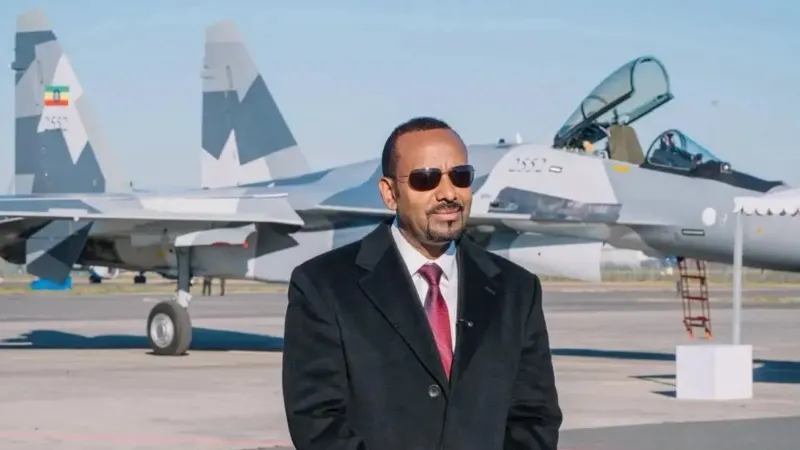
Ethiopia has taken delivery of 12 Su-35 fighter jets from Russia, as fighting intensified in the northern Tigray region, sharing boundary with Eritrea.
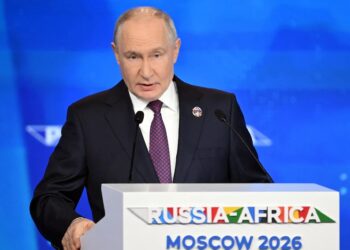
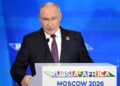
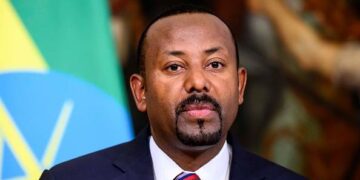
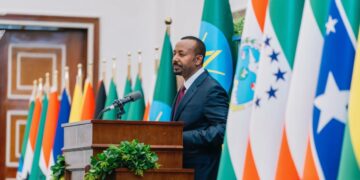
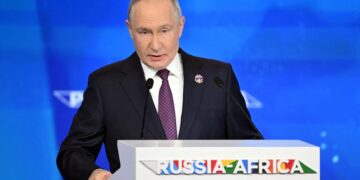
Prime Minister Abiy Ahmed, who is attending the Russia-Africa summit in Moscow, described the acquisition as a “milestone” that would boost Ethiopia’s defence capacity.
He said Ethiopia and Russia had agreed on the deal several years ago and the warplanes had come ahead of scheduled time. According to Abiy, Ethiopia had plans to acquire four S-400 air defence systems from Moscow.
The Ethiopian leader said the military hardware was essential to protect the country from external threats.
Abiy, who described Russian President Vladimir Putin, “as a close friend of Ethiopia”, said Ethiopia had now become the first country in sub‑Saharan Africa to own this kind of “advanced combat technology”.
“If we fail to build this capability, surviving as a country in our region will become difficult. Countries with sufficient preparation are not easily defied,” he said.
Russia and Ethiopia have signed several military agreements in recent years, including a deal in 2021 to train and improve technology for the military.
Abiy explained that Ethiopia signed an agreement with Russia several years ago to procure the Su‑35 jets and S‑400 systems, citing global air force trends and security threats facing the country.
The Su‑35, he noted, was equipped for both air‑to‑air and air‑to‑ground combat, with the ability to detect and neutralize incoming cruise missiles at distances of up to 200km (124 miles).
Abiy said in addition to the advanced capabilities of the aircraft from Russia, the use of drones was equally important in strengthening deterrence.
Ethiopia has extensively used military drones, including those sourced from Turkey and China, in recent conflicts.
“We need to build capacity not only with drones, but also with the fourth generation capabilities of the Su 30 and Su 35 [aircraft],” Abiy said.
The latest acquisition of military hardware from Russia comes after the current conflict in northern Tigray started last month between the government and the party that controls Tigray, the Tigray People’s Liberation Front (TPLF).
Both blame each other for violating a 2022 deal that ended a civil war.
Ethiopia accuses Eritrea of backing the TPLF, an allegation it denies.
Tensions between the two countries have also persisted as Abiy terms Ethiopia’s lack of direct sea access an “existential question”, which Eritrea views as a direct threat to its sovereignty.
Eritrea gained independence in 1993 after a decades-long war with Ethiopia, with the latter losing access to the sea.