







By Ebi Kesiena
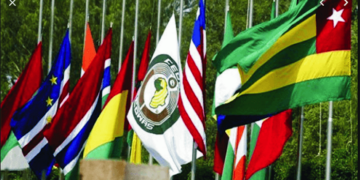
The Economic Community of West African States (ECOWAS) has reaffirmed its commitment to launching the ECO single currency in 2027, as part of efforts to deepen regional integration, boost cross-border trade and strengthen economic cooperation among member states.
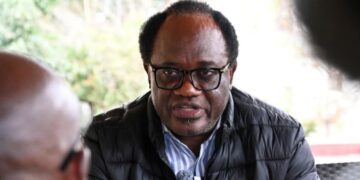
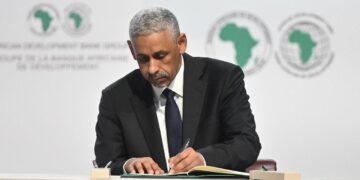
The ECOWAS Commission President, General Birame Diop, restated the commitment at the sixth meeting of the Ministerial Committee of the Presidential Task Force on the ECOWAS Single Currency Programme held in Abidjan, Côte d’Ivoire.
In a statement published on the ECOWAS Commission’s website, Diop said the meeting provided an opportunity to accelerate regional monetary integration and address outstanding institutional, technical and economic requirements for the phased introduction of the single currency.
The meeting was chaired by Côte d’Ivoire’s Minister of Economy, Finance and Budget, Mr Adama Coulibaly, who represented President Alassane Ouattara, Chairman of the Presidential Task Force.
Diop recalled that the vision of a monetary union, pursued by member states for more than four decades, had survived several economic crises, external shocks and implementation delays.
He stressed that the priority was no longer debating the desirability of monetary integration but mobilising the political commitment, institutional structures and technical capacity required to make the ECO a reality.
According to him, the proposed currency would serve as a strategic instrument for regional integration by facilitating cross-border transactions, attracting investment, strengthening regional value chains and promoting financial inclusion across a population of more than 400 million people.
He urged participants to approach the deliberations with openness and pragmatism, noting that future generations would judge the region by its ability to translate long-standing ambitions into tangible development outcomes.
Speaking on behalf of President Ouattara, Coulibaly said West Africa was approaching a critical point as the 2027 deadline for the phased introduction of the ECO draws closer.
He called for stronger coordination of macroeconomic policies and accelerated structural reforms, particularly amid geopolitical tensions, insecurity, rising interest rates and inflation.
The committee examined the 2027–2030 Agenda, which provides the strategic and operational framework for the gradual introduction of the currency.
Discussions also covered the proposed host country and governance structure for the future Central Bank of West Africa, the regional payment and settlement system, and the ECOWAS Solidarity and Stabilisation Fund.
The meeting forms part of preparations for the sixth session of the Presidential Task Force, which is focused on accelerating priority reforms and consolidating political consensus for the gradual, inclusive and effective implementation of the ECO by 2027.