










By Emmanuel Nduka
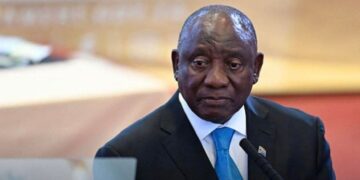
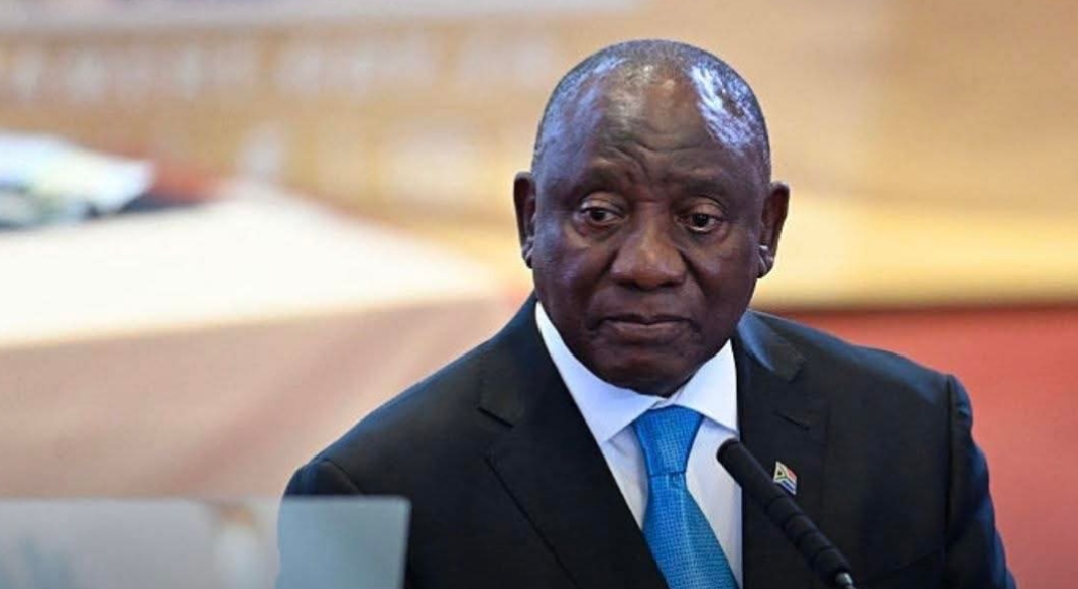
South African President Cyril Ramaphosa has secured a major legal victory after the Western Cape High Court overturned a parliamentary report that had threatened his presidency over the controversial theft of $580,000 from his private game farm.
The unanimous judgment, delivered on Wednesday, declared unlawful and set aside a 2022 report by an independent parliamentary panel which had concluded that Ramaphosa might have committed serious misconduct and violated constitutional provisions in connection with the incident.
The court also invalidated all actions subsequently taken by the National Assembly on the basis of the report, effectively removing the legal foundation for the renewed impeachment proceedings against the 74-year-old president.
Delivering the judgment, Judge President Nolwazi Mabindla-Boqwana said the panel had exceeded its lawful mandate, applied the wrong legal standards and committed several significant errors in its assessment of the allegations.
The court held that the panel fundamentally misunderstood its responsibilities and failed to properly distinguish between information presented before it and admissible evidence capable of establishing serious misconduct.
The ruling followed a legal challenge instituted by Ramaphosa after South Africa’s Constitutional Court ruled in May 2026 that Parliament had acted unconstitutionally when lawmakers voted against advancing the impeachment process in December 2022.
The controversy, popularly known as the Phala Phala scandal, originated from a burglary at Ramaphosa’s Phala Phala game farm in Limpopo province in February 2020, during which approximately $580,000 in foreign currency was stolen.
The money was reportedly concealed inside furniture at the property, raising questions about its origin, the circumstances surrounding its storage and whether the theft was properly reported to law enforcement authorities.
The scandal became public in June 2022 after former South African intelligence chief Arthur Fraser filed a criminal complaint accusing the president of concealing the incident from the police and tax authorities.
Fraser also alleged that Ramaphosa used members of his presidential security team to investigate the burglary and track down those responsible rather than following established law enforcement procedures.
Ramaphosa, however, consistently denied wrongdoing, maintaining that the money represented legitimate proceeds from the sale of 20 buffaloes to a Sudanese businessman. He also maintained that the incident was reported to the appropriate security authorities.
An independent panel subsequently led by former Chief Justice Sandile Ngcobo examined the allegations and concluded that there was sufficient preliminary evidence to warrant further investigation into possible constitutional violations and serious misconduct by the president.
Although Ramaphosa survived an initial parliamentary challenge in December 2022 after lawmakers rejected the panel’s report, the matter resurfaced following the Constitutional Court’s May 2026 intervention.
The latest ruling, however, represents a significant setback for political opponents seeking to remove him from office through the impeachment process.
Meanwhile, the chairperson of Parliament’s Impeachment Committee, Makashule Gana, said the committee would study the judgment and seek legal advice on its implications for the proceedings.
The committee had been expected to advance its work on the matter, but Wednesday’s decision has thrown the process into uncertainty.
Ramaphosa’s office said the president would study the judgment, stressing that he had exercised his constitutional right to seek judicial review of the parliamentary panel’s findings.
Despite the legal victory, the possibility of further political and legal challenges remains.
The African Transformation Movement, one of the political parties opposed to Ramaphosa in the case, criticised the judgment, with its parliamentary leader, Vuyolwethu Zungula, arguing that the decision reflected unequal application of the law. The party said it would consult its lawyers on a possible appeal.
The development is particularly significant for Ramaphosa, whose African National Congress (ANC) lost its parliamentary majority for the first time since the end of apartheid in the 2024 general election, forcing it to form a government of national unity with other political parties.
Under South Africa’s Constitution, removing a sitting president through impeachment requires the support of at least two-thirds of the National Assembly.
Although Ramaphosa’s presidential tenure is expected to run until 2029, the Phala Phala controversy had remained a major political vulnerability for his administration.
The court’s decision therefore provides considerable relief for the president, although it does not necessarily foreclose the possibility of fresh legal or parliamentary action founded on a different and lawful process.
Earlier this month, two individuals were convicted in connection with the theft at the Phala Phala farm.