








By Emmanuel Nduka
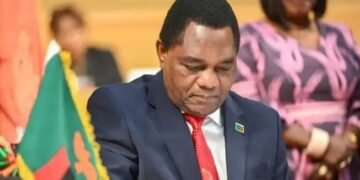
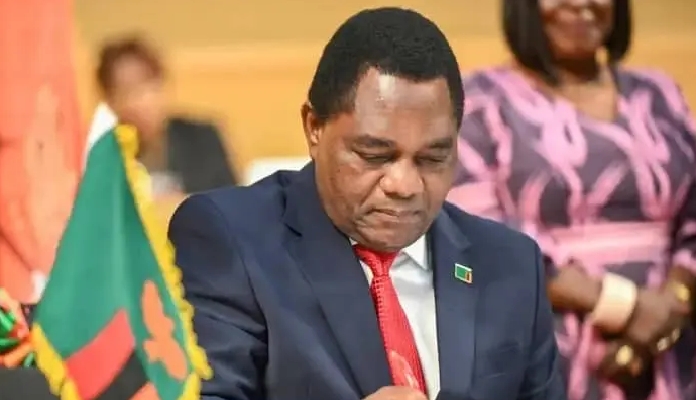
Zambian President Hakainde Hichilema has secured a second five-year term in office after winning the country’s presidential election with a commanding margin, setting the stage for a renewed push to tackle economic challenges, revive the mining sector and ease political tensions.
Official results announced by the Electoral Commission of Zambia showed Hichilema winning more than 2.9 million votes, representing approximately 61.4 per cent of ballots cast. His closest challenger, opposition candidate Brian Mundubile, secured about 38 per cent of the vote.
The victory enabled Hichilema to comfortably surpass Zambia’s constitutional requirement of obtaining more than 50 per cent plus one vote, eliminating the need for a runoff election and reaffirming public support for his administration.
Speaking after the declaration of results, supporters hailed the outcome as an endorsement of the economic reforms pursued during Hichilema’s first term, which focused heavily on debt restructuring, fiscal discipline and efforts to stabilize the national currency after years of economic strain.
However, analysts note that the president’s second term will be defined less by electoral success and more by his ability to translate macroeconomic gains into tangible improvements in the lives of ordinary Zambians.
Despite progress in restructuring the country’s debt burden and restoring investor confidence, many citizens continue to grapple with rising living costs, unemployment and widening economic inequality. Concerns over the affordability of basic goods and services featured prominently during the election campaign, with opposition parties accusing the government of failing to deliver sufficient relief to struggling households.
Another major priority for the administration will be Zambia’s copper industry, the backbone of the southern African nation’s economy and a critical source of government revenue and foreign exchange earnings. With global demand for copper expected to rise as countries accelerate the transition to clean energy technologies, Hichilema is expected to intensify efforts to attract investment, increase production and strengthen the sector’s contribution to economic growth.
The election, however, was not without controversy. Opposition figures raised concerns over alleged irregularities and claims of electoral fraud, allegations that cast a shadow over the vote and underscored persistent political divisions within the country.
While electoral authorities maintained that the process was credible and transparent, the disputes have heightened calls for political reconciliation and greater protection of democratic freedoms as Zambia enters a new political cycle.
Hichilema, who first came to power in 2021 after defeating former President Edgar Lungu, now faces the challenge of balancing economic reform with public expectations. His ability to reduce the cost of living, create jobs and foster national unity is expected to shape both his legacy and Zambia’s trajectory over the next five years.
With a strong electoral mandate behind him, attention is now shifting from the ballot box to governance as Zambians look to the president’s second term for solutions to the country’s most pressing economic and social concerns.