






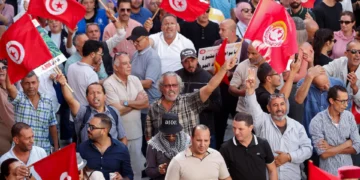







Tension erupted in South Africa on Thursday as anti-immigrant protesters took to the streets, demanding that the government impose a ban on Nigerians entering the country, amid renewed concerns over xenophobia and the safety of foreign nationals.
The protesters, who carried placards and chanted slogans during the demonstration, displayed messages including “Ban Nigerians From Our Country” and “South Africa For South Africans,” accusing Nigerians of taking employment opportunities, controlling local businesses and contributing to crime in their communities.
Some demonstrators who spoke to journalists insisted that the South African government must take immediate action to restrict the entry of Nigerians, arguing that their presence was creating economic and security challenges for citizens.
The protest comes amid longstanding tensions between Nigerians and sections of South African society, with Nigerians in the country repeatedly facing allegations of criminal activities, harassment, discrimination and violent attacks.
The development also comes at a sensitive time in diplomatic relations between both countries, following recent efforts by Nigeria’s High Commissioner to South Africa, Femi Fani-Kayode, and South African authorities to resolve disagreements and strengthen bilateral ties.
Fani-Kayode had on November 17 met with South Africa’s Director-General of International Relations and Cooperation, Zane Dangor, describing the engagement as cordial and constructive.
The meeting followed a diplomatic controversy surrounding the presentation of his credentials to President Cyril Ramaphosa and subsequent exchanges involving South African presidential spokesperson Vincent Magwenya.
Fani-Kayode said both sides discussed concerns affecting their relationship and expressed commitment to rebuilding cooperation and mutual respect.
Despite the diplomatic engagements, Thursday’s demonstration highlights continuing concerns over anti-immigrant sentiments and the treatment of Nigerians living in South Africa.
Many Nigerians operate legitimate businesses, including restaurants, supermarkets, salons and other small enterprises across Johannesburg, Pretoria and Cape Town.
At the time of filing this report, the South African government had yet to officially respond to the protesters’ demand, while the Nigerian High Commission in Pretoria had not issued a statement on the demonstration.