










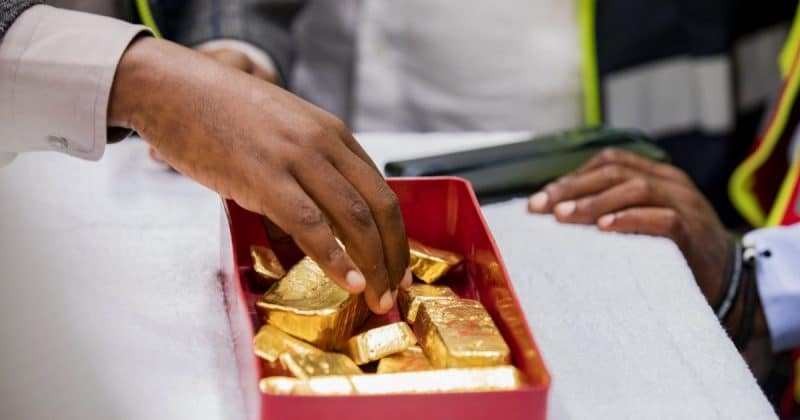
The United States has imposed sanctions on a major Rwandan gold refinery and two of its senior executives over allegations that they facilitated the smuggling of minerals from rebel-controlled areas in the eastern Democratic Republic of Congo (DRC).
The sanctions, announced on Friday, target Gasabo Gold Refinery, its chairman, Jean Malic Kalima, and its general manager, Bosco Kayobotsi. Washington accused the refinery of playing a central role in an illicit mineral trade linked to the M23 rebel group, which controls parts of eastern DRC rich in gold and coltan, a critical mineral used in the production of electronic devices.
According to the US Treasury Department, at least 60 kilograms of gold worth millions of dollars were smuggled from eastern DRC to the Gasabo Gold Refinery in early 2026. The US further alleged that the operation was overseen by Rwandan government officials and members of the country’s armed forces.
The latest action comes despite Rwanda’s repeated denial of supporting the M23 rebels, even as United Nations experts have presented evidence linking Kigali to the armed group. While the Rwandan government has yet to respond to the latest US sanctions, it has previously dismissed similar punitive measures as unfair and politically biased.
The United States also sanctioned three mining companies controlled by Kalima—Bugambira Mines, Wolfram Mining and Processing, and Rwinkwavu Mining Corporation, for their alleged involvement in the illicit mineral network.
The sanctioned individuals and companies have not publicly commented on the allegations.
Under the sanctions, any assets belonging to the designated entities and individuals under US jurisdiction will be frozen, while American citizens and businesses are prohibited from engaging in transactions with them.
US Treasury Secretary Scott Bessent said the measures underscore Washington’s commitment to disrupting illegal mineral trafficking and preventing armed groups from profiting from the conflict.
The sanctions follow a US-backed peace agreement signed in December 2025 by the presidents of Rwanda and the DRC. The accord was designed to curb decades of conflict in eastern Congo while promoting transparency in the region’s lucrative mining sector.
Analysts believe the Trump administration also sees the agreement as an opportunity to expand American investment in the region’s strategic minerals.
However, violence has persisted despite the peace deal. During a review summit held recently, officials from the DRC, Rwanda and the United States expressed deep concern over the worsening security situation, warning that renewed fighting threatens to undermine ongoing peace efforts.