










By Emmanuel Nduka
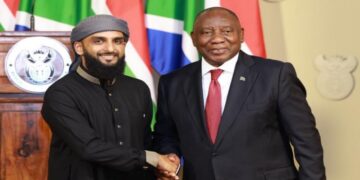
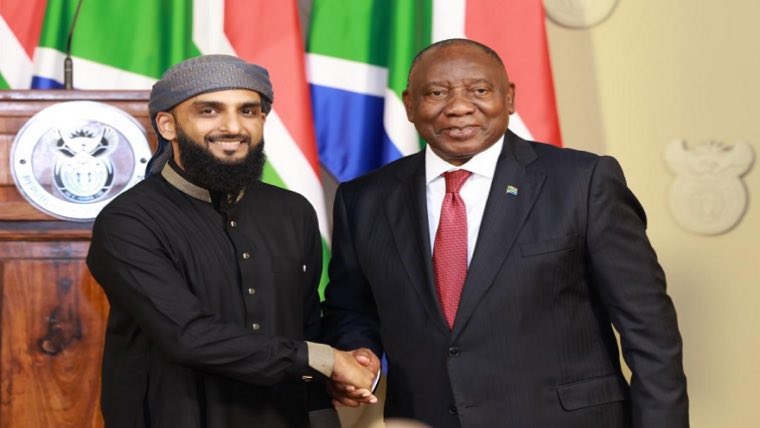
President Cyril Ramaphosa has officially appointed Yusuf Cassim, a senior politician of Indian heritage, as the nation’s new Deputy Minister of Higher Education, amid a wave of volatile anti-immigrant protests and rising xenophobic tensions sweeping the country.
The high-stakes appointment, confirmed by The Presidency of the Republic of South Africa, comes as part of a sudden national executive shake-up following programmatic negotiations within the Government of National Unity (GNU). Cassim’s promotion to the national executive has quickly been weaponized on social media by nationalist factions, who are using the broader context of local anti-foreigner sentiment to incorrectly label the born-and-bred Eastern Cape politician as a “foreigner”.
The appointment of the 36-year-old Cassim forms part of a broader, targeted cabinet adjustment executed under Section 93(1)(a) of the South African Constitution. Prompted by restructuring demands from the Democratic Alliance (DA), Ramaphosa’s executive changes also included moving DA leader John Steenhuisen to Deputy Minister of Trade and bringing controversial former minister Dina Pule back into the cabinet.
However, it is Cassim’s assignment to the higher education portfolio that has drawn unique scrutiny. Against a backdrop of ongoing grassroots protests targeting foreign nationals and undocumented immigrants in South Africa, right-wing internet groups and anti-immigrant accounts aggressively amplified false narratives regarding Cassim’s origins almost immediately after the announcement.
Despite digital campaigns seeking to paint him as an outsider, public records show that Cassim’s roots are deeply tied to South Africa. Born and raised in Uitenhage (Kariega) in the Eastern Cape, he is a fourth-generation South African of Indian descent.
Cassim first rose to prominence in local politics as the Student Representative Council (SRC) President at Nelson Mandela University in Gqeberha before transitioning to national politics, where he previously served as South Africa’s youngest Member of Parliament.
Political analysts suggest that using Cassim’s heritage to stoke anti-immigrant rhetoric highlights how easily legitimate public anxieties over immigration and local economic stagnation can be manipulated.
Stepping into his role at the Department of Higher Education and Training, Cassim faces an immediate uphill battle. The tertiary education sector remains plagued by systemic funding crises, student housing shortages, and ongoing demands for equitable access.
Defying the social media noise, Cassim maintained that his focus remains entirely on operational reform, stating that his primary goal is to advocate for underprivileged students and stabilize a critical government sector.