







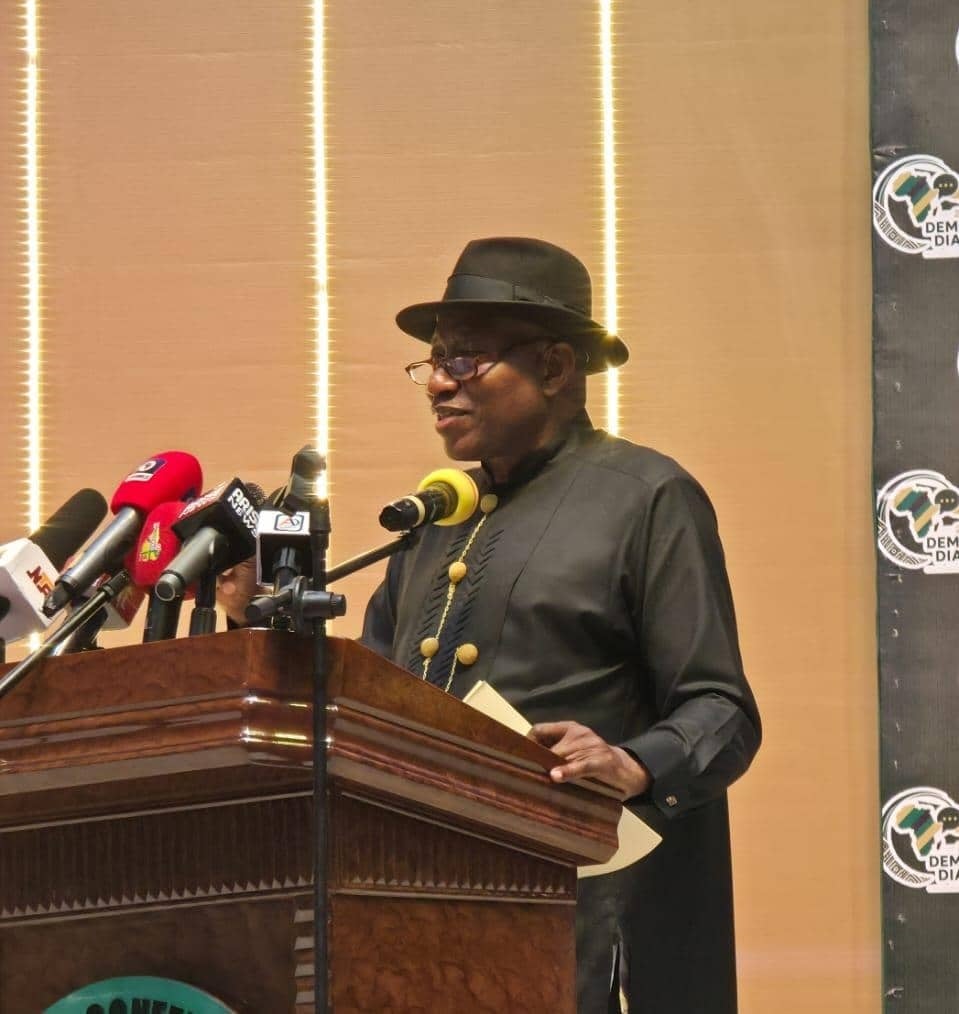
By Ebi Kesiena
African countries have been urged to develop democratic systems that reflect their unique histories, cultures and political realities while upholding justice, equality, human rights, accountability and credible elections.
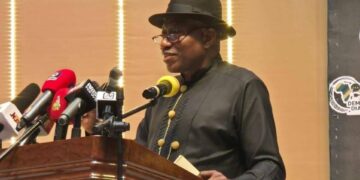
Former Nigerian President, Dr Goodluck Jonathan, made the call while delivering a vote of thanks at the 2026 GJF Democracy Dialogue, themed “Beyond Elections: Can Political Parties and Judiciary Save African Democracy?” at the Ahmadu Bello International Conference Centre in Bauchi on Tuesday.
Jonathan said African nations should critically reassess the democratic models they operate, stressing that no single system could be applied uniformly across the continent.
He cited Switzerland as a possible model for some African countries, particularly because its system prevents excessive concentration of executive power in one individual.
“At the top level of the presidency, perhaps the Swiss model, where you don’t have one powerful President, may be the best for some African countries,” he said.
Jonathan recalled that during his tenure as Vice President, he had noted that Swiss forefathers believed concentrating too much power in one person was dangerous to society.
He warned that excessive presidential powers could weaken democratic institutions and undermine effective governance across Africa.
The former President also cautioned against defining democracy solely by elections, saying credible polls were only one component of a functional democratic system.
Citing the 2024 Afrobarometer survey covering 39 African countries, Jonathan said more than 70 per cent of respondents preferred democracy, although satisfaction with how democracy was being practised remained significantly lower.
“This clearly shows that there is something fundamentally wrong with our democracy,” he said.
Jonathan stressed that democracy must guarantee fairness, justice and equal treatment, while giving citizens the power to choose their leaders and participate freely in political processes.
He called for an independent judiciary, effective legislative oversight and stronger protection of fundamental rights, including freedom of speech, religion, assembly and the press.
“If citizens are gagged, if the civic space is choked by the executive, then, of course, there is no democracy,” he said.
He also identified accountability, transparency and credible elections as essential pillars of democratic governance, urging African governments to ensure that electoral processes are free from intimidation, manipulation and interference