


















By Emmanuel Nduka
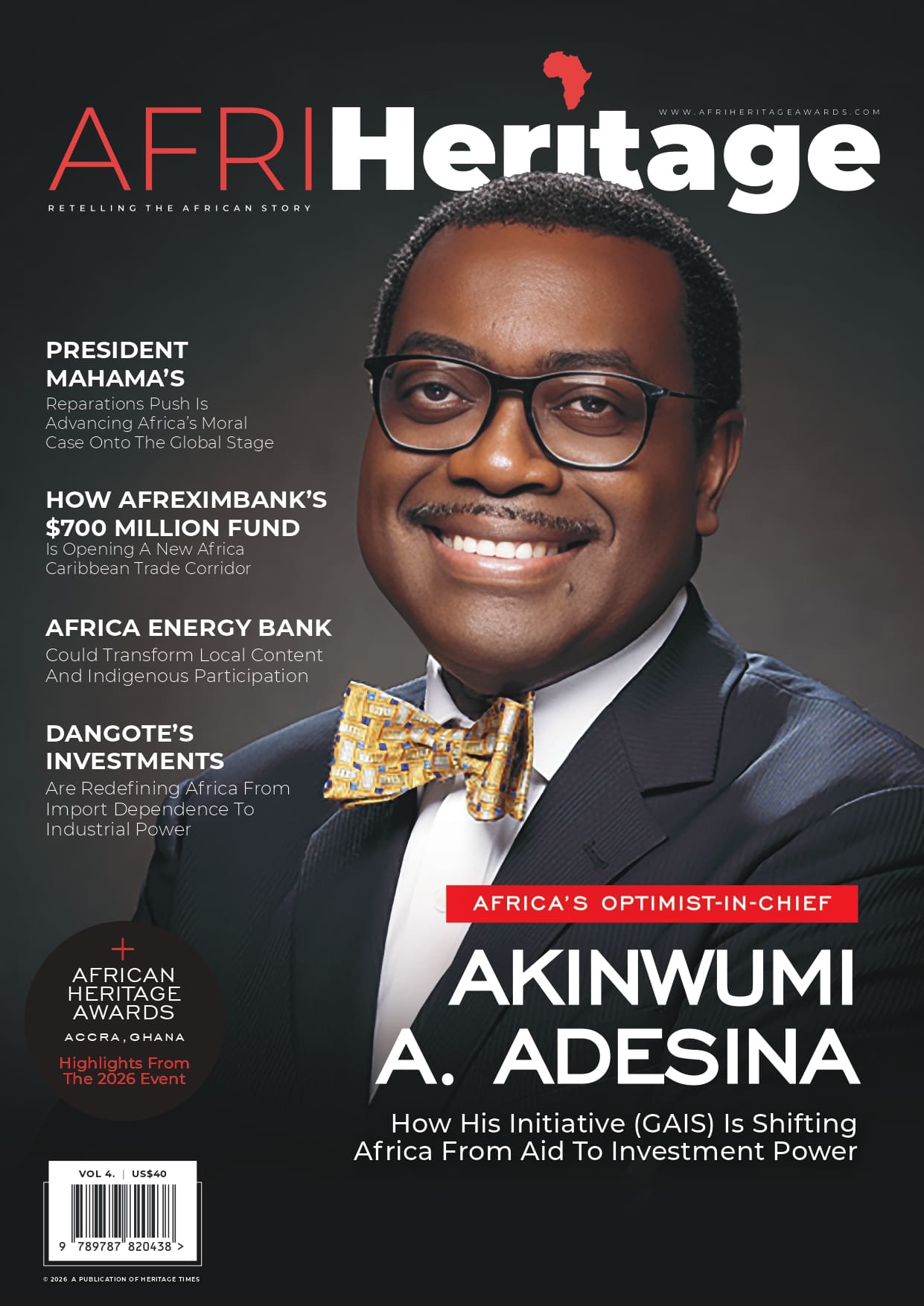
Former African Development Bank Group President, Dr Akinwumi Adesina, has called for a fundamental restructuring of African economies, urging governments and businesses across the continent to move beyond exporting raw materials towards industrialization, value addition and technology-driven production capable of competing in global markets.
Adesina argued that Africa’s vast natural resources, expanding population and growing consumer markets would deliver greater economic returns only if countries developed competitive industries, strengthened intra-African trade and invested in the skills and technologies required to retain more value within the continent. He identified the African Continental Free Trade Area (AfCFTA) as a critical instrument for creating the scale needed to attract investment, expand manufacturing and build African-owned companies capable of competing internationally.
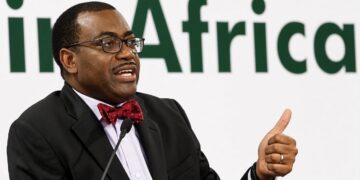
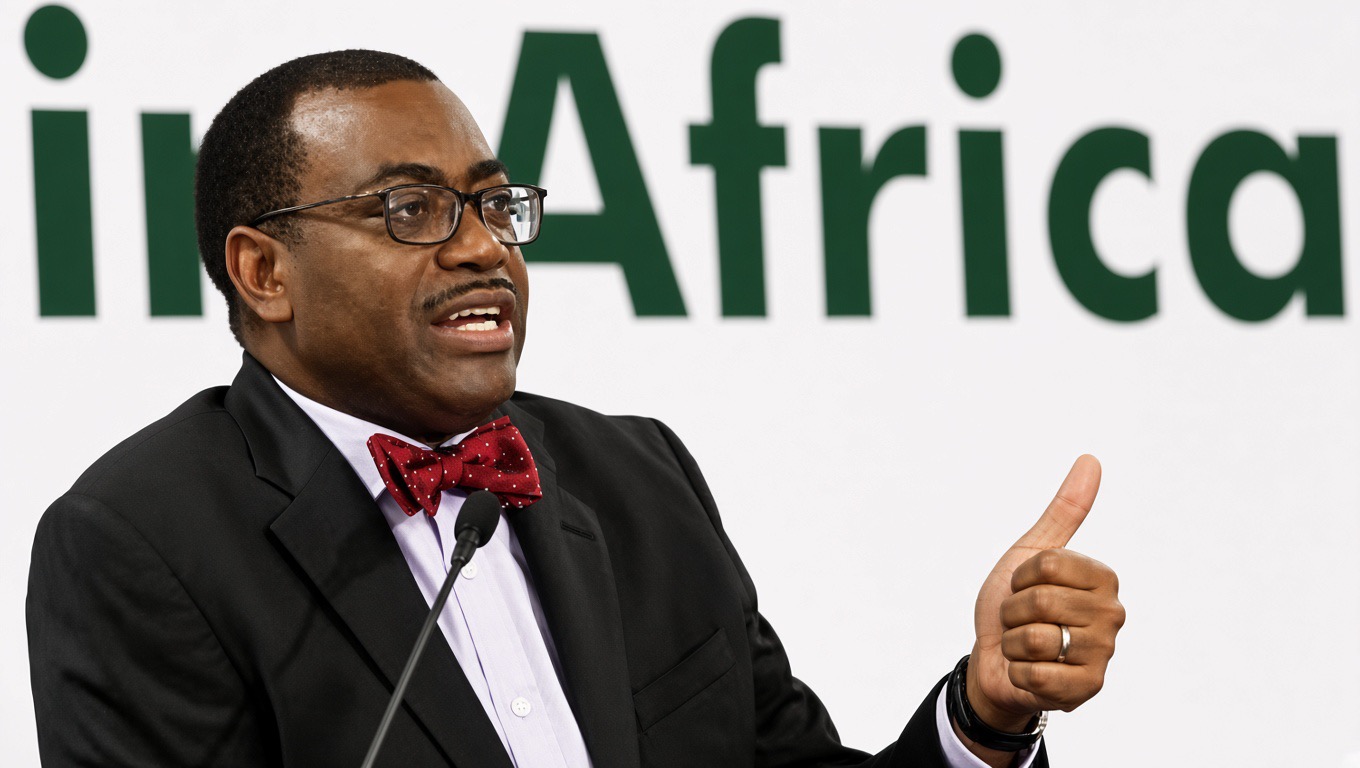
Speaking at the BPI Iconic Awards in Johannesburg, South Africa, last Thursday, Adesina said: “The AfCFTA should become an industrial platform for Africa.” He added: “Our natural resources provide an extraordinary starting point. The opportunity is to move further along the value chains—to process, manufacture, innovate and create intellectual property”. “Africa must not simply adopt the technologies of the future; we must help build them,” he stressed further.
The former AfDB president’s message places the continent’s industrialisation challenge at the centre of its quest for sustainable economic growth, particularly as many African economies continue to depend heavily on primary commodity exports while importing finished products that could potentially be manufactured locally.
According to Adesina, the continent must reconsider how it deploys its natural resource wealth, shifting from a model centred on extracting and exporting commodities towards one that supports processing, refining, manufacturing, research and the development of intellectual property. Such a transition, he argued, would enable African countries to capture a greater share of the economic value generated from their resources while developing the industrial capabilities needed to compete in international markets.
He pointed to Nigeria’s $20 billion Dangote Refinery as an example of the scale of industrial investment African entrepreneurs can achieve, arguing that its significance extends beyond the facility itself.
“Its significance goes beyond one refinery. It demonstrates that African capital and African entrepreneurship can build industrial assets capable of competing at global scale,” he said.
Adesina called for similar investments across strategic value chains, including automobiles and electric vehicles, batteries and energy storage, steel and machinery, pharmaceuticals, medical technology, food processing, software and artificial intelligence.
“We need more Dangotes for Africa to play big on the global stage,” he said.
For Africa, the economic stakes extend beyond increasing industrial output. Building competitive domestic industries could strengthen supply chains, create demand for skilled labour, encourage technology transfer and give local enterprises opportunities to expand beyond their national markets.
Adesina maintained that regional economic integration would be essential to achieving this transformation, arguing that Africa’s 55 countries could generate greater industrial and commercial opportunities by connecting their respective resources, production capabilities and markets.
Rather than requiring every country to manufacture everything independently, he envisaged a continental production system in which countries specialise in different stages of industrial value chains. One country could supply minerals, another energy, another processing capabilities, while another handles final assembly, creating interconnected businesses that operate across borders.
A larger integrated market, he said, could attract investment, encourage innovation, reduce costs and give African companies the scale required to compete globally.
“Success should be measured by what we produce, the companies we create, the value we capture and the global competitiveness we achieve,” Adesina said.
His argument underscores the importance of translating the AfCFTA from a trade liberalisation framework into a platform for production, industrial investment and cross-border value chains. The agreement offers the prospect of a larger market for African manufacturers, although realising that opportunity will depend on countries addressing barriers that constrain the movement of goods, investment and productive capacity across borders.
Adesina also identified Africa’s demographic profile as a significant economic opportunity, noting that around 60 per cent of the continent’s population is under the age of 25. By 2050, he said, approximately one in four people worldwide will be African.
He argued that this growing population must be equipped with the skills, knowledge and technological capabilities required by emerging industries if demographic growth is to translate into economic power.
The former AfDB chief called for stronger connections between universities, vocational institutions and industry, alongside greater investment in apprenticeships and lifelong learning. He said education must go beyond preparing people for existing jobs to equipping them to establish businesses, develop technologies and create employment.
“We should aspire to become one of the great workforces of the global economy—defined by talent, productivity, adaptability, creativity and knowledge,” he said.
Artificial intelligence and advanced technologies featured prominently in his assessment of Africa’s future economic competitiveness. With major economies investing heavily in artificial intelligence, semiconductors, robotics and advanced computing, Adesina urged African countries to participate in the industries and technologies shaping the global economy rather than remain consumers of innovations developed elsewhere.
He called for investments in artificial intelligence, data science, cybersecurity, robotics, semiconductors and advanced computing, supported by universities, laboratories, computing infrastructure and industrial ecosystems capable of turning African talent into commercially viable technologies.
For resource-rich countries, he argued, the challenge is to move beyond supplying minerals and other raw materials to developing the industries, technological capabilities and intellectual property associated with their processing and use.
However, Adesina warned that the continent’s economic ambitions would require leadership capable of protecting public resources, strengthening institutions and making decisions in the long-term national interest.
He maintained that transparency, accountability and sound institutions were essential to ensuring that public resources and strategic partnerships translated into lasting economic benefits for citizens.
“Power is for serving the public,” he said, stressing that decisions involving mining agreements, infrastructure projects, public finances and strategic partnerships should be assessed by their contribution to national development and the opportunities they create for future generations.
Adesina’s address presented Africa’s next phase of economic development as a transition from resource ownership to productive capacity, from fragmented national markets to continental scale, and from technology adoption to innovation.
He argued that the continent already possesses substantial natural resources, a growing workforce, expanding markets and entrepreneurial talent, but must bring these assets together through industrial investment, regional integration and visionary leadership.
“Our task is to do so with ambition, discipline, imagination and integrity,” he said.
He added that Africa’s future would depend not merely on its existing economic potential, but on the decisions leaders make to turn that potential into industrial capability, innovation and broad-based prosperity.