

• Latest
  • Trending
  • All
  • Politics
  • Economy
  • Security
  • Education
  • Sports
  • Health
  • Entertainment
  • Legal
  • Technology and Science
  • Opinion
  • Columns
  • Exposé
  • World
  • Lifestyle
African Elections Show Democracy Should Not Be Taken For Granted

African Elections Show Democracy Should Not Be Taken For Granted

2 years ago
Ghana: Mahama Vows To Cut Freebies For Govt Officials If Elected President

Ghana On Track To Exit IMF Programme By April 2026 With Dignity – Mahama

11 hours ago
FGM: Harmful Cultural Practices Against Women

Nigeria: Experts Call For Urgent, Sustained Action To End Female Genital Mutilation

12 hours ago
Nigeria: UN, US Condemn Terror Attacks In Kwara

Nigeria: UN, US Condemn Terror Attacks In Kwara

13 hours ago
Kenya To Overtake Angola As Sub-Saharan Africa's Fourth Largest Economy - IMF

Zimbabwe Approves Staff-Monitored Programme With IMF

15 hours ago
Netherlands Repatriates 3,500-Year-Old Artefacts Stolen From Egypt In 2011

Netherlands Repatriates 3,500-Year-Old Artefacts Stolen From Egypt In 2011

15 hours ago
Saturday, February 7, 2026
  • About
  • HT Management
  • Privacy Policy
Heritage Times
No Result
View All Result
Translate |
  • Login
  • Politics
    Congo: 82-Year-Old President N’guesso Announces Plan To Seek Re-Election

    Congo: 82-Year-Old President N’guesso Announces Plan To Seek Re-Election

    UK Expels Russian Diplomat In Retaliatory Spying Allegation

    UK Expels Russian Diplomat In Retaliatory Spying Allegation

    Guinea-Bissau: Prominent Opposition Figure Released From Jail

    Guinea-Bissau: Prominent Opposition Figure Released From Jail

    Burkina Faso: Military Government Dissolves Political Parties

    Burkina Faso: Military Government Dissolves Political Parties

    Somalia: Parliament In Rowdy Session Over Attempt To Extend Legislators’ Tenure

    Somalia: Parliament In Rowdy Session Over Attempt To Extend Legislators’ Tenure

    France Moves To Normalise Diplomatic Ties, Invites Chadian President

    France Moves To Normalise Diplomatic Ties, Invites Chadian President

    Guinea: President Doumbouya Appoints New Prime Minister

    Guinea: President Doumbouya Appoints New Prime Minister

    Algeria: Senate Seeks Review Of Law Declaring French Colonization A Crime

    Algeria: Senate Seeks Review Of Law Declaring French Colonization A Crime

    Uganda: Defence Chief Threatens To Behead Opposition Leader

    Uganda: Military Chief Confesses To Killing Of 30 Opposition Supporters

  • Economy
    Ghana: Mahama Vows To Cut Freebies For Govt Officials If Elected President

    Ghana On Track To Exit IMF Programme By April 2026 With Dignity – Mahama

    South Africa’s Trade Minister To Seek Duty-Free Export Access During China Visit

    South Africa’s Trade Minister To Seek Duty-Free Export Access During China Visit

    South Africa: Afreximbank Maps Out $8bn Infrastructure Funding

    South Africa: Afreximbank Maps Out $8bn Infrastructure Funding

    Somaliland To Offer Israel Access To Valuable Minerals In Exchange For Trade Deal

    Somaliland To Offer Israel Access To Valuable Minerals In Exchange For Trade Deal

    DRC, UAE Sign Economic Partnership Agreements

    DRC, UAE Sign Economic Partnership Agreements

    UK To Invest $400m In Ethiopia’s Power Sector

    UK To Invest $400m In Ethiopia’s Power Sector

    South Africa Circles Back To Shale Gas As Power Crisis Drags

    Mozambique Restarts $20bn LNG Project Five Years After Deadly Insurgent Attack

    Venezuela: 80 Political Prisoners Freed

    Venezuela: US Begins Unfreezing Sanctioned Funds

    African Nations Now Spend More Repaying Chinese Loans Than Securing New Ones — Report

    African Nations Now Spend More Repaying Chinese Loans Than Securing New Ones — Report

  • Security
  • Education
  • Sports
  • Health
  • Metro
  • Entertainment
  • Lifestyle
  • Legal
  • Tech & Science
  • Opinion
  • Exposé
  • Exclusive Videos
  • Niger Delta
  • World
  • Politics
    Congo: 82-Year-Old President N’guesso Announces Plan To Seek Re-Election

    Congo: 82-Year-Old President N’guesso Announces Plan To Seek Re-Election

    UK Expels Russian Diplomat In Retaliatory Spying Allegation

    UK Expels Russian Diplomat In Retaliatory Spying Allegation

    Guinea-Bissau: Prominent Opposition Figure Released From Jail

    Guinea-Bissau: Prominent Opposition Figure Released From Jail

    Burkina Faso: Military Government Dissolves Political Parties

    Burkina Faso: Military Government Dissolves Political Parties

    Somalia: Parliament In Rowdy Session Over Attempt To Extend Legislators’ Tenure

    Somalia: Parliament In Rowdy Session Over Attempt To Extend Legislators’ Tenure

    France Moves To Normalise Diplomatic Ties, Invites Chadian President

    France Moves To Normalise Diplomatic Ties, Invites Chadian President

    Guinea: President Doumbouya Appoints New Prime Minister

    Guinea: President Doumbouya Appoints New Prime Minister

    Algeria: Senate Seeks Review Of Law Declaring French Colonization A Crime

    Algeria: Senate Seeks Review Of Law Declaring French Colonization A Crime

    Uganda: Defence Chief Threatens To Behead Opposition Leader

    Uganda: Military Chief Confesses To Killing Of 30 Opposition Supporters

  • Economy
    Ghana: Mahama Vows To Cut Freebies For Govt Officials If Elected President

    Ghana On Track To Exit IMF Programme By April 2026 With Dignity – Mahama

    South Africa’s Trade Minister To Seek Duty-Free Export Access During China Visit

    South Africa’s Trade Minister To Seek Duty-Free Export Access During China Visit

    South Africa: Afreximbank Maps Out $8bn Infrastructure Funding

    South Africa: Afreximbank Maps Out $8bn Infrastructure Funding

    Somaliland To Offer Israel Access To Valuable Minerals In Exchange For Trade Deal

    Somaliland To Offer Israel Access To Valuable Minerals In Exchange For Trade Deal

    DRC, UAE Sign Economic Partnership Agreements

    DRC, UAE Sign Economic Partnership Agreements

    UK To Invest $400m In Ethiopia’s Power Sector

    UK To Invest $400m In Ethiopia’s Power Sector

    South Africa Circles Back To Shale Gas As Power Crisis Drags

    Mozambique Restarts $20bn LNG Project Five Years After Deadly Insurgent Attack

    Venezuela: 80 Political Prisoners Freed

    Venezuela: US Begins Unfreezing Sanctioned Funds

    African Nations Now Spend More Repaying Chinese Loans Than Securing New Ones — Report

    African Nations Now Spend More Repaying Chinese Loans Than Securing New Ones — Report

  • Security
  • Education
  • Sports
  • Health
  • Metro
  • Entertainment
  • Lifestyle
  • Legal
  • Tech & Science
  • Opinion
  • Exposé
  • Exclusive Videos
  • Niger Delta
  • World
No Result
View All Result
First with the News

African Elections Show Democracy Should Not Be Taken For Granted

July 21, 2024
in Opinion, Top Stories
0
African Elections Show Democracy Should Not Be Taken For Granted
0
VIEWS
Share on FacebookShare on TwitterShare on Whatsapp

By Yuhniwo Ngenge

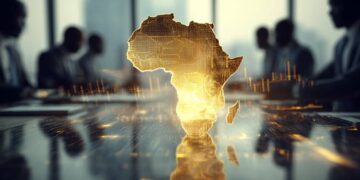
Rwanda’s Paul Kagame has won a landslide victory in the presidential elections held on July 15. His Rwanda Patriotic Front (RPF) party also emerged victorious in the legislative vote, retaining its parliamentary majority. With more than 99 percent of the vote in Kagame’s favour, this presidential election appears to be a repeat of the previous three, where the incumbent secured expected victories.

Relatedreading

Ghana On Track To Exit IMF Programme By April 2026 With Dignity – Mahama

Nigeria: Experts Call For Urgent, Sustained Action To End Female Genital Mutilation

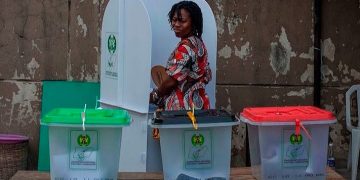
Kagame’s re-election unfolds against a broader context of many other important electoral races across Africa this year. Presidential elections have already taken place in the Comoros, Senegal, Chad and Mauritania. South Africa held a parliamentary poll in May.

Elections are now coming up in Algeria (September), Mozambique, Tunisia and Botswana (October), Somalia’s breakaway region of Somaliland, Mauritius, and Namibia (November); and Ghana, South Sudan, Guinea Bissau and Guinea (December).

With this high concentration of national votes, 2024 can serve as an indicator of where democracy in Africa is heading and offer important lessons.

Two victories for democracy

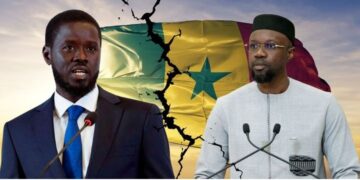
Senegal and South Africa saw two of the most stunning election outcomes so far this year. In March, Senegalese voters elected 44-year-old Bassirou Diomaye Faye as the country’s youngest president ever. Just 10 days prior, he was a political prisoner and Senegal’s democracy appeared on the edge of a precipice.

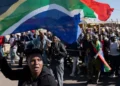
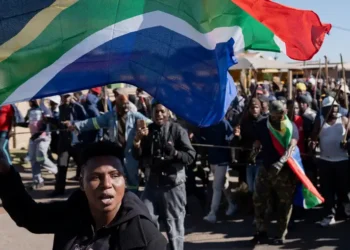
In May, South Africa’s African National Congress (ANC) lost its majority in Parliament for the first time since the end of apartheid and the beginning of free elections in 1994. This forced the party to negotiate its first coalition government ever with the Democratic Alliance (DA) party, its ideological opposite, which came second in the polls. This is untested waters for the country’s political system and democracy.

Given that in both cases ruling parties with a strong incumbency advantage suffered major losses, Senegal and South Africa’s elections can be considered two victories for democracy. Yet they also illustrate the fragility of democracy as neither was a smooth sail.

Months before the election, Senegal was experiencing a major political crisis as retiring President Macky Sall engaged in political manoeuvring, presumably to extend his tenure or at least influence the polls’ outcome. In South Africa, after the vote, at least 20 parties claimed rigging and called for a recount of the vote. Meanwhile, former President Jacob Zuma, leader of the uMkhonto weSizwe (MK) Party, ominously warned against “starting trouble where there is no trouble”.

Like in Mali, Benin, Niger and even Kenya, democracy in Senegal and South Africa has often been taken for granted. These cases show the limits of American political scientist Samuel Huntington’s “two turn-over” test for assessing the stability of a polity’s democracy – that is having two consecutive political transitions without the democratic constitutional order collapsing.

They illustrate that democratic complacency is a luxury we cannot afford yet. The same conclusion can be reached also from the contested outcomes in the Comoros and Chad votes.

The Comoros’ President Azali Assoumani and Chad’s President Mahamat Deby, both incumbents with a military pedigree, were re-elected amid claims of fraud. Violent demonstrations against the results in the Comoros reportedly resulted in at least one death and 25 injured. In Chad, at least 12 people were killed in pre- and post-election violence amid threats and intimidation.

The risks of an incumbent race

While positive trends could be observed in some African electoral races, elsewhere there are reasons for concern, especially in countries where incumbents are running. High-stakes, winner-takes-all races like presidential elections can be problematic, and even more so in cases of so-called incumbent polls where sitting presidents are also candidates.

Given their personal stake in the process, sitting presidents are likely to leverage the full advantages of incumbency such as state resources and the administrative machinery for their benefit.

This – as Rwanda’s elections illustrate – reduces the prospects of an opposition win. In principle, Kagame has never run unopposed. Yet, a tightly controlled state machinery has consistently ensured an uneven playing field that favours him by weeding out candidates who, arguably, could pose the greatest challenge to his rule.

Ahead of the July 15 vote, for example, the election commission rejected the candidacy of Diane Rwigara – possibly one of Kagame’s most vocal critics today – citing irregular paperwork. During the 2017 race, she was subjected to systematic intimidation and eventually barred from running over alleged signature irregularities. In April, a Kigali court also blocked the candidacy of another fierce Kagame critic, Victoire Ingabire, citing past convictions for genocide denial and terrorism charges.

By the end of the year, there will be several other presidential contests where this unfortunate reality – or much worse – may unravel. These will unfold in contexts of extreme democratic fragility like Tunisia, Guinea Bissau, the breakaway region of Somaliland, South Sudan, Guinea and Algeria.

Coups and conservative resurgence

It is also important to point out that these 2024 electoral contests are unfolding in a broader regional context, with less-than-ideal dynamics. More specifically, there has been a resurgence and normalisation of military coups in Africa, with putschists who are obviously in no hurry to return to the barracks.

Mali and Burkina Faso’s military leaders have indefinitely iced polls initially scheduled for February and July this year, promising a later date but leaving no doubt about their intention to be candidates whenever polls take place.

In Guinea, it is very likely that Colonel Mamady Doumbouya, who took power in a coup in 2021 and recently minted himself as a general, will be a candidate in the December election. In Niger and Gabon, putschists are also running the show while the government in the Democratic Republic of Congo recently averted a coup.

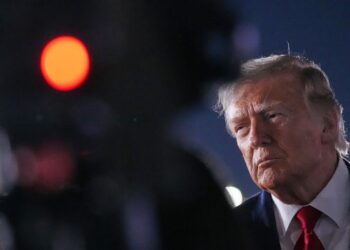
Worrying developments elsewhere in the world may also have a negative impact on the African continent. The United States, with more than 200 years of liberal democratic traditions, risks a democratic retreat as it looks set to re-elect Donald Trump, a convicted felon, with openly authoritarian tendencies and an unapologetic “America First” agenda.

Labour may have returned to power in the UK and France narrowly escaped a far-right takeover, but the far-right surge – with its threat to liberal democracy – is an undeniable reality in Europe.

For Africa, the constellation of these dynamics is both harrowing and alarming. The (re-)election of far-right, populist, inward-looking regimes in the West impugns its claims as a global model, especially to those in Africa and beyond who already challenge the Euro-American conceptualisation of democracy.

Supporting civil society and institutions

Thus, while Senegal and South Africa’s electoral experiences inspire hope, regional and global realities and dynamics underscore why we must double down efforts to promote and protect democracy.

Consolidated or not, democracy is more than a prize to capture and sit back. Rather, it must be conceived as a permanent process to constantly nourish and cater to even when, on the surface, there might be no imperative for it.

This demands creativity, innovation, concertation, constant revision of approaches, and, above all, resolute action. The potential, for example, of nonincumbent polls to increase the likelihood of political alternation through the ballot box cannot be overemphasised. Yet, this is only possible when safeguards, such as term limits, are constitutionally entrenched and respected. A compelling incentive thus exists to exact consequences when these are disregarded.

Senegal and South Africa also provide lessons on curbing assaults on democracy and the values that underpin it.

The Senegalese case illustrates how fearless pushback from a strong civil society, resilient political opposition and a courageous constitutional court can be ultimately instrumental in triggering spectacular outcomes in a complex political and electoral context.

The South African case demonstrates how an informed citizenry and a robust and resilient political opposition can gradually chip away the power of a once dominant party.

A robust and informed civil society, political parties, strong institutions and political dialogue processes are clearly sine qua nons for sustainable democracy. Indeed, this applies not only to Africa but also beyond, considering – for example – the worrying trends emerging in old democracies in the West. They must be strengthened and supported at all cost.

The views expressed in this article are the author’s own and do not necessarily reflect Heritage Times editorial stance.

About the Author

Yuhniwo Ngenge is a Knowledge and Programme Advisor with The Hague-based Netherlands Institute for Multiparty Democracy (NIMD). Opinions expressed are the author’s and do not necessarily reflect the views of  the Institute.
Tags: Yuhniwo Ngenge
ShareTweetSend
Previous Post

Nigeria: Amidst Chronic Hardship, Lawmaker Gifts Teenage Daughter Lavish Car

Next Post

JUST IN: Joe Biden Quits Presidential Race, Endorses Kamala Harris

Related Posts

Ghana: Mahama Vows To Cut Freebies For Govt Officials If Elected President

Ghana On Track To Exit IMF Programme By April 2026 With Dignity – Mahama

February 6, 2026
FGM: Harmful Cultural Practices Against Women

Nigeria: Experts Call For Urgent, Sustained Action To End Female Genital Mutilation

February 6, 2026

Nigeria: UN, US Condemn Terror Attacks In Kwara

Zimbabwe Approves Staff-Monitored Programme With IMF

Netherlands Repatriates 3,500-Year-Old Artefacts Stolen From Egypt In 2011

Nigeria: Court Orders UK To Apologise, Pay £420m Over 1949 Killing Of Coal Miners

Next Post
US Pushes For Update Of World Bank’s Mission Statement, Targets Climate Change

JUST IN: Joe Biden Quits Presidential Race, Endorses Kamala Harris

Please login to join discussion
AfriHeritage Magazine Issue 3 - Cover 1 AfriHeritage Magazine Issue 3 - Cover 1 AfriHeritage Magazine Issue 3 - Cover 1
AH 2026 AH 2026 AH 2026

Updates

Plugin Install : Widget Tab Post needs JNews - View Counter to be installed
  • Trending
  • Comments
  • Latest
Ghana: Mahama Vows To Cut Freebies For Govt Officials If Elected President

Ghana On Track To Exit IMF Programme By April 2026 With Dignity – Mahama

February 6, 2026
FGM: Harmful Cultural Practices Against Women

Nigeria: Experts Call For Urgent, Sustained Action To End Female Genital Mutilation

February 6, 2026
Nigeria: UN, US Condemn Terror Attacks In Kwara

Nigeria: UN, US Condemn Terror Attacks In Kwara

February 6, 2026
Kenya To Overtake Angola As Sub-Saharan Africa's Fourth Largest Economy - IMF

Zimbabwe Approves Staff-Monitored Programme With IMF

February 6, 2026
JESIN GAMES - AfriTrivia JESIN GAMES - AfriTrivia JESIN GAMES - AfriTrivia
ADVERTISEMENT

Most Recent

Ghana On Track To Exit IMF Programme By April 2026 With Dignity – Mahama

February 6, 2026

Nigeria: Experts Call For Urgent, Sustained Action To End Female Genital Mutilation

February 6, 2026

Nigeria: UN, US Condemn Terror Attacks In Kwara

February 6, 2026

Zimbabwe Approves Staff-Monitored Programme With IMF

February 6, 2026

Netherlands Repatriates 3,500-Year-Old Artefacts Stolen From Egypt In 2011

February 6, 2026

Nigeria: Court Orders UK To Apologise, Pay £420m Over 1949 Killing Of Coal Miners

February 6, 2026

Congo: 82-Year-Old President N’guesso Announces Plan To Seek Re-Election

February 5, 2026

Trump Administration Finalises Rule Expanding Presidential Power To Dismiss Career Civil Servants

February 5, 2026

About

Heritage Times HT stands as a beacon of pan-African journalism, dedicated to amplyfing the rich tapestry of voices and narratives across the continent. With unwavering commitment, we illuminate the evocative essence of Africa, offering a fresh perspective that captivates our global audience.

Featured

One Year of Transformative Stewardship: Walson-Jack’s Innovative Impact on Nigeria’s Civil Service

Africa’s Largest Tech Event, MWC25 Kigali, Returns With Focus On Innovation, Policy

Nadine Djuiko: Meet The Cameroonian Woman Behind Maryland’s Million-Dollar Braiding Empire

Connect

Connect with us on social media and receive timely updates on the go.

Get Updates

  • About
  • HT Management
  • Privacy Policy

© 2025 Heritage Times (HT) Media.

No Result
View All Result
  • Welcome
  • Politics
  • Economy
  • Security
  • Exposé
  • Education
  • Sports
  • Health
  • Entertainment
  • Legal
  • Technology and Science
  • Columns
    • Opinion
  • World
  • __________________
  • Make a Donation
  • Photo Speaks
  • Videos
  • You-Report
  • Whistleblower
  • Advertise
  • HT Events
  • HT Management
  • About HT
  • Contact us

© 2025 Heritage Times (HT) Media.

Welcome Back!

Login to your account below

Forgotten Password?

Retrieve your password

Please enter your username or email address to reset your password.

Log In