





















By Enyichukwu Enemanna
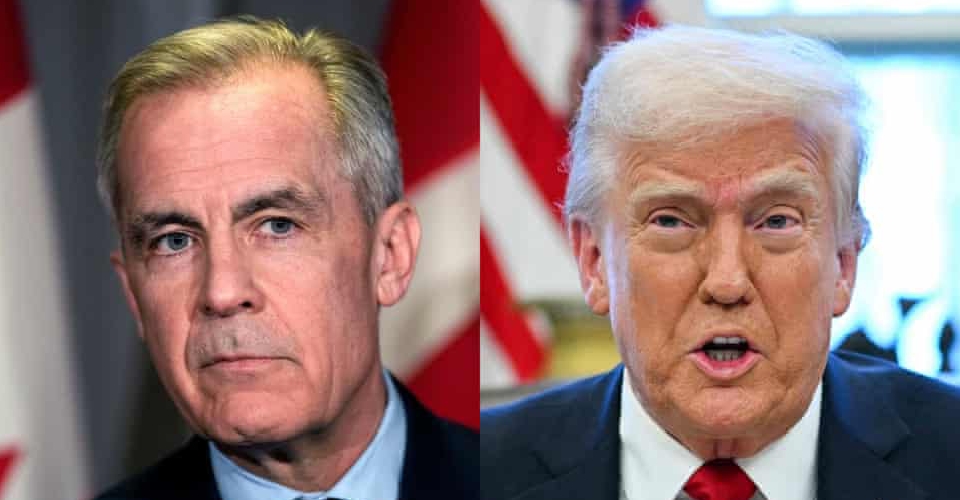
Canadian Prime Minister Mark Carney on Saturday announced that he would slap retaliatory tariffs on the United States after walking away from a “bad deal” on trade, deepening the rift between the longtime allies.
Negotiations between the neighbouring countries broke down on Friday in Washington, allowing new 50-percent US tariffs impacting some $20 billion worth of goods, or 5.5 percent of Canadian exports to the United States, to come into force.
US President Donald Trump had said Washington “should be able to have a deal with Canada,” citing his “good relationship” with Carney.
But on Saturday, the Canadian Prime Minister said Trump had set conditions that were ultimately unacceptable.
“We believed earlier this week that we were moving towards a mutually beneficial agreement,” Carney said in the Canadian capital Ottawa.
“In recent days, the United States proposed new terms that were uneconomic, unfair, and undermined the net benefits for Canada, and called into question the reliability of any deal. In short, they asked too much and they offered too little,” he said.
“We cannot accept what they’ve offered, and we will not give what they’ve asked,” Carney said, accusing Trump of launching a trade “war.”
“You’re at war when you get attacked. We got attacked,” Carney said.
New Canadian tariffs will notably target the US steel and dairy industries, and take effect on September 8. Carney said further details would come next week.
On Friday, US Trade Representative Jamieson Greer said Washington had offered “significant tariff reductions on steel, aluminum, autos and lumber” in exchange for concessions from Canada.
A senior US official, who spoke on condition of anonymity, characterized the talks as candid and not acrimonious, but said there were no further scheduled meetings.
Canada has been seeking relief from Trump’s tariffs on autos, steel and aluminum, which have battered the country’s economy, forced job losses and strained what was once an iron-clad trade relationship.
Canadian negotiators had been camped out in Washington this week to firm up a deal that aimed to address various flashpoints.
The White House had alleged “discriminatory treatment” by Canada against US alcohol, automobile and dairy products in introducing the duties.