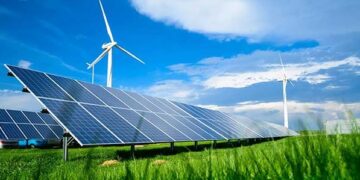









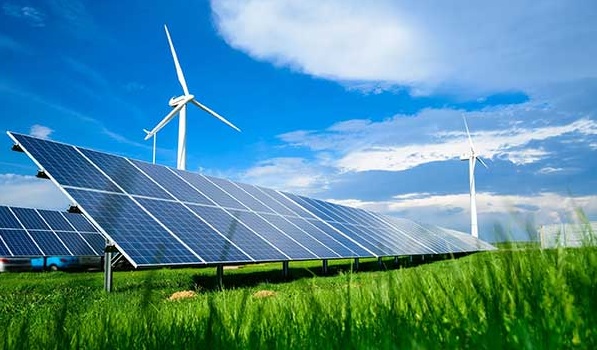
The Economic Community of West African States (ECOWAS) has reaffirmed its commitment to expanding access to affordable, reliable and sustainable electricity across the region, setting a target of increasing renewable energy’s share of the electricity mix to 48 per cent by 2030.
The regional bloc said the goal is part of broader efforts to accelerate West Africa’s energy transition, improve electricity access and drive sustainable economic growth across member states.
Speaking at the ongoing delocalised meeting of the ECOWAS Parliament in Dakar, Senegal, the Director of Cabinet in the Office of the President of the ECOWAS Commission, Mr. Abdou Kolley, said the commission remains focused on ensuring that more citizens have access to modern energy services. Kolley was represented by the Acting Director of Energy and Mines, Mr. Williams Baidoe.
Addressing members of the parliament’s Joint Committee on Energy and Mines, Infrastructure, Agriculture, Environment and Natural Resources, Kolley explained that the ECOWAS Renewable Energy Policy seeks to raise the contribution of renewable energy sources, including large hydropower, to 48 per cent of the region’s electricity supply by 2030.
He also noted that the ECOWAS Energy Efficiency Policy aims to reduce electricity losses, currently estimated at between 35 and 40 per cent, largely due to ageing and obsolete infrastructure.
According to him, access to electricity goes beyond providing light to homes, serving instead as a catalyst for economic growth, quality education and improved healthcare delivery, particularly in rural communities.
Kolley highlighted several initiatives introduced by ECOWAS to tackle energy access challenges, including gender-responsive policies embedded in the bloc’s updated Energy Policy, Renewable Energy Policy and Energy Efficiency Policy.
He further explained that ECOWAS recently adopted a Climate Strategy designed to harmonise member states’ responses to climate change through adaptation and mitigation measures.
The official noted that institutions such as the ECOWAS Centre for Renewable Energy and Energy Efficiency (ECREEE), the ECOWAS Regional Electricity Regulatory Authority (ERERA), the West African Power Pool (WAPP) and the West African Gas Pipeline Authority (WAGPA) are playing key roles in strengthening regional energy integration and developing infrastructure required for sustainable energy delivery.
Kolley said ECOWAS is working closely with member states, development partners and other stakeholders to mobilise resources, build capacity and promote clean energy markets across West Africa.
He added that recommendations from the parliamentary meeting would help shape innovative solutions aimed at accelerating universal energy access, expanding renewable energy adoption and fostering inclusive economic development throughout the region.