








By Emmanuel Nduka
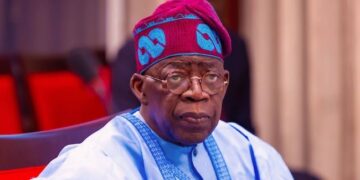
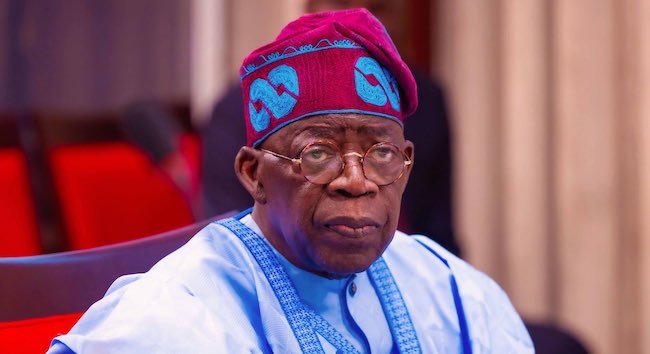
From a hardline warning to terrorists and claims of economic recovery to promises of power sector reforms and local government autonomy, President Bola Tinubu used his Democracy Day address to outline his administration’s priorities and vision for Nigeria.
President Tinubu’s speech combined reflections on Nigeria’s democratic journey with a robust defence of his administration’s economic and security policies.
Speaking as Nigeria marked 27 years of uninterrupted democratic rule, the President touched on national security, economic reforms, electricity sector restructuring, grassroots governance and the country’s democratic heritage.
Below are five major talking points from the address:
1. Tough Message To Terrorists, Bandits And Kidnappers
Security featured prominently in the President’s speech as he addressed the worsening concerns over kidnappings and insurgent activities in parts of the country.
Tinubu disclosed that the government had declared a security emergency, recruited additional security personnel and allocated a record N5.41 trillion to defence and security in the 2026 budget.
He also highlighted military gains against insurgents, including operations against ISWAP in Borno State and the surrender of thousands of former fighters through Operation Safe Corridor.
The President delivered perhaps the strongest warning of his speech when he declared: “To bandits, kidnappers, and sponsors of terror: Surrender or face the full force of the Nigerian State. These windows of surrender will not remain open forever. No mercy will be shown to those who trade in the blood of Nigerians.”
2. Tinubu Defends Economic Reforms, Says Stability Is Returning
The President used the occasion to defend the controversial economic reforms introduced since 2023, arguing that they were necessary to rescue the economy from fiscal distress.
According to him, public finances were under pressure when his administration took office, while investment confidence had weakened.
Tinubu maintained that the reforms have improved revenue generation, increased fiscal transparency and restored investor confidence across key sectors.
He said: “Since 2023, our reforms have restored stability and credibility to economic management.”
While acknowledging the hardship many Nigerians continue to face, he insisted that the country was moving in the right direction.
“We are moving from uncertainty to stability. The next phase is about accelerating growth and ensuring the benefits are felt in every home, every community, and every region. We believe that Democracy must be felt in the pocket.”
3. Major Focus On Electricity Sector Reform
Another significant aspect of the speech was the President’s assessment of Nigeria’s electricity sector and his plans to improve power supply.
Tinubu painted a grim picture of the state of the sector before his administration came into office, citing generation shortfalls, weak transmission infrastructure, mounting debts and a massive metering deficit.
He pointed to the Electricity Act and ongoing interventions aimed at empowering states to generate and distribute electricity while addressing legacy debts.
The President assured Nigerians that improving power supply remains a key priority.
In his words: “Electricity is a democratic dividend we owe every Nigerian. We intend to deliver it.”
4. Push For Local Government Autonomy
Tinubu linked insecurity and underdevelopment to what he described as the collapse of grassroots governance, arguing that stronger local governments are essential for national development.
He revealed that his administration has pursued financial autonomy for all 774 local government councils as part of efforts to bring governance closer to citizens.
According to him, democracy loses its meaning when citizens do not experience its benefits at the local level.
The President said: “Recognising that democracy is undermined when people do not feel its impact, my administration has sought financial autonomy for our 774 local councils.”
He added that the Renewed Hope Agenda is aimed at ensuring that governance delivers tangible benefits to Nigerians across communities.
5. Democracy’s Next Challenge Is Economic Freedom
Beyond celebrating the historic June 12 struggle, Tinubu argued that the current generation faces a different mission from that of the democracy activists who fought military rule.
While paying tribute to Chief M.K.O. Abiola and other heroes of the pro-democracy movement, the President said political freedom alone was no longer enough.
He stressed that economic empowerment and improved living standards must become the next frontier of Nigeria’s democratic journey.
Tinubu stated: “June 12, 1993, revealed the possibility of a true Nigerian nation. The heroes of June 12 secured political freedom. Our challenge is to secure economic freedom.”
He further challenged Nigerians to unite around a common national purpose, declaring: “Our generation must secure prosperity.”
The Big Picture
Although the speech celebrated Nigeria’s democratic resilience, it also served as a report card on Tinubu’s administration and a roadmap for the years ahead. The President sought to reassure Nigerians that security operations are yielding results, economic reforms are beginning to stabilise the economy, and major structural changes in the power sector and local government administration will ultimately improve lives.
Whether Nigerians feel the impact of these promises may determine how history judges the administration’s Democracy Day message and its broader Renewed Hope agenda.