




Nigeria has been identified as the country with the highest number of children who have never received a single routine vaccine in Africa, according to the United Nations Children’s Fund (UNICEF).
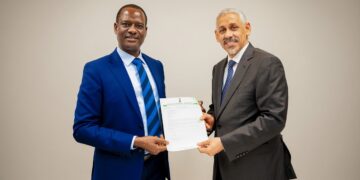
This was disclosed by UNICEF Nigeria Country Representative, Wafaa Saeed, during the flag-off of the Republic of Korea–UNICEF Investment in Routine Immunisation programme in Lagos State, recently.
Saeed revealed that an estimated 2.2 million Nigerian children are classified as “zero-dose,” meaning they have not received any routine immunisation. He stressed that the figure underscores a shared responsibility among stakeholders to address the gap.
He explained that these children are not mere statistics but represent real lives, many of whom reside in fragile urban settlements, border communities, conflict-affected areas, and other hard-to-reach locations with limited access to essential health services.
“Today’s event is a shared political and moral commitment to the right of every Nigerian child to life-saving vaccines, regardless of where they are born or live.
“This burden is not a failure of science. Vaccines work. Rather, it reflects enduring challenges related to equity, access, and service reach, and this is why political leadership and strong partnerships are really possible.
“UNICEF is deeply grateful to the Government of the Republic of Korea for its leadership and solidarity. Through this partnership, Korea has demonstrated a clear understanding that global health security begins by reaching those who are most excluded.
“Nigeria’s inclusion in this investment reflects both the scale of the need and the confidence in Nigeria’s systems and capacity to deliver results.
“This investment is about strengthening existing national and sub-national systems, supporting government efforts to extend routine immunisation services, strengthen primary health care, rebuild trust, and ensure that vaccines consistently reach every child, especially those who have historically been left behind.
“Lagos State, and Badagry Local Government Area in particular, illustrate this challenge clearly. Even in areas experiencing growth and opportunity, pockets of exclusion persist.
“Reaching zero-dose children here sends a strong national signal, equity is not optional; it is foundational to sustainable development and stability,” he said.
Saeed noted that UNICEF remains committed to supporting the Nigerian government by leveraging global expertise, operational capacity, and community trust to ensure that national commitments translate into tangible results, particularly in underserved communities.
He also commended the Federal Government, the National Primary Health Care Development Agency (NPHCDA), and State Primary Health Care Boards for prioritising zero-dose children through targeted interventions in high-burden local government areas.
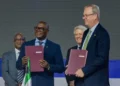
Meanwhile, the Consul General of the Korean Embassy in Lagos, Lee Sang Ho, said the event marked the commencement of a routine immunisation programme under the Access to COVID-19 Tools Accelerator (ACT-A) Investments Project, implemented through the UNICEF–Republic of Korea global partnership.
Sang Ho explained that the partnership, which began in 2023, involves a total contribution of $70 million over three years. According to him, $20 million was allocated to 22 countries in 2023, $30 million to 34 countries between 2024 and 2025, and another $20 million earmarked for 12 countries between 2025 and 2026.
He disclosed that Nigeria will receive $5.6 million from the 2025–2026 funding tranche to support a one-year immunisation project.
“The purpose for funding this project is to ensure that cases of zero-dose vaccination in children are reduced in selected targeted areas comprising a total of 40 Local Government Areas in five states, Lagos, Ogun, Niger, Bauchi, Adamawa and the Federal Capital Territory, Abuja.
“The choice of Nigeria is strategic because Nigeria records a high volume of children with little or zero-dose immunisation, which poses great danger to global health security,” he said.