













By Emmanuel Nduka
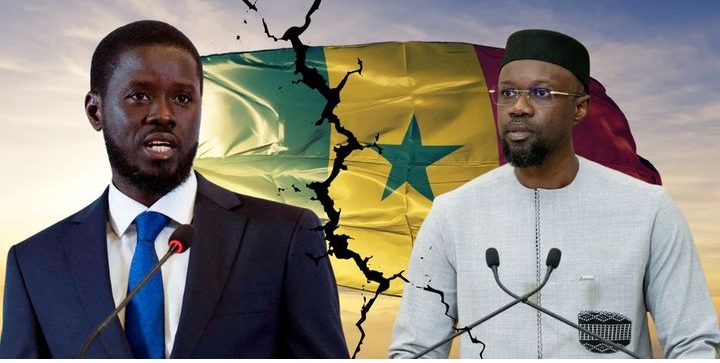
Senegal’s political crisis appears to be deepening as President Bassirou Diomaye Faye and his former mentor, Ousmane Sonko, increasingly find themselves on opposing sides of a growing power struggle that is reshaping the country’s political landscape.
The latest twist came after President Faye unveiled a new 30-member cabinet, less than two weeks after dismissing Sonko as prime minister and dissolving the previous government. The move was widely seen as an attempt by the president to assert his authority and distance himself from the influence of the man who played a key role in his rise to power.
The dispute has exposed cracks within the ruling Pastef party, which swept to power in 2024. Although Sonko was removed from government, he remains a formidable political force. Shortly after his dismissal, he was elected Speaker of the National Assembly and continues to lead Pastef, which controls 130 of the parliament’s 165 seats.
Analysts, however, believe Sonko’s influence may not be enough to derail the government’s agenda. Retired senior civil servant Youssou Diallo argued that while Sonko could slow government action, Senegal’s presidential system ultimately grants greater authority to the head of state. As commander-in-chief of the armed forces and holder of key constitutional powers, Faye remains firmly positioned at the centre of government.
Political analyst Ousmane Sene of the Dakar-based WARC research centre said the president appears to be consolidating power and has surrounded himself with allies capable of helping him fully exercise the responsibilities of his office. He also noted that not all members of Pastef seem willing to follow Sonko’s increasingly confrontational approach.
That division became evident when Sonko declared that Pastef would not participate in the new government, only for several party members and allies to appear on Faye’s cabinet list. The development has fuelled speculation that the ruling party itself may be facing internal fractures.
Sonko, however, remains defiant. Speaking at a news conference on Tuesday, he dismissed the new government as lacking a political foundation and questioned Faye’s legitimacy within parliament. Nevertheless, he stopped short of threatening to bring down the administration, insisting that Pastef would cooperate with the government and support constructive dialogue.
“Whether he likes it or not, we are in a situation of cohabitation,” Sonko said, while maintaining that his party had the numbers to topple the government if it chose to do so.
With Pastef expected to hold a party congress this weekend to confirm Sonko as its leader, attention is now turning to how both men navigate their increasingly strained relationship. For many observers, the outcome could shape Senegal’s political direction ahead of local elections in 2027 and the presidential race in 2029.