




















By Emmanuel Nduka
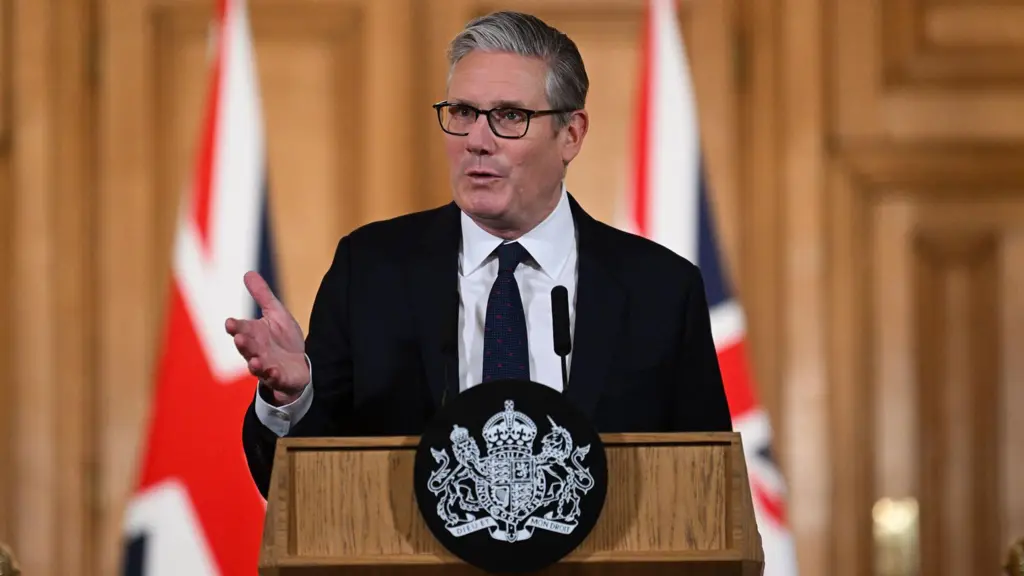
British Prime Minister Keir Starmer has unveiled plans to ban children under the age of 16 from using major social media platforms, describing the move as necessary to protect young people from online harms and addiction.
The proposed legislation, which the government hopes to pass before the end of 2026, would place the United Kingdom among a growing number of countries imposing strict age-based restrictions on social media access.
Speaking in a televised address from 10 Downing Street on Monday, Starmer said his administration was determined to push the measure through Parliament before Christmas, paving the way for enforcement from 2027.
“We hope to pass regulation before Christmas,” the prime minister stated.
Under the proposal, popular platforms including YouTube, TikTok, Instagram, Snapchat and X would be inaccessible to users below the age of 16. Messaging applications such as WhatsApp and Signal, however, would be exempt from the restrictions.
Starmer defended the planned ban, arguing that social media platforms have become increasingly addictive for children and are contributing to growing concerns over mental health, cyberbullying and online safety.
“A full ban is the right choice… I am not prepared to compromise on the safety and happiness of our children,” Mr Starmer stated. “That is all any parent wants. They want to know that Britain will be better for their children, that they will get a fair chance.”
The British leader further disclosed that his government intends to widen its online safety agenda by pursuing what he described as “world-leading action” on gaming services and live-streaming platforms, sectors that have also come under scrutiny over their impact on young users.
The proposed legislation reflects a broader global trend as governments seek stronger safeguards for children in the digital space.
Australia became the first country to prohibit social media use by individuals under 16 after amending its Online Safety Act in 2024, with the restrictions taking effect in December 2025.
Several other nations have since followed suit. Canada, Brazil and Indonesia have either introduced legislation or announced age-related restrictions governing children’s access to social media platforms. Meanwhile, countries including Spain, Denmark and South Korea are reportedly examining similar measures for possible adoption.
If passed, the UK legislation would mark one of the most far-reaching attempts by a major Western nation to regulate children’s access to social media, intensifying the global debate over balancing online freedom with child protection.