




By Emmanuel Nduka Obisue
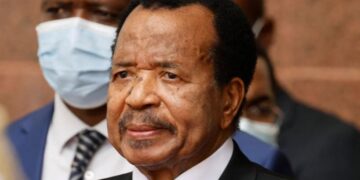
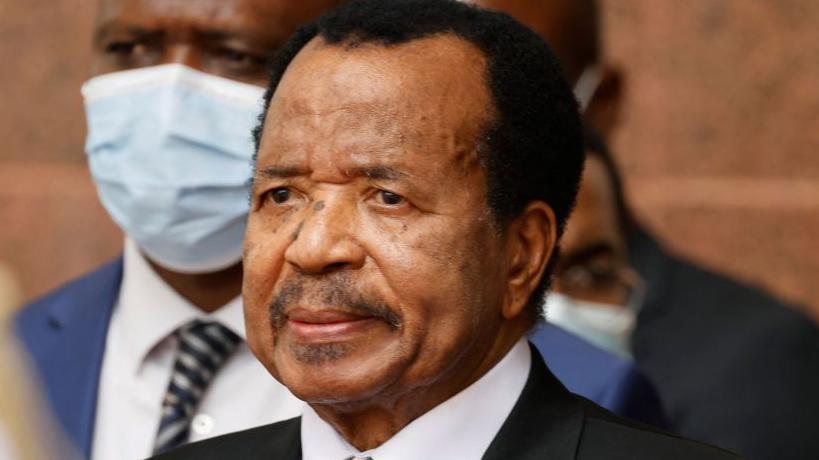
Political uncertainty is deepening in Cameroon as President Paul Biya’s 45-day absence from the country fuels growing concerns over his health, the continuity of government, and the future of leadership in the Central African nation.
Biya, 93, who has ruled Cameroon since 1982 and is one of Africa’s longest-serving leaders, has been out of the country since departing for Europe on June 7. His prolonged absence has triggered intense political debate, prompting the ruling Cameroon People’s Democratic Movement (CPDM) to convene a rare closed-door meeting of its senior leaders in Yaoundé amid mounting questions over succession.
The meeting, chaired by CPDM Secretary-General Jean Nkuete, was held behind closed doors, with officials declining to disclose its agenda. The unusual gathering has fueled widespread speculation that the ruling party is weighing options for the country’s political future as concerns over the president’s extended stay abroad continue to grow.
Opposition parties have intensified calls for transparency, urging the government to provide Cameroonians with clear information on the president’s condition and the continuity of state governance. Some opposition figures have also appealed to the Constitutional Court to determine whether the presidency should be declared vacant if the prolonged absence persists.
The uncertainty has been heightened by the absence of a clearly designated successor. Although lawmakers approved legislation in April reintroducing the position of vice president, the office has yet to be filled. Under Cameroon’s constitutional provisions, the President of the Senate would assume interim leadership should the presidency become vacant.
Government officials, however, have consistently dismissed speculation about Biya’s health, maintaining that the veteran leader remains fully capable of carrying out his constitutional responsibilities from abroad. Authorities have also insisted that state affairs continue to function normally despite his absence.
The development comes at a politically sensitive period for Cameroon following recent constitutional and electoral developments. Analysts say the president’s prolonged absence has intensified discussions over succession planning in a country where Biya has remained in power for more than four decades without publicly naming an heir.
With no official indication of when the president is expected to return, pressure continues to mount on the government to reassure citizens and investors that the country’s political institutions remain stable as questions over Cameroon’s future leadership grow louder.