










By Olusegun Adeniyi
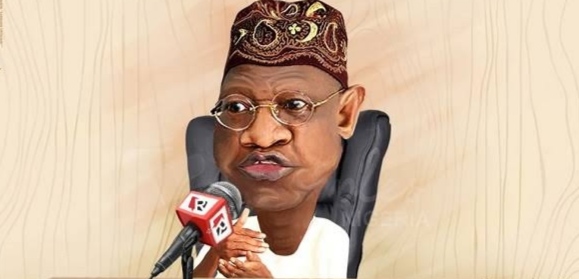
Last Thursday, Information and Culture Minister, Alhaji Lai Mohammed responded to an article in The Economist, ‘Insurgency, secessionism and banditry threaten Nigeria.’ Quite naturally, the minister faulted a number of assertions in the London-based magazine. That of course is his job, and he did it well. But his attempt to make light of the collection of taxes by bandits in Northwest communities is concerning. Here is what the minister said: “Do you know how many places in this country where area boys collect taxes? And there is no terrorism or banditry there. I don’t want to mention names. In many of our cities, they carve out their own territory. So, it is not indicative that the bandits have taken over. No. I know many areas in Nigeria both in the South and the North where these kinds of things happen. So, it is not the same thing.”
The minister can make his point that bandits have not taken over the country without the allusion he offered. But it is also typical. Rather than look for solutions to mounting security challenges, officials of this administration simply invent convenient excuses. And nobody seems more adept at what is now glibly referred to as ‘Whataboutery’—a Soviet-era propaganda tactic that seeks to draw attention away from the issue under discourse by pointing out a similar challenge elsewhere—than the Information and Culture Minister. That is how he would compare ‘Area Boys’ with bandits who are not only killing, maiming, raping and kidnapping hundreds of people for ransom but have made going to school a high-risk enterprise in many states in the North after forcing people to abandon their farms.
From Zamfara to Katsina, Kaduna and Sokoto States in the Northwest, as well as Niger State in the Northcentral, many local governments are home to rural dwellers who regularly pay protection money to bandits just to stay alive. That is the issue the federal government must deal with, especially given Tuesday’s raid at the University of Abuja staff quarters by bandits who took away a Professor and members of his family.
In its latest report, the ‘Nextier SPD Violent Conflict Database’ reveals that in one calendar year (September 2020 to September 2021), “Nigeria recorded 890 incidents of violent conflicts resulting in 3,787 deaths, 340 injured persons, and 2,542 kidnapped persons. 90.3 percent of the fatalities were civilians, while the balance of 9.7 percent were security agents.” These violent eruptions were ranked into such categories as Banditry, Farmer-herder conflicts, Terrorism, Extra-judicial killings, Cultism, Armed robbery, Civil unrest, Communal clashes, Group conflict, and Maritime piracy. “When ranked by the total number of victims, which is calculated as the number of casualties, injured and kidnapped, banditry is still the first with 78 percent of the total victims,” according to Nextier Founding Partner, Patrick Okigbo IIII in his paper, ‘Stemming the Tears’ presented at last week’s 27th edition of the Nigeria Economic Summit.
At a forum on insecurity in Yola, Adamawa State, also last week, former National Health Insurance Scheme (NHIS) Executive Secretary, Prof. Usman Yusuf corroborated that finding. “I am from Katsina (State) where the president comes from. Before this government came, we did not know what IDPs look like (but) now, a third of my state, the president’s state, is under siege by bandits. Our capital city is filling up with IDPs, we never saw that. The president doesn’t call to commiserate with us, (he) doesn’t speak about banditry. Listen to him each time he talks about insecurity; he talks about Boko Haram. Banditry is more difficult and more lethal than Boko Haram, and I will tell you why. Boko Haram (members are) located in one place—the northeast. Bandits are all over this country.” And then the clincher: “We are not going to wait for any government that lies with propaganda and say, ‘oh they have been decimated’; ‘we are going to take the war to them’—all that nonsense.”
Perhaps the Information and Culture Minister should listen more to his colleague at the Ministry of Interior. On Tuesday, Ogbeni Rauf Aregbesola said that as terrorism, banditry and other serious cross border crimes continue to proliferate in the country, there should be concerted efforts to counter them. Particularly noteworthy was Aregbesola’s summation that while the security agencies in Nigeria are still operating an 18th century crime prevention model, the sundry criminal cartels that they contend against have already adopted 22nd century strategies for their nefarious activities.
It is bad that the Minister of Information and Culture sees little wrong in a situation in which criminals create fiefdoms for themselves by collecting taxes from rural dwellers. Worse is that he is unwittingly admitting to the growing number of ungoverned spaces across the country where outlaws have taken over. The concern here is the danger of ‘Whataboutism’ when dealing with security challenges. Politicians who deploy it, according to Larry Ruark, in his ‘Sun Chronicle’ column on Tuesday, do so “to escape accountability, to justify what appears to be an unwise or illegal action, or to divert attention away from unpleasant events, actions, speeches or opinions that cannot be logically or morally defended.”
I share the view that the international media have lately been hard on our military without considering the number of their personnel, the meagre resources at their disposal and the fact that the internal security role for which they are saddled is constitutionally that of the police. With the proposed capital budget of N28 billion in 2022 for the entire Nigerian army (an amount not up to what some federal government agencies vote for miscellaneous expenses) the Chief of Army Staff, Lt General Farouk Yahaya, yesterday lamented at the senate on lack of adequate financial investment in the military. The minister is therefore right to defend our military from unfair attacks. But to compare bandits with opportunistic Lagos touts is to take ‘Whataboutism’ too far.
To borrow a common Yoruba parlance, nobody can call a dog a monkey for some of us. Bandits are not area boys. They are mass murderers who kill, maim, rape and kidnap. What Alhaji Lai may not appreciate is that when we promote this kind of narrative, according to a recent editorial in the London Observer regarding the danger of false equivalencies, “We effectively promote the tolerance of intolerance, allowing fringe groups that are clearly harmful to compare their platforms with those that are reasonable.”
As I argued in my column last week on ‘Banditr-ocrazy’, it is the defensive way operatives of this government speak about bandits that have made many Nigerians suspicious of their actual endgame. That is perhaps what pushed the two chambers of the National Assembly into passing separate resolutions urging the president to designate outlaws as terrorists. But following the Area Boys comparison, the former Senator representing Kaduna North, Shehu Sani, on Monday offered the Information and Culture Minister another idea. He cynically suggested on his Twitter handle that the bandits simply be designated as ‘federal civil servants’!
NOTE: Three weeks ago, I began a series based on the report of a study conducted by the late President Umaru Musa Yar’Adua on subsidies in five critical sectors of our national life (power, education, health, agriculture, and petroleum). Although I am yet to run the aspects touching on agriculture and petroleum in the 2008 report, I am taking a pause today for the intervention by my friend, Bolaji Abdullahi, on options available for funding tertiary education in Nigeria. The conversation continues.
• You can follow me on my Twitter handle, @Olusegunverdict and on www.olusegunadeniyi.com
Higher Education: Why FG Needs to Step Back
By Bolaji Abdullahi
I have been following with keen interest Olusegun Adeniyi’s columns on the issue of subsidy in critical sectors of our national life, including education and I want to make some quick points. The key issues to consider when discussing the funding of higher education are effectiveness and efficiency. The first has to do with whether the amount being spent is adequate; and the second, with whether the money is being spent in the best way possible. The funding of Nigerian universities is currently not meeting either of the two tests.
A former Vice Chancellor of the University of Lagos, Professor Rahmon Bello identified five key funding sources for a university. These include tuition fees, proprietor’s fund, endowments, research, and innovation grants and, investments and businesses. Now, federal universities draw their funding mostly from the proprietor’s fund alone, while, according to him, 90-95 per cent of the universities’ budgetary receipts go to personnel cost. What this means in essence is that our universities are existing mainly to pay salaries rather than to perform their core duties of teaching and research.
Funding of education needs to reflect the national priority. Today, it does not. Available reports indicate that Nigeria spends up to four times on higher education than it spends on basic education. This conflicts with global and regional pattern on education spending. In almost all the countries of the world, governments invest the bulk of their resources on basic education, which is the only level of education that must be free, compulsory, and universal, as a matter of right.
It is quite ironic that basic education that has been statutorily declared as free and compulsory has become the most expensive level of education in Nigeria. As parents lose confidence in the ability of public schools to educate their children, they now mostly prefer fee-paying private schools. The grand irony also is that even parents who were prepared to pay so much for basic and secondary education have come to expect tertiary education to be free. Therefore, ours is perhaps the only country in the world where it is more expensive to get basic education than to get a university education.
This absurdity has been sustained by government’s fallacious policy of free university education which has mostly served to cover up its failure to develop a needs-based university system. Our post-secondary education system is too narrow and therefore leaves the universities as the only real choice left to our children. Therefore, looking at the long line of children waiting to enter the universities, government instinctively responds by expanding access. Whereas, what we need to do is to provide real options by creating opportunities for post-secondary education that delivers real skills and globally recognised certifications in different sectors that meet the requirements of available jobs, most of which do not even require a university degree.
One continues to wonder why it is difficult for government to see that its pre-occupation with expanding access to university education without corresponding direct investments in teaching and research has not only brought down quality, but is also compounding the youth unemployment situation, which remains a time bomb. The painful truth is that university education has worked better for parents in this country than it is currently working for their children. This is not natural.
To put it plainly, Nigeria is paying so much in the name of subsidy in higher education but getting very little or nothing in return; whether in terms of meeting the national objective of developing high level manpower, or even in terms of economic and social benefits to the individual students and their families. We therefore need to change course. As I have noted earlier, what government has done over the years is to subsidise the personnel cost of the university administration rather than support the students who should benefit from the subsidy. Yes, government must continue to subsidise the universities, but the subsidy needs to be repurposed.
Best practice is to fund the universities based on students’ needs. How much does it cost to give university education to a student in Nigeria per annum? This cost may also vary from locations, course of study and sundry factors. What we need to establish therefore is the basic minimum cost. A 2005 estimate by the National Universities Commission (NUC) projected that it would cost between N345,000 and N680,000 to train a student, depending on the faculty. In 2021, these figures will merely be illustrative. Therefore, if we take N680,000 as the average cost of training a student, it will mean that a university with 10,000 students will receive an allocation of N6.8billion if the government intends to continue with full subsidy. The benefit of tying cost to students is that it would, among others, ensure that students become the centre of universities’ planning and operation. Now, students are hardly part of the plan. What this also means is that the universities are effectively funded as the cost per students is allocated around the core elements of that students’ training, which will include payments to lecturers, teaching facilities and other services, which would have been factored into the cost.
However, should government decide on partial subsidy, which means only a percentage of this cost would be borne by the government, the universities should still expect to get full payments. The difference in this case is that other people are also contributing to the payment besides government. For example, if government decides to pay 60 per cent of the cost, it means the university would still expect to receive N6.8billion for its 10,000 students, but in this case, only N4.080billion will come from Federal Government and the balance of N2.720billion will be paid by the students as tuition at N272,000 per student.
Meanwhile, tuition payment is one of the most politically contentious issues in Nigerian education. However, as shown earlier, if it is clearly defined as a means of improving quality, which in turn will enhance the employability of the students upon graduation, most parents would be willing to pay. Nevertheless, the idea of a federally backed Education Bank needs to be brought back on board to off-set the challenge that students from poor homes are likely to face when they now need to pay tuition by awarding students loans. But this must be part of a broader plan rather than a stand-alone initiative. In addition to student loans, merit-based scholarships and general bursaries are other avenues of funding that would be open to students from governments at all levels.
Nigeria cannot continue to pretend to give free university education, which is quite costly because it has made it difficult for students and their families to demand accountability or improvement even when available evidence suggests that prospective employers no longer have confidence in the system. As things stand, our universities do not need to change anything. After all, how much money they get or how many students come to them each year does not really depend on anything they do in terms of their core functions. This needs to change.
Global trends indicate that less government is better for universities and that institutions of higher learning function best when they are self-governing. It must be noted however that the degree to which universities are autonomous worldwide is also mostly determined by the extent to which they rely on government funding. The Academic Staff Union of Universities (ASUU) has been at the forefront of fighting for university autonomy; but the quest for autonomy would always be undermined by the universities’ corresponding desire and willingness to continue to draw the bulk of their funding from the federal government, especially those related to salaries and other compensations.
What we should aim for is a system of embedded autonomy, which gives the government overall policy formulation, coordination, and monitoring role, while freeing the universities to operate as autonomous units. This relates to what the Harvard Professor, Lant Pritchett has described as the ‘starfish’ system, which allows for a level of control from the centre but grants freedom to each of the limbs to operate with significant autonomy. Compared to a ‘spider’ system, which pulls responsibility for all functions to themselves, especially through financing; a starfish system, he says, creates local operation which “pulls apart all of the many functions and activities and allocate those across the system.”
Essentially, what we require is a system that would foster high level competitions for resources and even for students. This will create the condition for each university to develop at its own pace, based on real accomplishments in research, in teaching and in their contributions or responsiveness to national development goals. We should have done this many decades ago. But we can start now.
• Abdullahi is a former Minister of Youth and Sports