





















By Emmanuel Nduka
Africa has overtaken Asia as the continent with the highest number of people facing hunger, according to a new United Nations report that paints a troubling picture of food insecurity across the continent despite modest improvements in global hunger levels.
The findings, contained in the latest State of Food Security and Nutrition in the World (SOFI) report jointly published by the Food and Agriculture Organization (FAO), the International Fund for Agricultural Development (IFAD), the World Food Programme (WFP), the World Health Organization (WHO), and UNICEF, show that an estimated 309 million Africans suffered from undernourishment in 2025.
The figure represents about 20 per cent of Africa’s population, making the continent home to the largest number of hungry people globally for the first time. Asia followed with 292 million undernourished people, although the prevalence of hunger there was significantly lower at about six per cent.
The report indicates that while global hunger has declined for a third consecutive year, progress has been uneven, with Africa continuing to bear the heaviest burden of chronic food insecurity.
Globally, an estimated 645 million people experienced hunger in 2025, down from about 688 million in 2024 and 688 million-plus in 2022, reflecting a gradual recovery from the disruptions caused by the COVID-19 pandemic. However, the number remains considerably above pre-pandemic levels, underscoring the scale of the challenge.
Explaining the shift, FAO’s Director of the Agrifood Economics Division, David Laborde, said the “centre of gravity of hunger has shifted from Asia to Africa,” noting that countries such as China have made remarkable progress in reducing hunger, while India has also intensified efforts through large-scale food security and agricultural programmes.
Although Africa recorded slight improvements in some countries, rapid population growth, prolonged conflicts, economic instability and recurring climate shocks have combined to leave more people vulnerable to hunger than any other region.
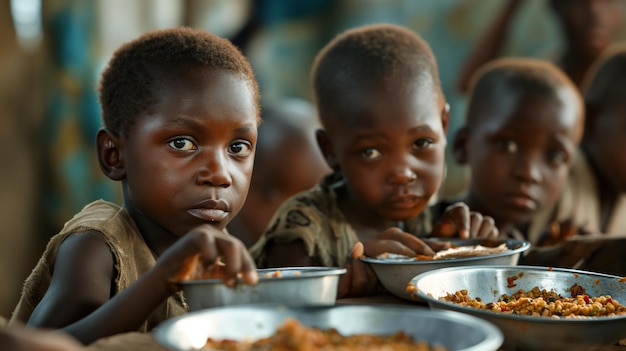
The report also reveals another disturbing trend: two out of every three Africans cannot afford a healthy diet.
According to the UN agencies, 66.6 per cent of Africans are unable to purchase food that meets minimum nutritional requirements, more than twice the proportion recorded in Asia. High food prices, weak infrastructure, limited access to markets, poor agricultural productivity and low household incomes continue to make nutritious foods unaffordable for millions.
The UN agencies noted that animal-source foods including meat, eggs, fish and dairy products, remain among the most expensive food groups across much of Africa, contributing to widespread malnutrition, particularly among children and pregnant women.
Experts say transforming Africa’s agrifood systems through increased investment in livestock production, irrigation, storage facilities, transport infrastructure and modern farming techniques will be critical to reducing the cost of nutritious foods.
Conflict remains one of the biggest drivers of hunger across the continent.
The ongoing war in Sudan has displaced millions of people and devastated agricultural production, with the United Nations warning earlier this year that around 20 million people face acute food insecurity in the country. Similar crises in the eastern Democratic Republic of Congo, the Sahel and parts of the Horn of Africa continue to disrupt farming, destroy livelihoods and limit humanitarian access.
Climate change has compounded the crisis through prolonged droughts, devastating floods and unpredictable rainfall, severely affecting food production in several African countries.
Despite the grim statistics, the report points to encouraging signs in parts of the continent. Countries including Ethiopia, Tanzania, Senegal and Zambia have recorded improvements in food security through increased agricultural investments, stronger social protection programmes and better-targeted nutrition interventions.
The United Nations, however, warned that achieving Sustainable Development Goal 2 – Zero Hunger by 2030 remains increasingly difficult without urgent action.
The report calls on African governments and development partners to substantially increase investment in resilient agriculture, climate-smart farming, rural infrastructure, food processing, market access and social safety nets. It also urges greater support for smallholder farmers, who produce the bulk of Africa’s food but remain among the most vulnerable to poverty and climate-related shocks.
Analysts say the report serves as a stark reminder that while the world is making slow progress against hunger, Africa’s growing population, coupled with conflict, climate change and economic pressures, means the continent remains at the centre of the global food security challenge.
With more than half of the world’s hungry people now living in Africa, the UN says stronger political commitment, increased financing and coordinated international action will be essential to reverse the trend and ensure millions of Africans gain access to sufficient, safe and nutritious food.